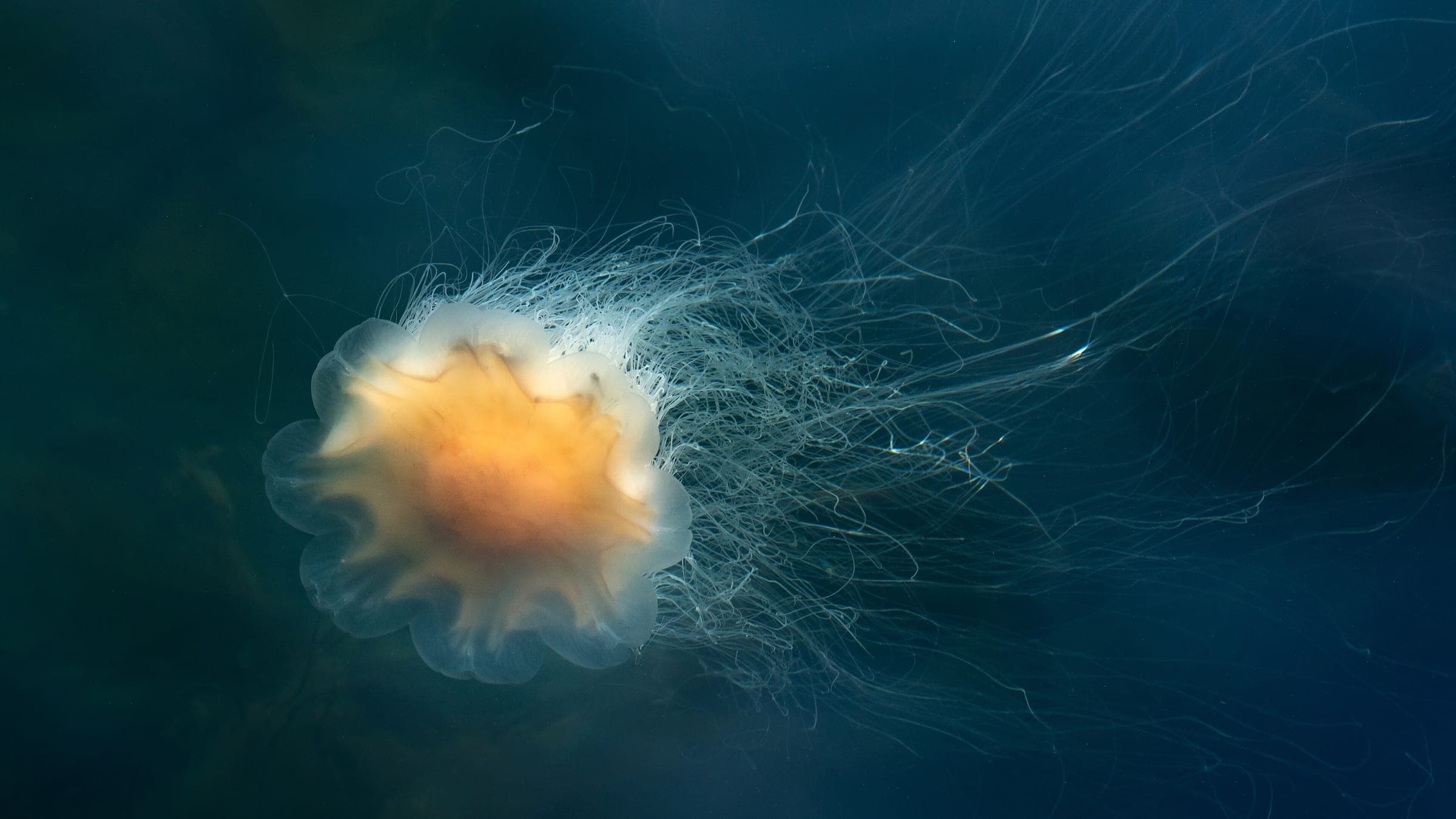
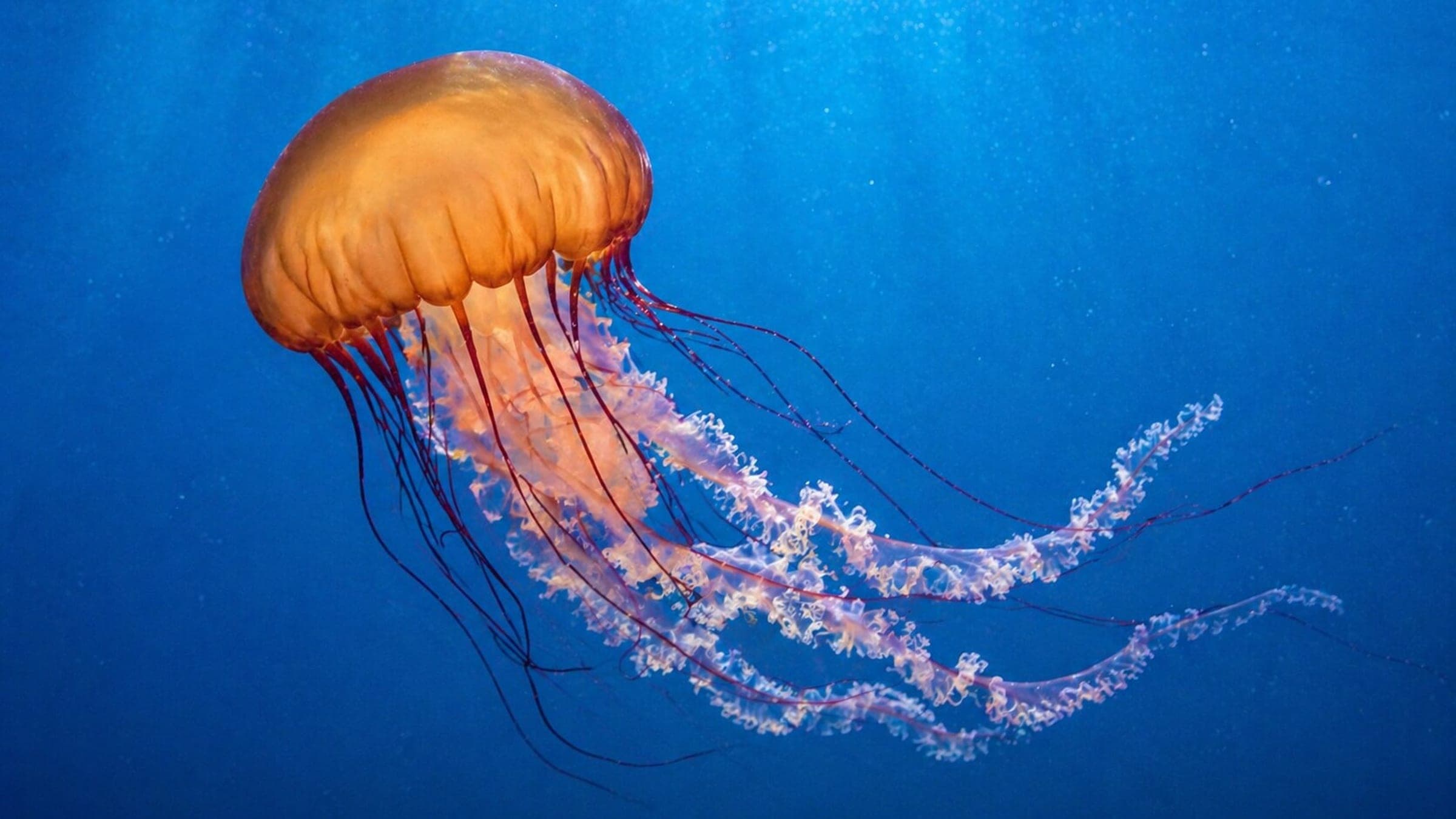
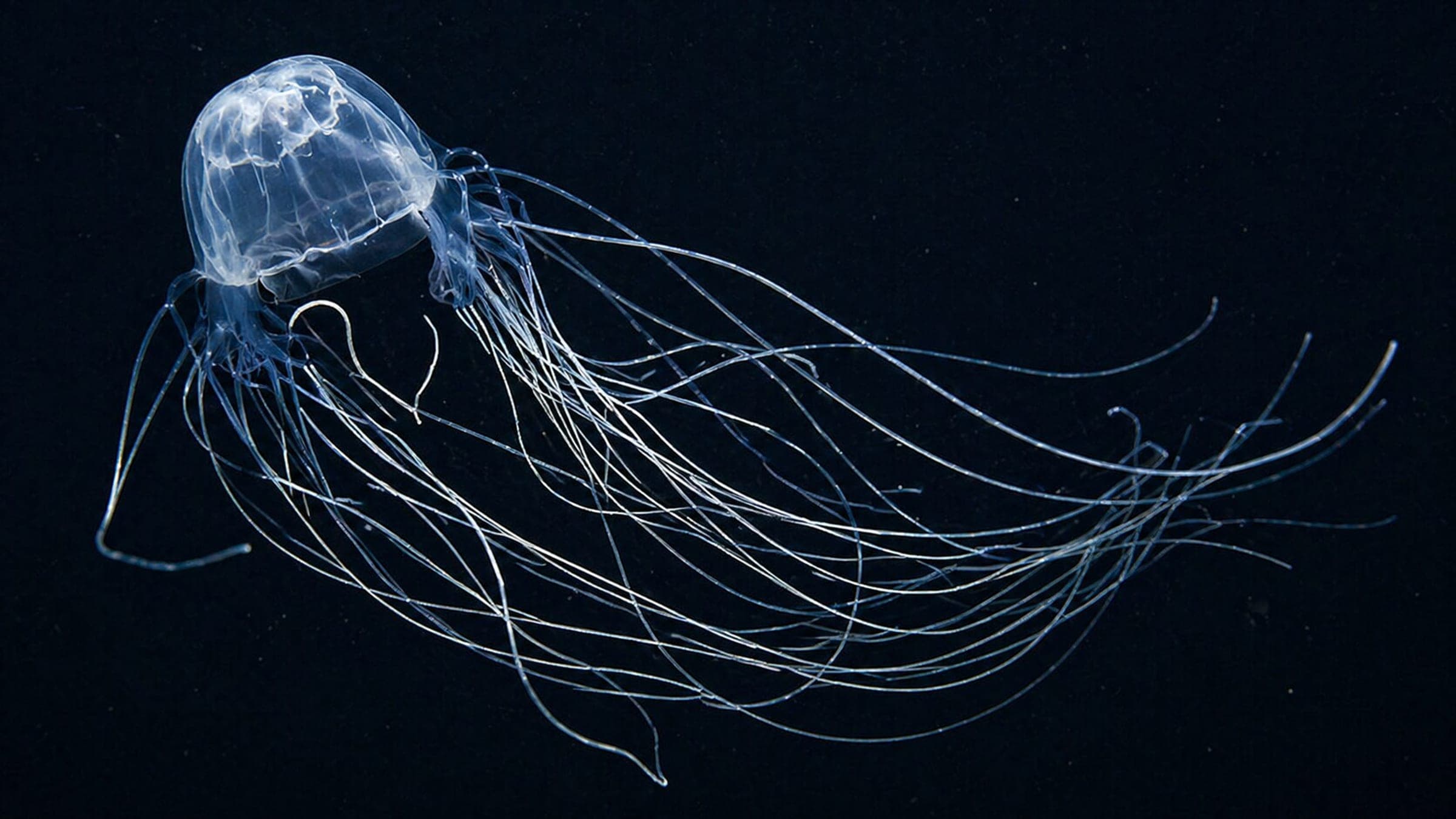
Long venomous tentacles
Tentacles with cnidocytes can hang up to about 30 m (100 ft) below the float.
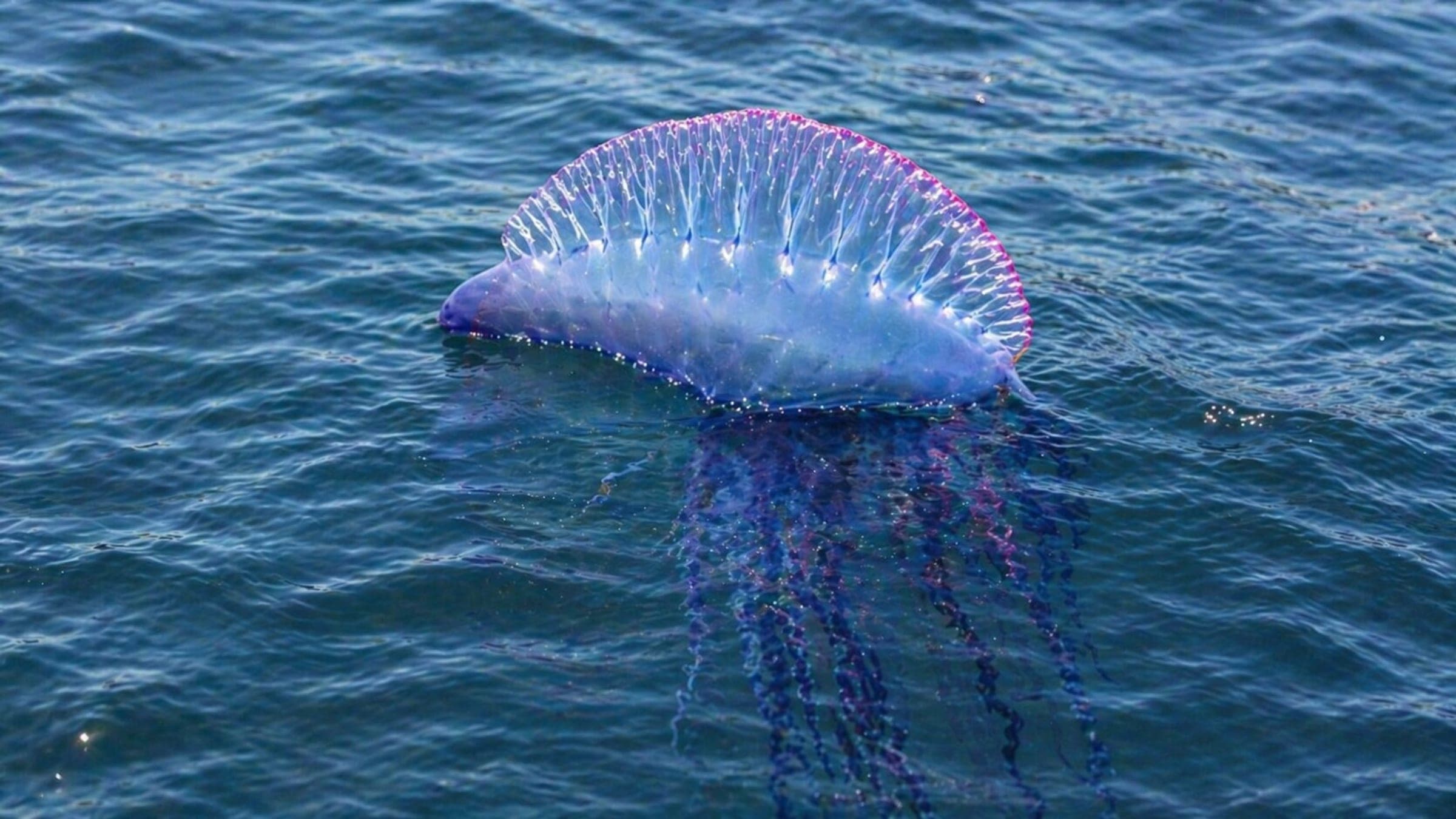
Physalia physalis
The Portuguese man o' war is a colonial siphonophore with a gas-filled float and venomous tentacles that lives at the sea surface worldwide.
Species Guide
A clean field guide focused on habitat, identification, behavior, and conservation context without burying the useful parts.
The Portuguese man o' war (Physalia physalis) is a marine hydrozoan classified as a siphonophore rather than a true jellyfish. It is a colonial organism composed of many specialized, genetically identical zooids that function together as one unit. A gas-filled bladder called the pneumatophore provides buoyancy and supports a sail that propels the colony across the water surface. Tentacles containing venomous cnidocytes hang below the float and can reach lengths up to 30 m (100 ft). The species is part of the neuston and is found in the Atlantic, Indian, and Pacific oceans. Man o' wars sometimes occur in groups as large as 1,000 individuals. Although typically treated as the sole species in its genus and family, genetic evidence suggests there may be additional distinct lineages.
Part of the neuston, it floats at the water surface; a sail on the pneumatophore propels it and can cause colonies to be wind-driven, sometimes forming groups up to about 1,000 individuals.
Tentacles bear venomous cnidocytes used to capture prey; recorded prey types include fish and crustaceans.
The strongest linked planning options currently surface around destinations such as Derawan Islands, Murcia: Cabo de Palos and Islas Hormigas, Nusa Penida and countries such as Kuwait, Indonesia, Cabo Verde for divers building trips around portuguese man o'wars.
Identification
The visual markers divers can use underwater, plus the species most likely to cause confusion.
Last Updated Mar 9, 2026 · 3 sources
A visible gas-filled bladder provides buoyancy and often bears a sail used for movement across the surface.
Tentacles with cnidocytes can hang up to about 30 m (100 ft) below the float.
Composed of many specialized, genetically identical zooids fulfilling functions like hunting, digestion, and reproduction.
Lives at the water surface rather than submerged depths.
Superficially resembles a jellyfish but differs taxonomically as a siphonophore and in being a colonial organism.
Range and Movement
The broad range, seasonal movement, or migratory behavior that shapes where divers encounter this species.
Part of the neuston, it floats at the water surface; a sail on the pneumatophore propels it and can cause colonies to be wind-driven, sometimes forming groups up to about 1,000 individuals.
Diet
Useful feeding context that often explains habitat, movement, and encounter style.
Tentacles bear venomous cnidocytes used to capture prey; recorded prey types include fish and crustaceans.
Responsible Encounters
Conservation-minded guidance for divers who want the encounter without adding pressure.
Give portuguese man o'war space, avoid blocking the animal's path, and follow local site and operator rules for wildlife interactions with jellyfish.
Field Notes
Useful species context that makes the encounter more meaningful once you are underwater.
Although it appears to be a single animal, it is a colony of many distinct zooids that operate together.
All zooids in a single specimen share the same genetic makeup despite morphological differences.
The sail may be left- or right-handed, influencing the direction the colony is driven by wind.
Top Destinations
Destinations surfaced from the linked dive spots associated with this species.
Top Countries
The strongest country-level starting points currently linked to this species.
Top Dive Spots
Directly linked dive spots where this species already shows up in the planning data.
Boat drift site for early-summer hammerhead runs.
Maratua boat dive with gentle slope, coral blocks, and rays
Underwater tunnel into Crystal Bay's bat-filled cavern.
Shallow training reef with a busy fish mix
Crazy Eight is a boat-accessed Red Sea reef with a deep drop-off.
Devil Pinnacle is Caño's signature shark pinnacle.
FAQ
Clear planning and conservation answers written for search visibility and AI retrieval.
Research Sources
Primary and credible references behind the field-guide and conservation claims on this page.
Primary wildlife guide source.
Supporting wildlife source.
Taxonomy reference.
Related Species
Related species guides in the same encounter family.