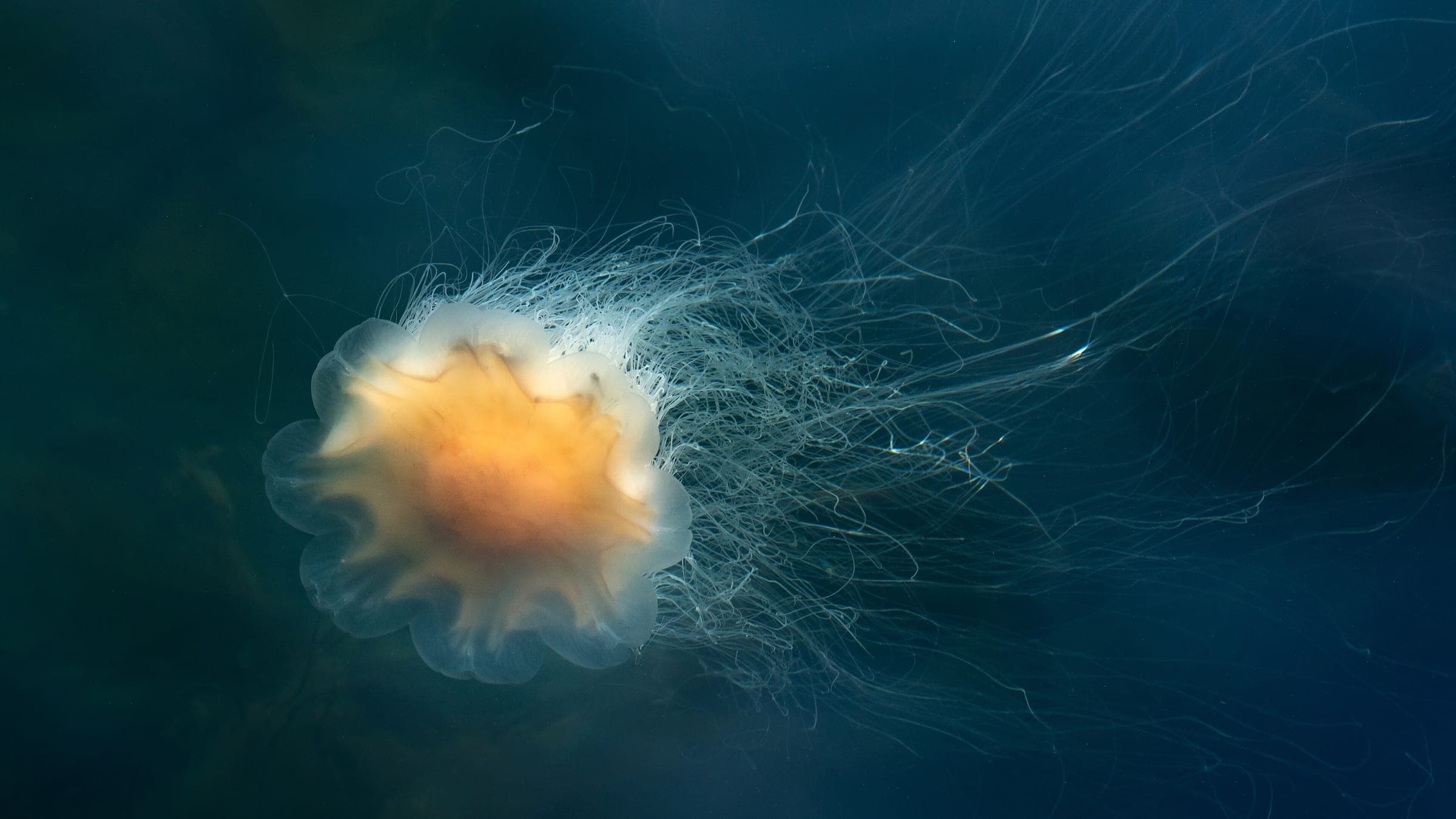
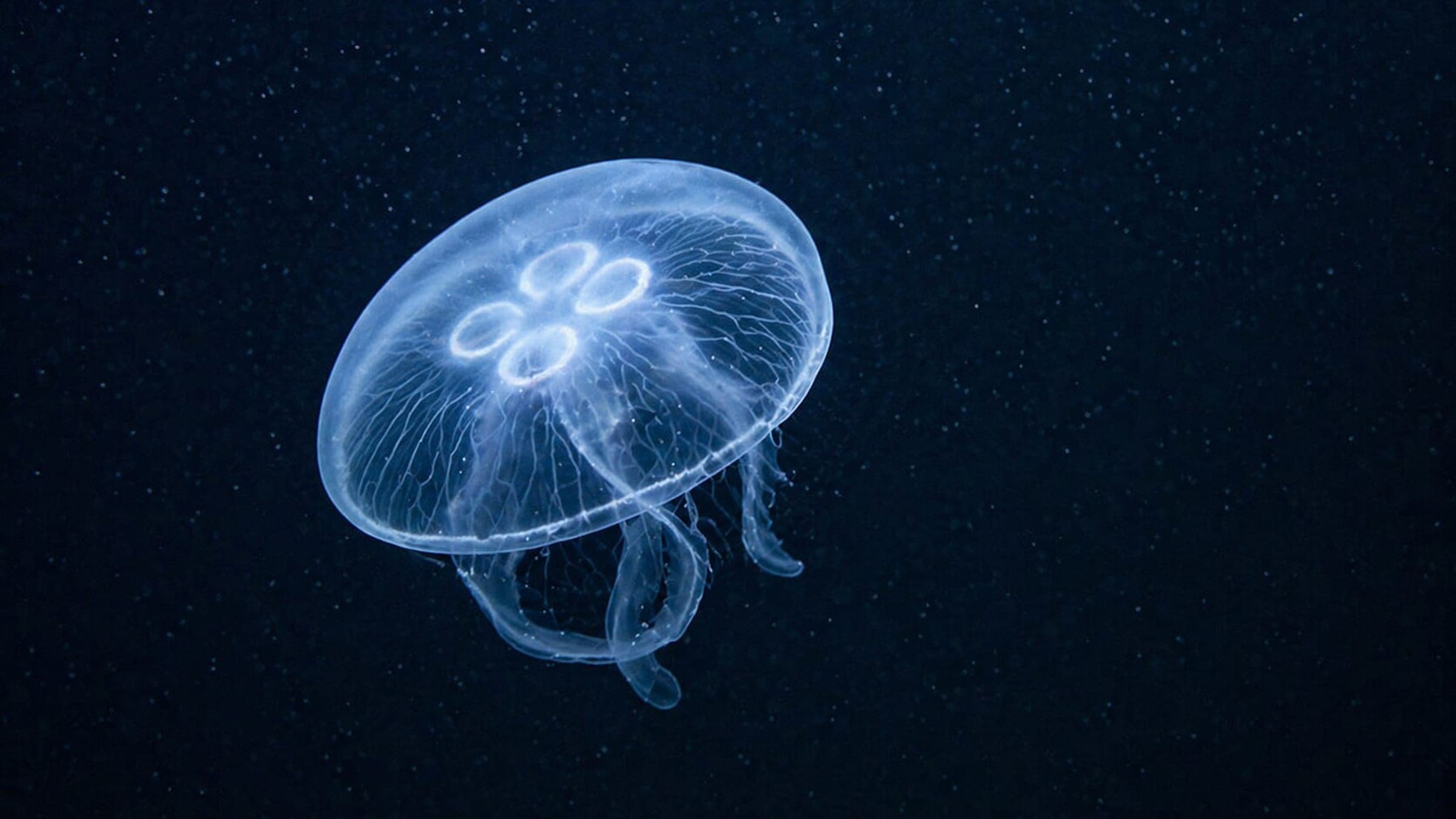
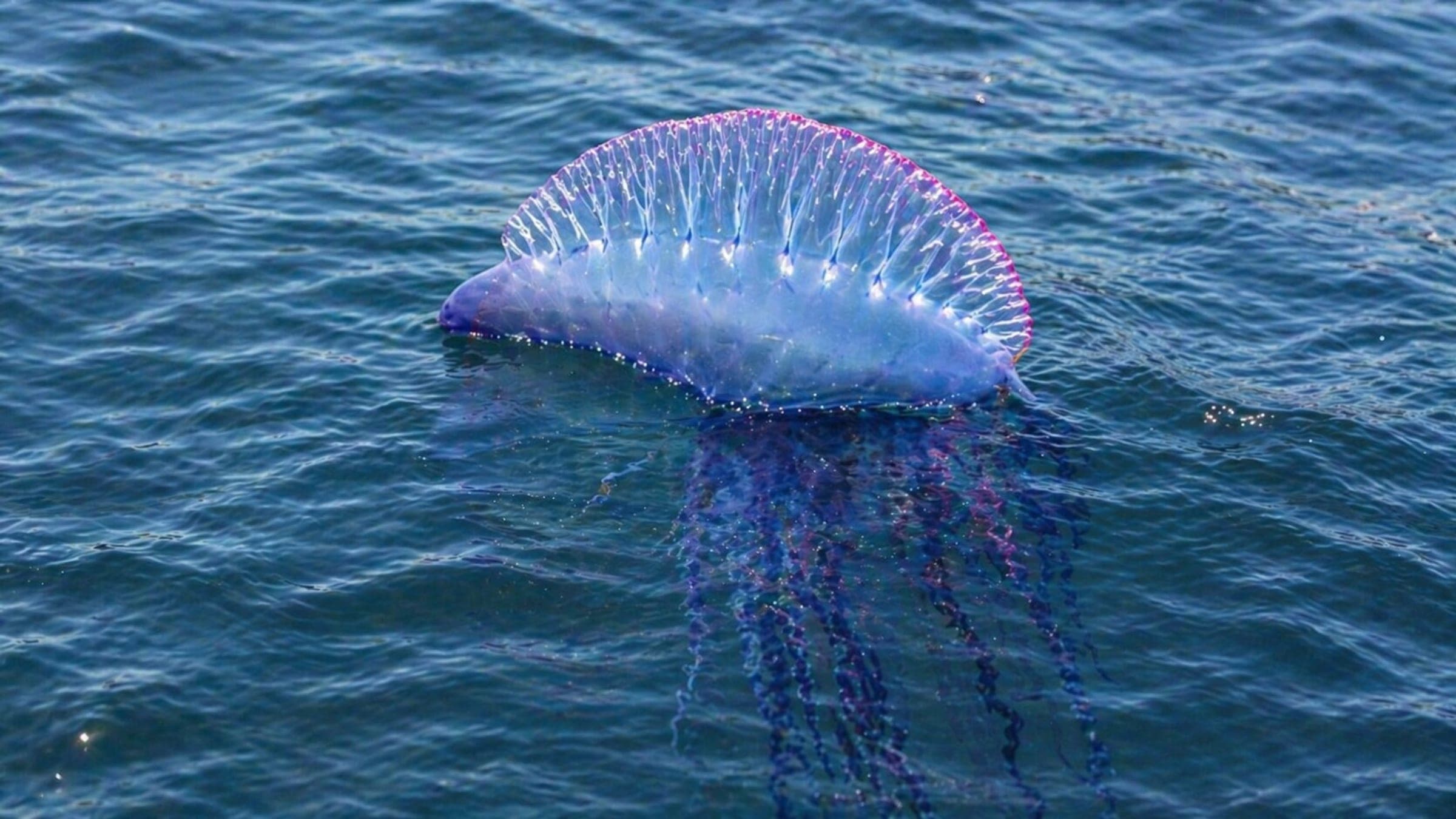
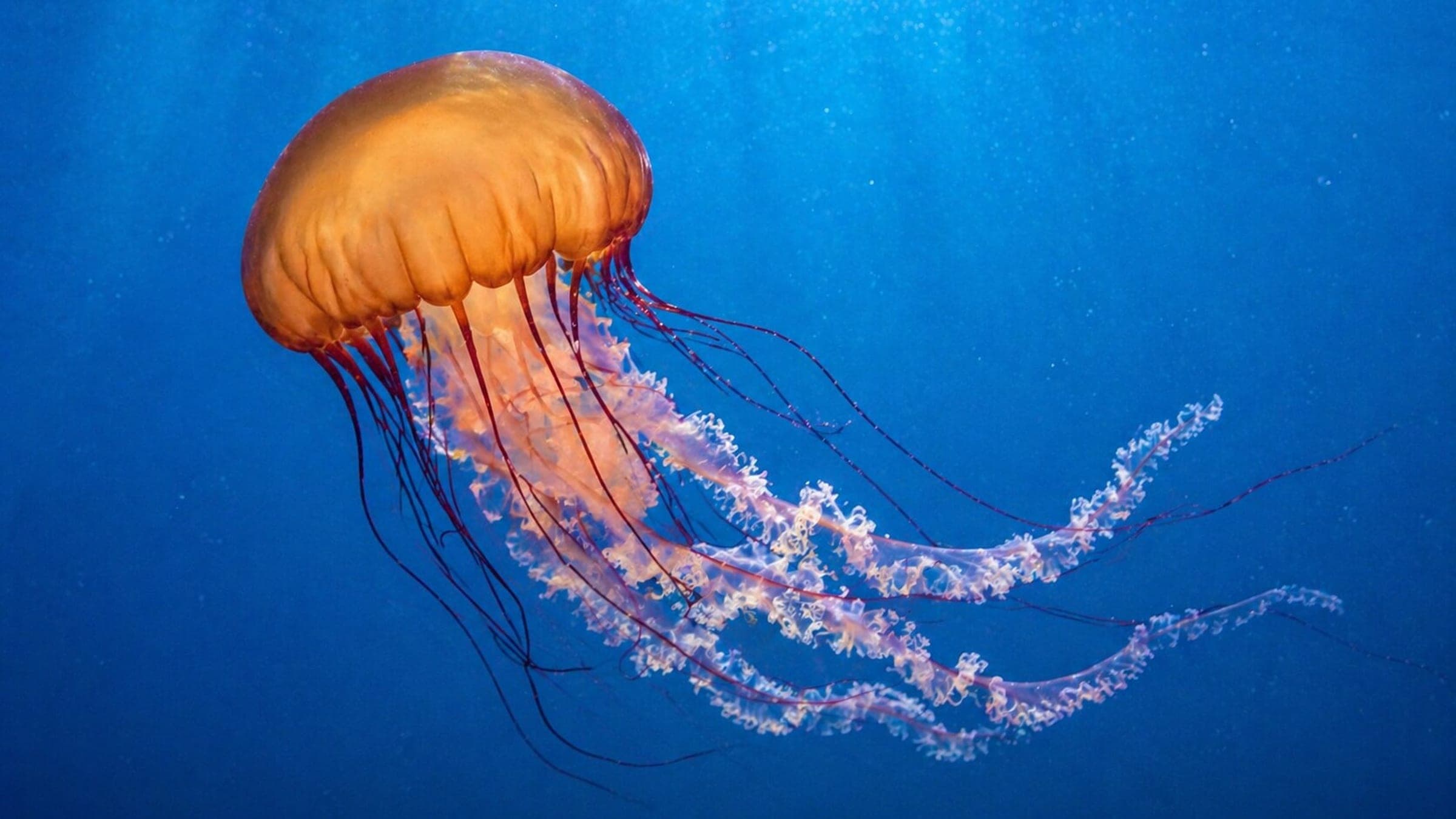
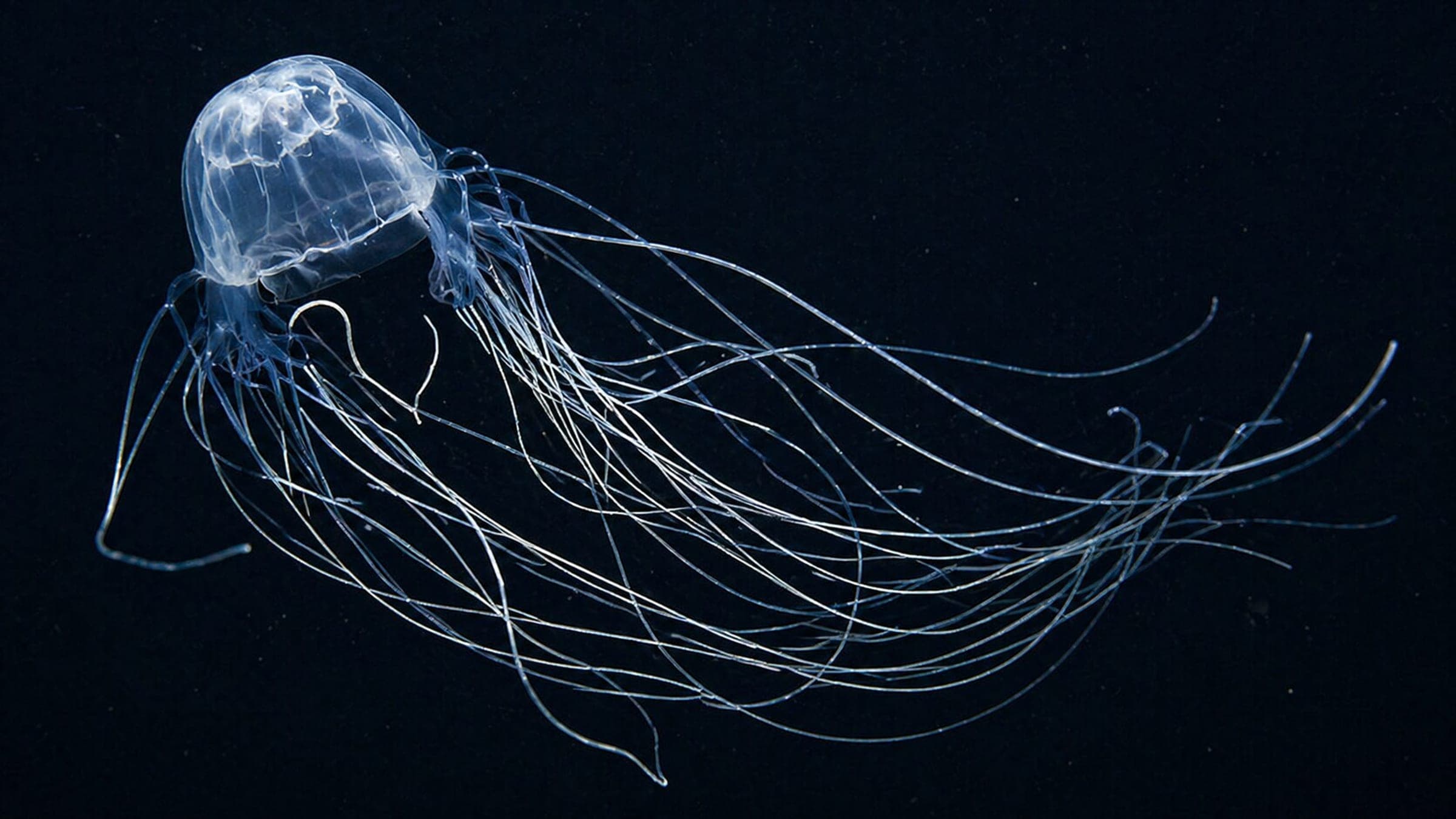
Gelatinous bell and trailing tentacles
Most divers identify jellyfish first by a translucent bell shape with trailing tentacles or oral arms suspended in the water column.
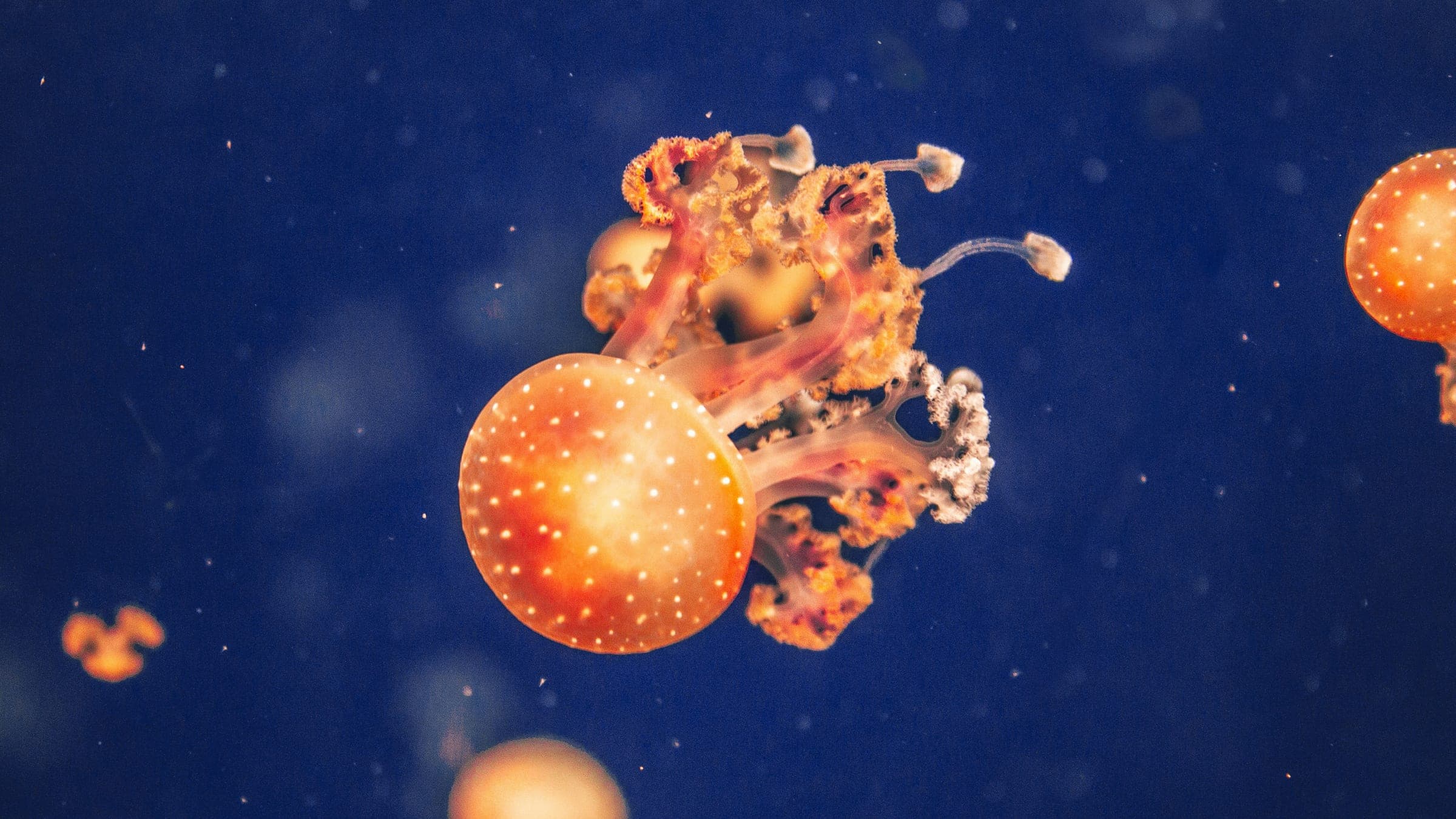
Jellyfish encounters are shaped by currents, blooms, and water clarity, with responsible diving focused on distance, exposure protection, and avoiding surprise contact.
Group Guide
A group-level field guide built to move divers from broad intent into the right species, destinations, and encounter planning.
Jellyfish are one of the least predictable wildlife categories for divers because they are carried and concentrated by water movement rather than by a fixed reef or den. Some dives produce a few scattered animals; others line up into seasonal blooms, surface slicks, or blue-water drifts that completely change how the site feels. For trip planning, the key questions are not just where they live, but when local currents, temperature, and plankton conditions make encounters more likely.
The obvious shared feature is a gelatinous bell with trailing tentacles or oral arms, but the group is visually diverse. Some jellyfish are large and pulsing in open water, some are nearly transparent, and some drifting stingers that divers worry about are not all classic bell-shaped jellyfish. Visibility, backlighting, and current direction often matter as much as color when spotting them early enough to avoid contact.
Divers usually meet jellyfish in the water column, along current edges, in sheltered bays during bloom periods, or on blue-water drifts where plankton gathers. Calm surface conditions can make them easier to spot, but surge, glare, and low-angle light can also hide them until the last second.
This group is less about destination promises than about timing, local warnings, and exposure management. A site known for reefs, sharks, or turtles can suddenly become a jellyfish story when bloom conditions line up.
This group guide pulls together 5 published Jellyfish guides so divers can move from broad trip intent to the right species pages, destinations, and dive spots faster.
Jellyfish do not lend themselves to one simple group-wide conservation story. Some species are common or bloom-prone, while others are more localized and less familiar to divers. The most defensible group-level framing is ecological and safety-focused: blooms respond to changing ocean conditions, and divers should treat local warnings, species mix, and exposure risk as more important than any one generic status label.
Jellyfish distribution is controlled heavily by currents, winds, tides, and bloom dynamics. They can concentrate rapidly in one bay, drift line, or surface layer and then disperse again after a change in weather or water movement. For divers, that means the encounter map can change faster than for almost any reef-tied animal group.
Zeeland (Oosterschelde and Grevelingenmeer), Fehmarn and the Schleswig-Holstein Baltic Coast (Kiel and Lübeck Bay), and Cape Town currently stand out as strong destination entry points for Jellyfish planning.
Germany, Netherlands, and United States of America are some of the clearest country-level starting points for this group right now.
Most divers identify jellyfish first by a translucent bell shape with trailing tentacles or oral arms suspended in the water column.
Many species are partly transparent, which means light angle, contrast, and water clarity strongly affect how early a diver spots them.
A jellyfish encounter often looks like suspended drift life rather than a bottom-associated animal holding to a familiar reef feature.
A dive site that was clear one day can become a jellyfish-heavy drift the next once wind, tide, and plankton concentration change.
Because many jellyfish are translucent, the safest divers are often the ones reading glare, contrast, and current direction rather than staring only at the reef below.
Even famous wildlife destinations can have jellyfish-driven off-days or seasonal windows when exposure management becomes the main planning issue.
Jellyfish distribution is controlled heavily by currents, winds, tides, and bloom dynamics. They can concentrate rapidly in one bay, drift line, or surface layer and then disperse again after a change in weather or water movement. For divers, that means the encounter map can change faster than for almost any reef-tied animal group.
Jellyfish mostly feed on plankton and other small drifting prey, with some taking fish eggs or larvae. Productive water and the physical processes that concentrate plankton often help explain why blooms and diver encounters build in the same areas.
Conservation
A group-level read on the pressures, protections, and diver behavior that matter most across these species.
Jellyfish do not lend themselves to one simple group-wide conservation story. Some species are common or bloom-prone, while others are more localized and less familiar to divers. The most defensible group-level framing is ecological and safety-focused: blooms respond to changing ocean conditions, and divers should treat local warnings, species mix, and exposure risk as more important than any one generic status label.
Do not treat jellyfish as touchable curiosities. Keep a clear buffer, use full exposure protection when local operators recommend it, and abort the entry if bloom density or glare makes contact likely. If you are already in the water, swim slowly, protect your face and neck, and follow the boat team's exit plan rather than improvising through a drifting concentration.
Temperature, nutrient load, and shifting plankton conditions can alter bloom size and distribution, sometimes very quickly.
Coastal runoff, degraded water quality, and altered nearshore systems can change local jellyfish dynamics even when the mechanism is not simple or uniform across species.
From a dive-planning perspective, the immediate operational issue is not harvesting but exposure risk when jellyfish aggregate in conditions that hide tentacles or increase contact.
Site closures, warning systems, and operator route changes are the most practical protections in dive settings where bloom risk spikes.
Broader coastal stewardship helps because bloom behavior is tied to the condition of the surrounding marine system, not just the animals themselves.
For divers, the most effective field protection is conservative briefings, full skin coverage when needed, and a willingness to skip the water if conditions are wrong.
Species
Jump into the individual species pages that currently sit inside this wildlife group.
Top Destinations
Destinations surfaced from the linked dive spots associated with species in this group.

Netherlands

Germany

South Africa

United Kingdom
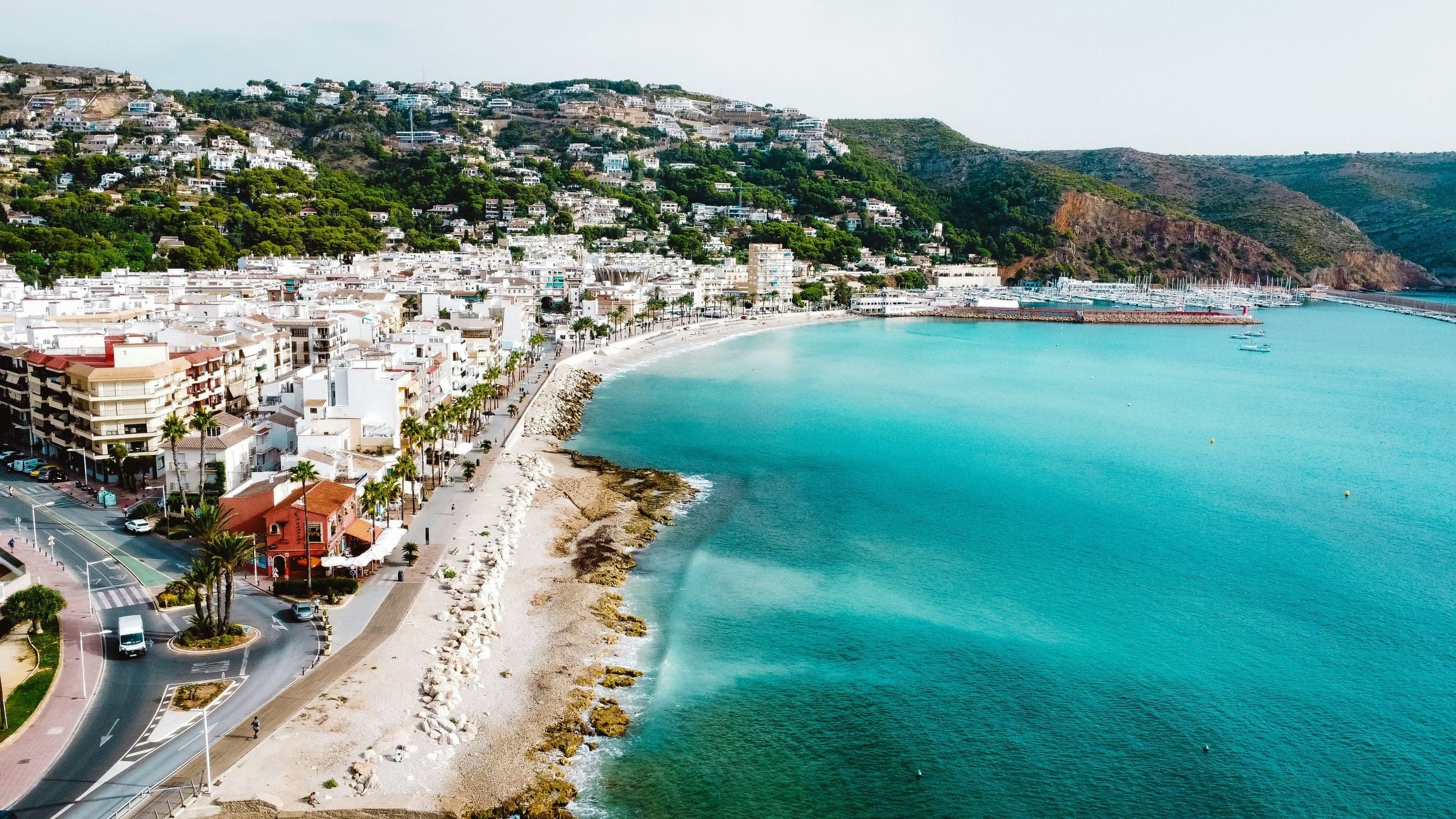
Spain

France
Top Countries
The strongest country-level starting points currently linked to this wildlife group.
Top Dive Spots
Directly linked dive spots where species in this group already show up in the planning data.
Calm Matinhos beach with shallow water, lifeguards, and easy snorkeling.
Rock and cave dive with sheltered structure.
Sheltered Port de Sóller training cove with rock and posidonia.
Calm-day shore dive at Plaja Mica with easy entry and small marine life.
Boat drift site for early-summer hammerhead runs.
Shore dive with a small wall, sandy bottom, and kelp life.
FAQ
Direct answers to the questions divers and planners tend to ask first.
Research Sources
Primary and supporting references used for the published group guide.
Broad jellyfish biology and diver-relevant natural-history framing.
Bloom drivers and changing environmental conditions.
Diver-facing overview of jelly forms and stinging variety.
Operational sting and exposure context relevant to dive planning.