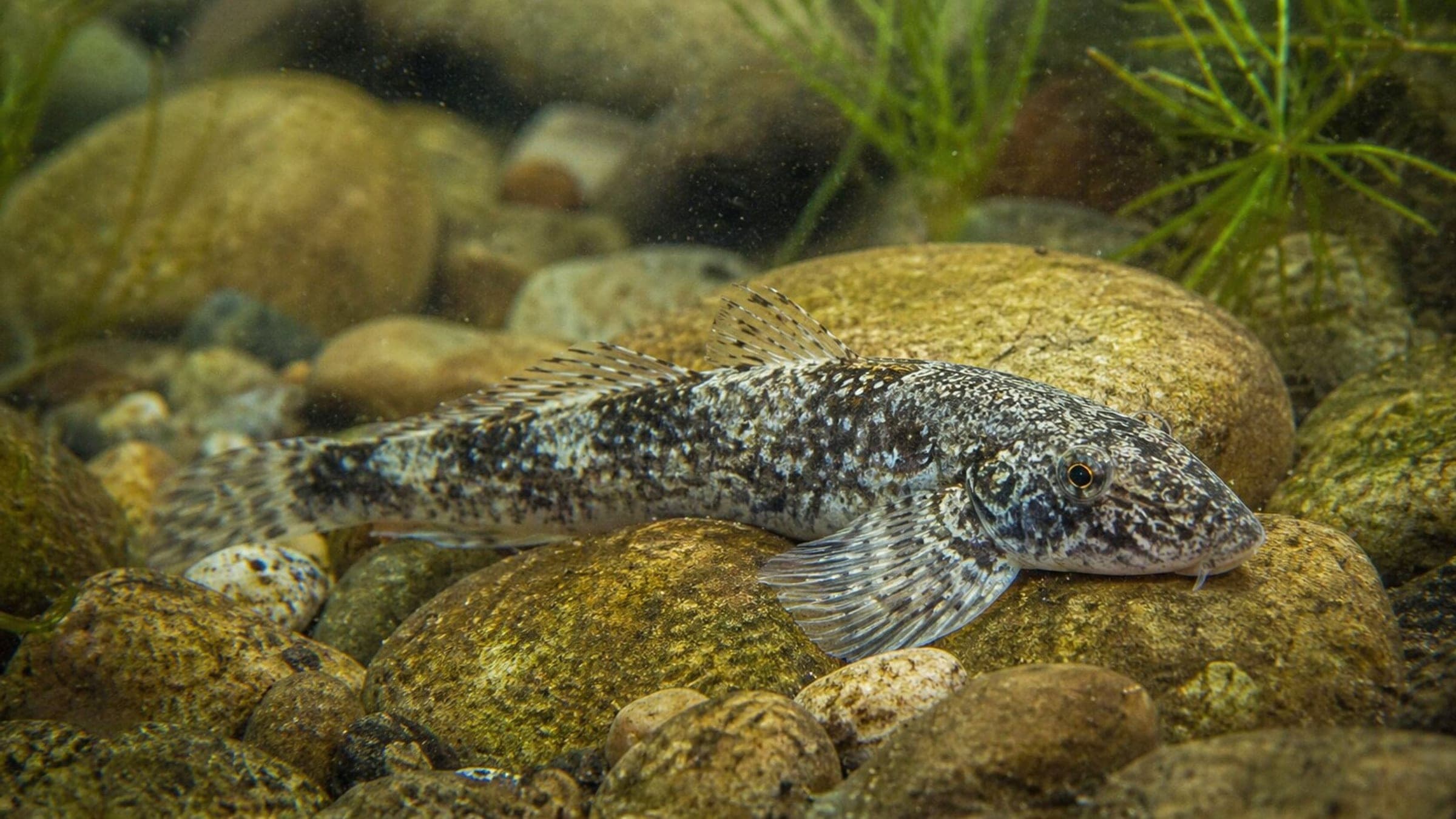
Body shape and skin
Elongated, spindle‑like body that is smooth and scaleless, armored with five lateral rows of bony scutes.
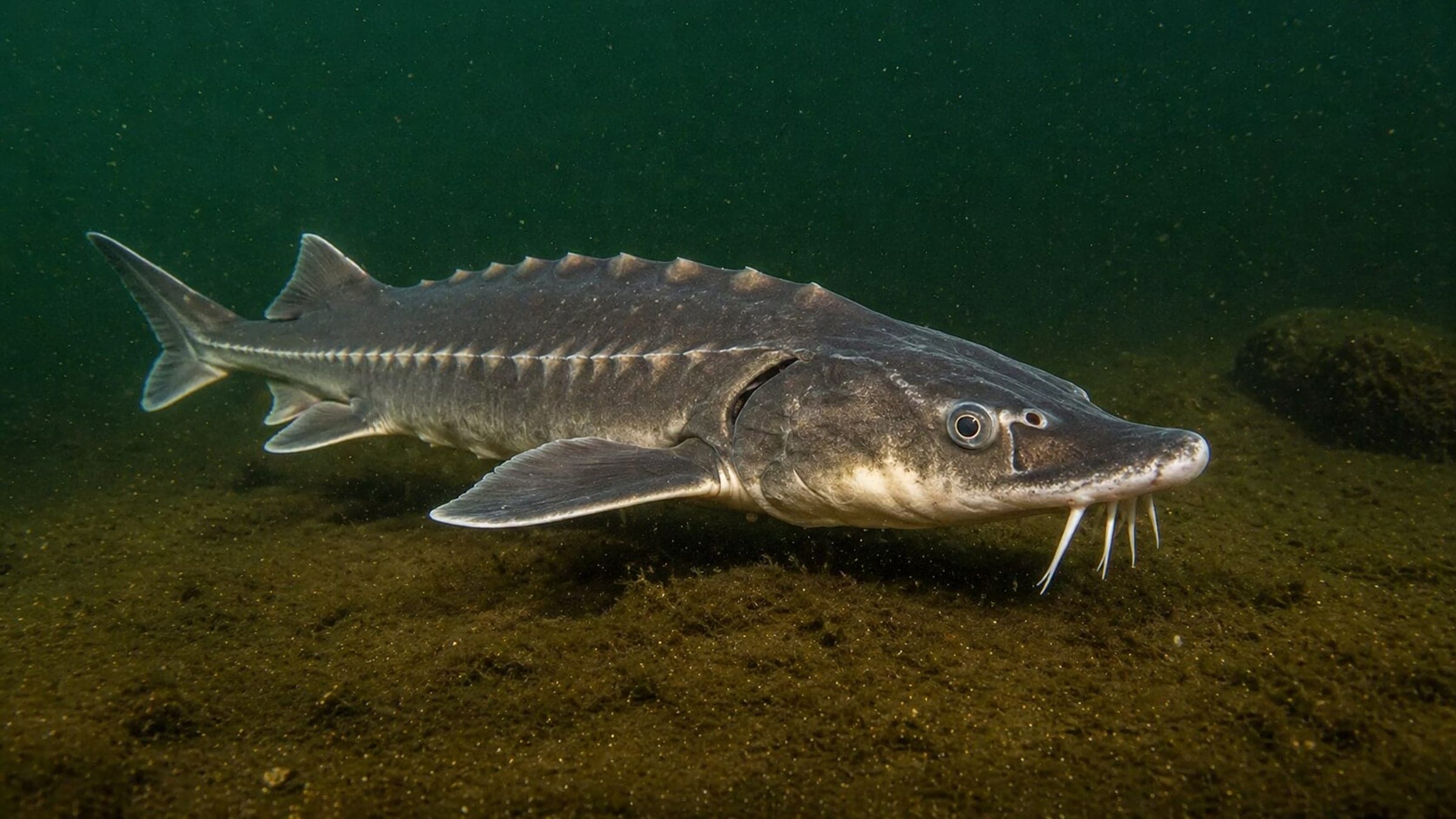
Sturgeon are large, long‑lived, scaleless fishes with bony scutes, found in rivers, lakes, estuaries and coastal waters across Eurasia and North America.
Species Guide
A clean field guide focused on habitat, identification, behavior, and conservation context without burying the useful parts.
“Sturgeon” refers to 27 species in the family Acipenseridae, grouped into five genera (Acipenser, Huso, Scaphirhynchus, Sinosturio and Pseudoscaphirhynchus). They are one of two living families of Acipenseriformes alongside paddlefish. Sturgeons have ancient origins, with sturgeon fossils known from the Late Cretaceous and acipenseriform relatives dating back to the Early Jurassic. Typical features include an elongated, spindle‑like body, smooth, scaleless skin armored by five lateral rows of bony plates called scutes, and a heterocercal caudal fin. Several species reach large sizes (commonly 2–3.5 m / 7–12 ft), and some individuals have been recorded much larger. Many sturgeons are anadromous bottom‑feeders that migrate upstream to spawn and spend much of their lives feeding in river deltas and estuaries; other species are exclusively freshwater or primarily marine and may venture into the open ocean. Several species are harvested for their roe (processed as caviar), and widespread overexploitation combined with other conservation threats has brought most species to critically endangered status.
Widespread overexploitation for roe, combined with other conservation threats, has resulted in severe declines and critical endangerment for most sturgeon species.
Many sturgeon are anadromous bottom‑feeders that migrate upstream to spawn and spend much of their lives feeding in river deltas and estuaries; some species are exclusively freshwater, while others primarily inhabit marine coastal areas and may venture into the open ocean.
The strongest linked planning options currently surface around destinations such as Kreidesee Hemmoor, Raja Ampat, Bonaire and countries such as Germany, Austria, Belgium for divers building trips around sturgeons.
Last Updated Mar 9, 2026 · 2 sources
Identification
The visual markers divers can use underwater, plus the species most likely to cause confusion.
Elongated, spindle‑like body that is smooth and scaleless, armored with five lateral rows of bony scutes.
Heterocercal caudal fin (upper lobe longer than lower), similar in form to that of sharks.
Several species commonly reach 2–3.5 m (7–12 ft); some individuals have been recorded much larger.
Paddlefish are the only other living family in the order Acipenseriformes and may be encountered in some overlapping regions.
Range and Movement
The broad range, seasonal movement, or migratory behavior that shapes where divers encounter this species.
Many sturgeon are anadromous bottom‑feeders that migrate upstream to spawn and spend much of their lives feeding in river deltas and estuaries; some species are exclusively freshwater, while others primarily inhabit marine coastal areas and may venture into the open ocean.
Diet
Useful feeding context that often explains habitat, movement, and encounter style.
Primarily bottom‑feeding; they feed along riverbeds, deltas and estuarine bottoms.
Conservation
Status, pressure, and protection context grounded in cited sources rather than filler.
Widespread overexploitation for roe, combined with other conservation threats, has resulted in severe declines and critical endangerment for most sturgeon species.
Several species are harvested for their roe, and this exploitation has been a major driver of population declines.
The family has faced additional unspecified conservation threats that, together with overexploitation, have pushed many species toward critical endangerment.
Responsible Encounters
Conservation-minded guidance for divers who want the encounter without adding pressure.
Give sturgeon space, avoid blocking the animal's path, and follow local site and operator rules for wildlife interactions with freshwater fishes.
Field Notes
Useful species context that makes the encounter more meaningful once you are underwater.
Sturgeon fossils date to the Late Cretaceous, with acipenseriform relatives known from the Early Jurassic.
The common name covers 27 species in five genera within the family Acipenseridae.
The largest recorded sturgeon was a beluga captured in 1827, measured 7.2 m and weighed 1,571 kg.
Top Destinations
Destinations surfaced from the linked dive spots associated with this species.
Top Countries
The strongest country-level starting points currently linked to this species.
Top Dive Spots
Directly linked dive spots where this species already shows up in the planning data.
Shore-entry training site on Attersee with pebbly shallows and a lake slope.
Alice G is a shallow tug wreck in Tobermory's harbour.
Sheltered lake dive with fish and underwater features.
Advanced deep wreck dive off Saint-Leu, Réunion.
Auesee is a freshwater shore dive with slipway access and fish-rich shallows.
Shallow San Andrés wreck with coral growth and reef fish.
FAQ
Clear planning and conservation answers written for search visibility and AI retrieval.
Research Sources
Primary and credible references behind the field-guide and conservation claims on this page.
Related Species
Related species guides in the same encounter family.