Coloration
Bright orange overall coloration.
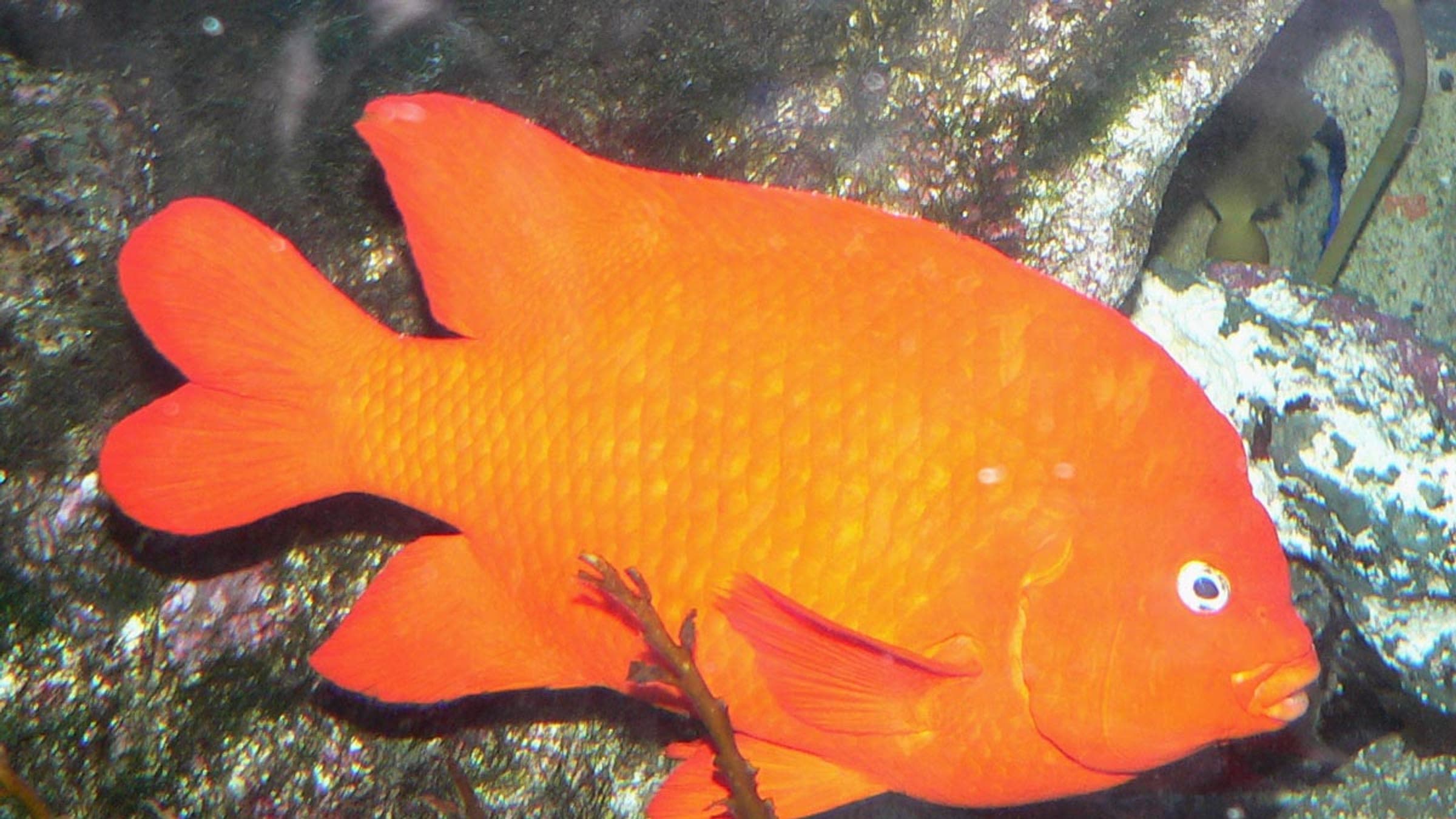
Hypsypops rubicundus
The Garibaldi is a bright orange damselfish found in the subtropical northeastern Pacific Ocean and is protected in California coastal waters.
Species Guide
A clean field guide focused on habitat, identification, behavior, and conservation context without burying the useful parts.
The Garibaldi (Hypsypops rubicundus) is a bright orange member of the damselfish family occurring in the subtropical northeastern Pacific Ocean. It has been the official marine state fish of California since 1995 and is protected in California coastal waters from recreational and commercial fishing. As with all damselfish, male Garibaldis aggressively defend the nest site after the female lays eggs.
Protected in California coastal waters from recreational and commercial fishing since being named the state marine fish in 1995.
The strongest linked planning options currently surface around destinations such as Catalina Island, San Diego and La Jolla and countries such as United States of America, Mexico, Philippines for divers building trips around garibaldi damselfish.
Identification
The visual markers divers can use underwater, plus the species most likely to cause confusion.
Bright orange overall coloration.
Conservation
Last Updated Mar 9, 2026 · 2 sources
Status, pressure, and protection context grounded in cited sources rather than filler.
Protected in California coastal waters from recreational and commercial fishing since being named the state marine fish in 1995.
Official marine state fish of California since 1995.
Protected in California coastal waters from recreational and commercial fishing.
Responsible Encounters
Conservation-minded guidance for divers who want the encounter without adding pressure.
Avoid disturbing nest sites; male Garibaldis aggressively defend nests after eggs are laid.
Field Notes
Useful species context that makes the encounter more meaningful once you are underwater.
The English name references Giuseppe Garibaldi and the scarlet/red shirts worn by his followers.
Top Destinations
Destinations surfaced from the linked dive spots associated with this species.
Top Countries
The strongest country-level starting points currently linked to this species.
Top Dive Spots
Directly linked dive spots where this species already shows up in the planning data.
Catalina's flagship shore dive park with kelp, walls, and easy stairs.
Boat-based Channel Islands reef with kelp, sea lions, and shallow arch sites.
Baring: deep wall dive with strong currents and pelagics.
Encinitas shore dive with rocks, crevices, and moon jellyfish.
Boat-accessed Catalina wall and arch dive with kelp and reef.
Sheltered Catalina kelp-and-reef shore dive off Camp Emerald Bay.
FAQ
Clear planning and conservation answers written for search visibility and AI retrieval.
Research Sources
Primary and credible references behind the field-guide and conservation claims on this page.
Primary wildlife guide source.
Taxonomy reference.
Related Species
Related species guides in the same encounter family.