Colour pattern
Typically show white vertical bars on a background of red, orange, yellow, brown or black.
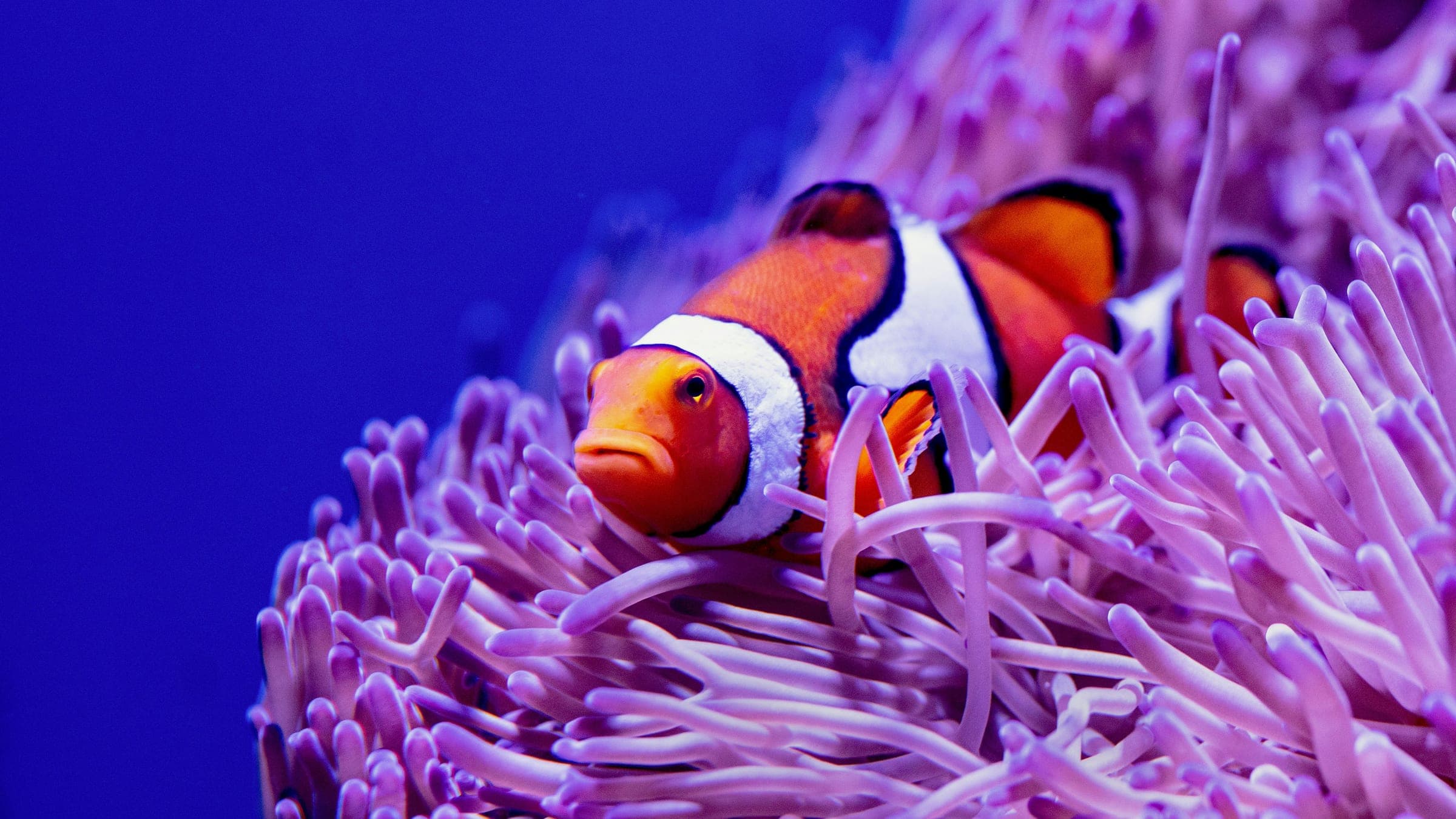
Clownfish (genus Amphiprion) are small Indo-Pacific reef fishes that live symbiotically with sea anemones and show distinctive white-barred colour patterns.
Species Guide
A clean field guide focused on habitat, identification, behavior, and conservation context without burying the useful parts.
Clownfish or anemonefishes (genus Amphiprion) are saltwater fish found in the warm tropical waters of the Indo-Pacific. They mainly inhabit coral reefs and typically show white vertical bars on a red, orange, yellow, brown or black background. Clownfish developed a symbiotic, mutually beneficial relationship with sea anemones: they rely on anemones for shelter and protection, and in return they help protect the anemone from anemone-eating fish, clean and fan it, and attract beneficial microorganisms with their waste.
Clownfish are omnivorous and mostly feed on plankton. They live in groups consisting of a breeding female and breeding male plus non-breeding individuals, organized by a size-based dominance hierarchy. If the breeding female disappears, the breeding male changes sex and becomes the new breeding female while others move up the hierarchy. For reproduction, the female deposits eggs on a rock near the anemone and the male fertilises them. After hatching, larvae disperse into the open ocean and later settle on the bottom, searching for an anemone host as juveniles.
Their recognisable colour patterns and social behaviour have made them popular in the aquarium trade and in popular culture.
The strongest linked planning options currently surface around destinations such as Okinawa, Coral Coast, Viti Levu, Rakiraki and Vatu-i-Ra / Bligh Water and countries such as Japan, Australia, Thailand for divers building trips around clownfish.
Last Updated Mar 9, 2026 · 4 sources
Identification
The visual markers divers can use underwater, plus the species most likely to cause confusion.
Typically show white vertical bars on a background of red, orange, yellow, brown or black.
Usually found on coral reefs in close association with sea anemones.
Live in groups with a size-based dominance hierarchy including a breeding female and male.
Range and Movement
The broad range, seasonal movement, or migratory behavior that shapes where divers encounter this species.
After hatching, clownfish larvae disperse into the open ocean before settling on the bottom and searching for anemone hosts as juveniles.
Diet
Useful feeding context that often explains habitat, movement, and encounter style.
Omnivorous; mostly feed on plankton.
Conservation
Status, pressure, and protection context grounded in cited sources rather than filler.
Populations have been reduced in places by collection for the aquarium trade; they tend to be more numerous inside marine protected areas. Ocean warming and acidification are additional threats.
Many captive clownfish were taken from the wild for the aquarium trade, contributing to population declines in some areas.
Global warming causing ocean warming and acidification is listed as a threat to clownfish populations.
Clownfish are more numerous in marine protected areas where collecting is forbidden.
Responsible Encounters
Conservation-minded guidance for divers who want the encounter without adding pressure.
Give clownfish space, avoid blocking the animal's path, and follow local site and operator rules for wildlife interactions with saltwater fishes.
Field Notes
Useful species context that makes the encounter more meaningful once you are underwater.
Clownfish were featured in the film Finding Nemo (2003).
The ocellaris clownfish is among the most commonly traded marine fish.
Breeding males can change sex to become breeding females if the female disappears.
Top Destinations
Destinations surfaced from the linked dive spots associated with this species.
Top Countries
The strongest country-level starting points currently linked to this species.
Top Dive Spots
Directly linked dive spots where this species already shows up in the planning data.
Beginner-friendly Kerama coral-garden dive off Aka Island.
Kerama reef known for fire coral and many anemonefish.
Outer ribbon reef with plate corals, walls and clear blue water.
Coral-head cluster with swim-throughs and a strong night dive.
Calm Zamami beach dive known for turtles and easy snorkeling.
Maze-like pinnacle line with multiple swim-throughs.
Diver Sightings
Approved diver reports where clownfish were recently tagged.
FAQ
Clear planning and conservation answers written for search visibility and AI retrieval.
Research Sources
Primary and credible references behind the field-guide and conservation claims on this page.
Primary wildlife guide source.
Supporting wildlife source.
Supporting wildlife source.
Supporting wildlife source.
Related Species
Related species guides in the same encounter family.