Body shape
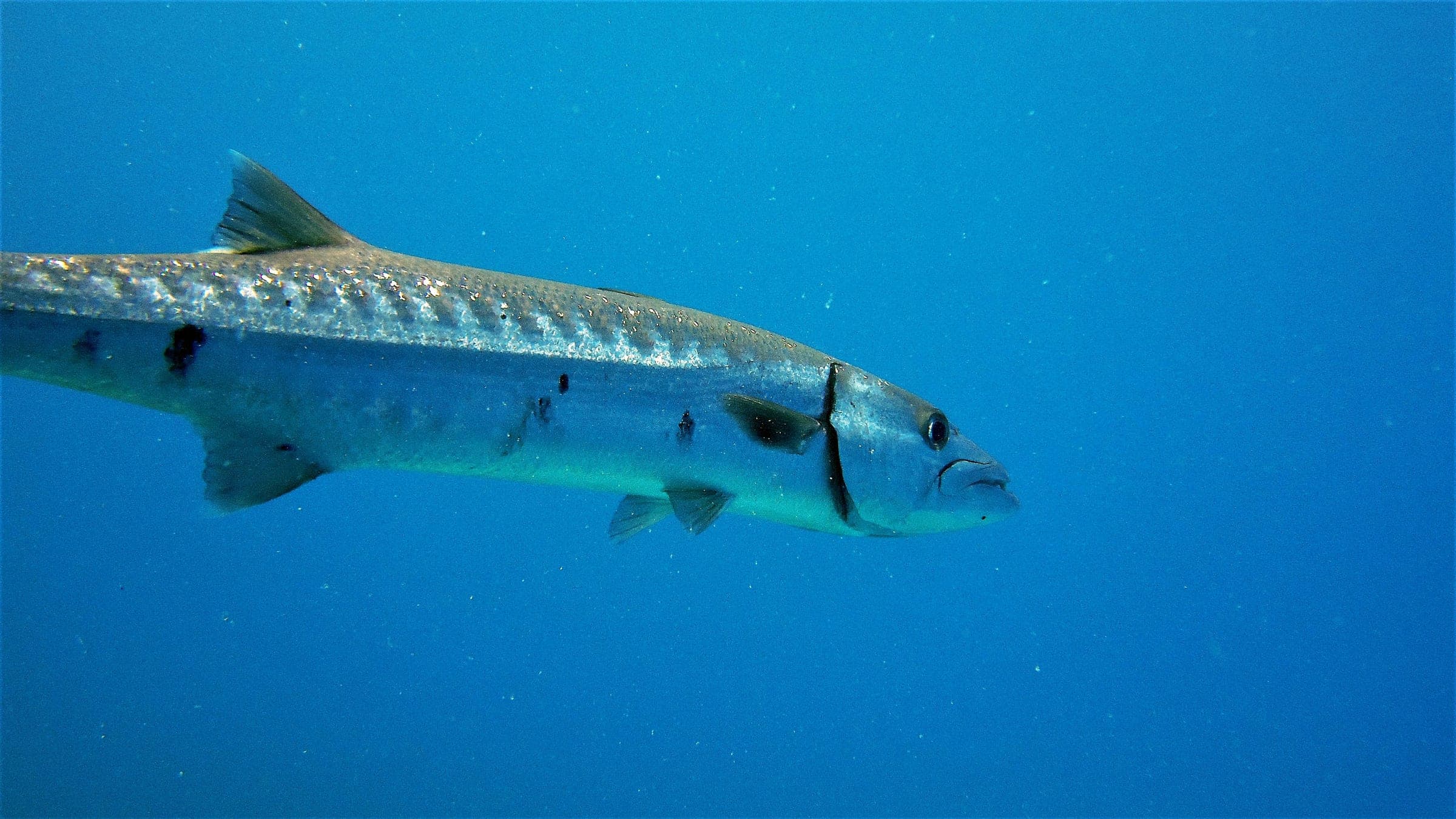
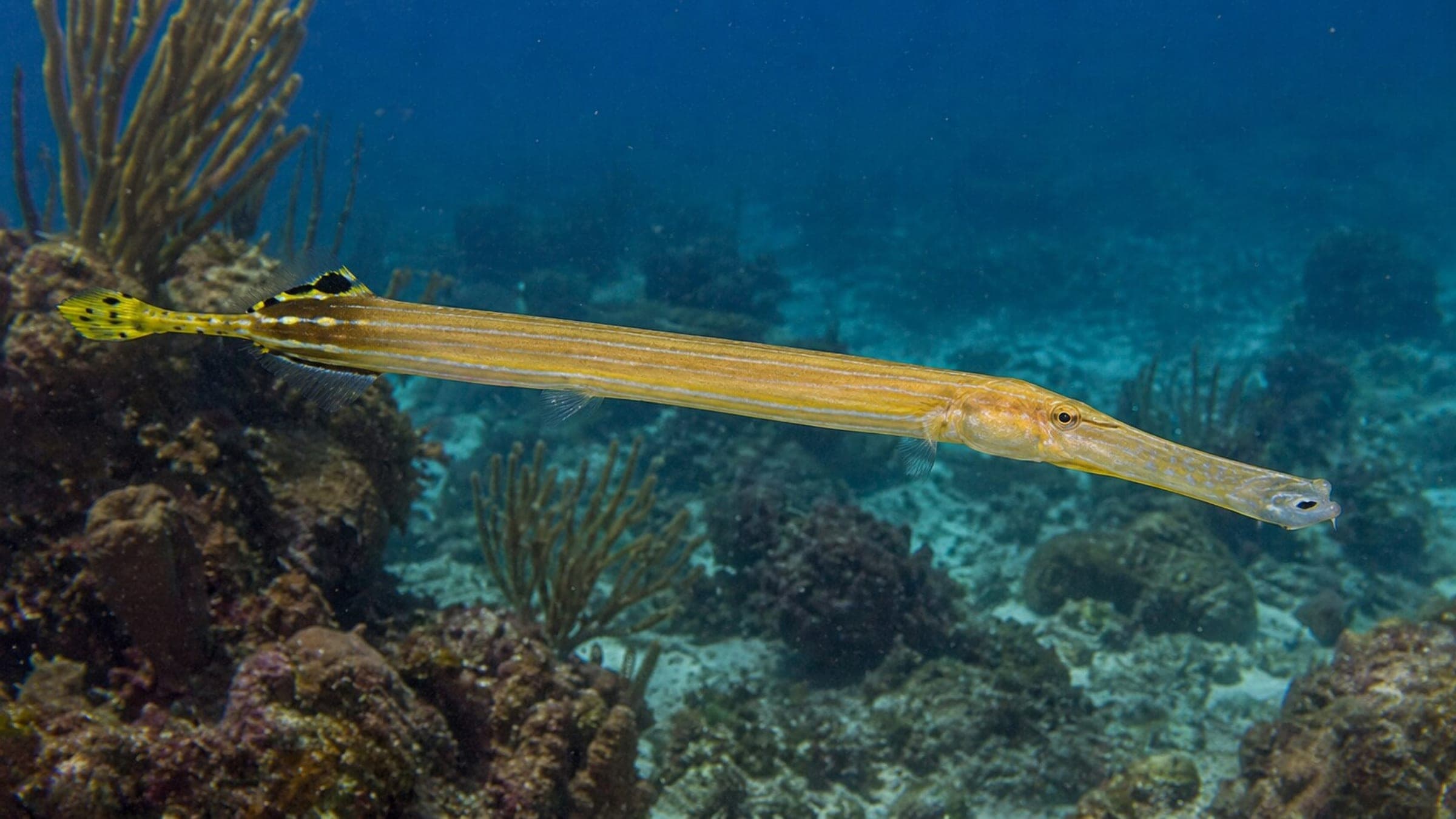
Rigid, elongated, pike-shaped body supported by interwoven bony struts.
Trumpetfishes are elongated, tube-snouted reef fishes that ambush small schooling reef fishes using rapid jaw expansion and suction.
Last Updated Mar 9, 2026 · 2 sources
Species Guide
A clean field guide focused on habitat, identification, behavior, and conservation context without burying the useful parts.
Trumpetfishes (genus Aulostomus) are three specialized marine species with tubular snouts, rigid elongated bodies, and dorsal and anal fins set close to the tail. They occur in tropical waters worldwide (two Atlantic species, one Indo-Pacific) and are mostly demersal reef-dwellers, with one species favoring rocky substrate. Individuals can reach almost 1 m in length. Like other Syngnathiformes, their bodies are relatively inflexible, supported by interwoven bony struts. Their long, tube-shaped snouts end in jaws that can rapidly expand into a circular gape nearly the body's diameter to create strong suction when feeding. Trumpetfishes hover motionlessly a few inches above the substrate to stalk prey and feed almost exclusively on small, schooling reef fishes. They have no significant commercial fishery value but sometimes appear in the aquarium trade.
They stalk prey by hovering almost motionlessly a few inches above the substrate and then quickly darting forward to capture prey.
Highly carnivorous, feeding almost exclusively on small, schooling reef fishes using suction generated by rapid jaw expansion.
At the country level, the clearest linked starting points on this guide currently point to Spain for divers looking for trumpetfish.
Identification
The visual markers divers can use underwater, plus the species most likely to cause confusion.

Rigid, elongated, pike-shaped body supported by interwoven bony struts.
Long, tubular snout (tube-shaped mouth) distinctive of the genus.
Relatively large reef fish, reaching almost 1 m in length.
Dorsal and anal fins are set closely adjacent to the tail; individual dorsal spines reach midway towards the head region.
Capability to rapidly expand jaws into a circular, gaping hole nearly the body's diameter when feeding.
Closely related fishes (family Fistulariidae) with similar elongated bodies; the term "flutemouth" is also sometimes used for cornetfishes.
Range and Movement
The broad range, seasonal movement, or migratory behavior that shapes where divers encounter this species.
They stalk prey by hovering almost motionlessly a few inches above the substrate and then quickly darting forward to capture prey.
Diet
Useful feeding context that often explains habitat, movement, and encounter style.
Highly carnivorous, feeding almost exclusively on small, schooling reef fishes using suction generated by rapid jaw expansion.
Responsible Encounters
Conservation-minded guidance for divers who want the encounter without adding pressure.
Give trumpetfish space, avoid blocking the animal's path, and follow local site and operator rules for wildlife interactions with saltwater fishes.
Field Notes
Useful species context that makes the encounter more meaningful once you are underwater.
Aulostomus derives from Greek words meaning "flute" and "mouth," referencing the tube-shaped snout.
They can expand their jaws rapidly into a circular gape nearly the diameter of their body to create strong suction.
Although not a commercial fishery species, trumpetfishes are sometimes found in the aquarium trade and have keeping guides available.
Top Countries
The strongest country-level starting points currently linked to this species.
Top Dive Spots
Directly linked dive spots where this species already shows up in the planning data.
FAQ
Clear planning and conservation answers written for search visibility and AI retrieval.
Research Sources
Primary and credible references behind the field-guide and conservation claims on this page.
Primary wildlife guide source.
Supporting wildlife source.
Related Species
Related species guides in the same encounter family.