Colour
All-white colour in adults, unique among cetaceans for regularly occurring white coloration.
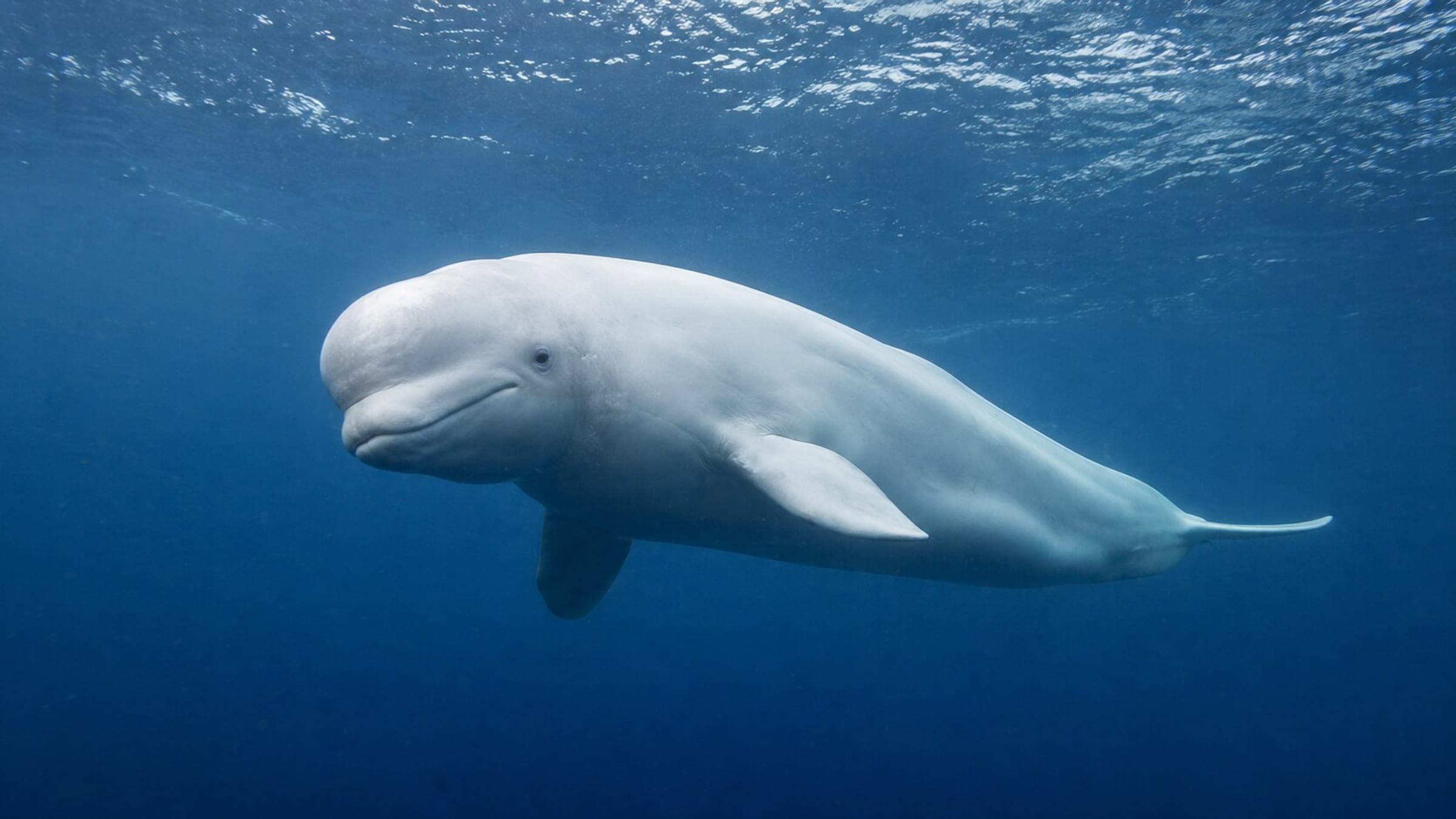
Delphinapterus leucas
An Arctic and sub-Arctic cetacean notable for its white colour, rounded melon, and absence of a dorsal fin.
Species Guide
A clean field guide focused on habitat, identification, behavior, and conservation context without burying the useful parts.
The beluga whale (Delphinapterus leucas) is an Arctic and sub-Arctic cetacean and one of two living members of the family Monodontidae, the other being the narwhal. It is the only member of the genus Delphinapterus. Belugas are characteristically all white and lack a dorsal fin, adaptations that facilitate swimming under ice. They have a large, deformable protuberance at the front of the head called the melon, used for echolocation; hearing and echolocation are highly developed and help locate breathing holes under sheet ice. Adult males can reach about 5.5 m (18 ft) in length and weigh up to 1,600 kg (3,530 lb). Belugas have a stocky body with a high proportion of blubber. They are gregarious, typically forming groups averaging around 10 animals, though in summer they may gather in the hundreds or thousands in estuaries and shallow coastal areas. They are relatively slow swimmers but can dive to depths of about 700 m (2,300 ft). Belugas are migratory in many populations, moving with seasonal ice changes to estuaries and coastal areas in summer, while some populations are more sedentary. They are opportunistic feeders, with diets that vary by location and season. The global population is thought to be around 200,000, though some subpopulations have declined considerably.
Belugas face threats from hunting, contamination (including PCBs), predation, climate change, and infectious diseases; some regional populations have declined substantially while others remain more stable.
Many beluga populations are migratory, wintering around the Arctic ice cap and moving to river estuaries and coastal areas in summer; some populations are sedentary and do not migrate long distances.
At the country level, the clearest linked starting points on this guide currently point to Canada for divers looking for beluga whales.
Last Updated Mar 9, 2026 · 4 sources
Identification
The visual markers divers can use underwater, plus the species most likely to cause confusion.
All-white colour in adults, unique among cetaceans for regularly occurring white coloration.
No dorsal fin, an adaptation that aids swimming under ice.
A large, deformable protuberance at the front of the head houses the echolocation organ.
Stocky body; males can grow up to about 5.5 m (18 ft) and weigh up to 1,600 kg (3,530 lb).
A large percentage of body weight is blubber (subcutaneous fat).
The name 'melonhead' is sometimes applied to belugas but more commonly refers to the melon-headed whale, an oceanic dolphin.
Range and Movement
The broad range, seasonal movement, or migratory behavior that shapes where divers encounter this species.
Many beluga populations are migratory, wintering around the Arctic ice cap and moving to river estuaries and coastal areas in summer; some populations are sedentary and do not migrate long distances.
Diet
Useful feeding context that often explains habitat, movement, and encounter style.
Opportunistic feeders; diet composition varies with location and season.
Population
Published estimates when credible, or an explicit note when no reliable global count exists.
Worldwide population is thought to be around 200,000, while some regional subpopulations have declined substantially (for example, Cook Inlet is critically endangered).
Conservation
Status, pressure, and protection context grounded in cited sources rather than filler.
Belugas face threats from hunting, contamination (including PCBs), predation, climate change, and infectious diseases; some regional populations have declined substantially while others remain more stable.
Native and some non-native hunts occur; regulations differ by country and aboriginal whaling is excluded from the IWC moratorium.
Pollutants such as polychlorinated biphenyls (PCBs) bioaccumulate in rivers and food chains, posing health risks.
Natural predators include polar bears and killer whales.
Changes to sea ice and Arctic environments affect habitat and seasonal movements.
Diseases can impact populations alongside other stressors.
The Cook Inlet subpopulation in Alaska is protected under the U.S. Endangered Species Act.
Aboriginal whaling is excluded from the IWC 1986 moratorium, allowing certain indigenous hunts for consumption and sale.
Responsible Encounters
Conservation-minded guidance for divers who want the encounter without adding pressure.
Give beluga whale space, avoid blocking the animal's path, and follow local site and operator rules for wildlife interactions with whales.
Field Notes
Useful species context that makes the encounter more meaningful once you are underwater.
They are nicknamed the 'sea canary' for their high-pitched calls.
While groups average about 10 individuals, belugas can gather in the hundreds or thousands in summer estuaries and shallow coastal areas.
They can dive to depths of approximately 700 m (2,300 ft).
Belugas are among the most commonly kept cetaceans in aquariums and wildlife parks in North America, Europe and Asia.
Top Countries
The strongest country-level starting points currently linked to this species.
Top Dive Spots
Directly linked dive spots where this species already shows up in the planning data.
Sheltered cold-water anemone bay with easy shore access
Cold-water ice diving in Russia with rock walls and Arctic wildlife.
FAQ
Clear planning and conservation answers written for search visibility and AI retrieval.
Research Sources
Primary and credible references behind the field-guide and conservation claims on this page.
Primary wildlife guide source.
Supporting wildlife source.
Supporting wildlife source.
Supporting wildlife source.
Related Species
Related species guides in the same encounter family.