Size
Extremely large: up to about 29.9–30.5 m in length and up to ~190–200 tonnes in weight.
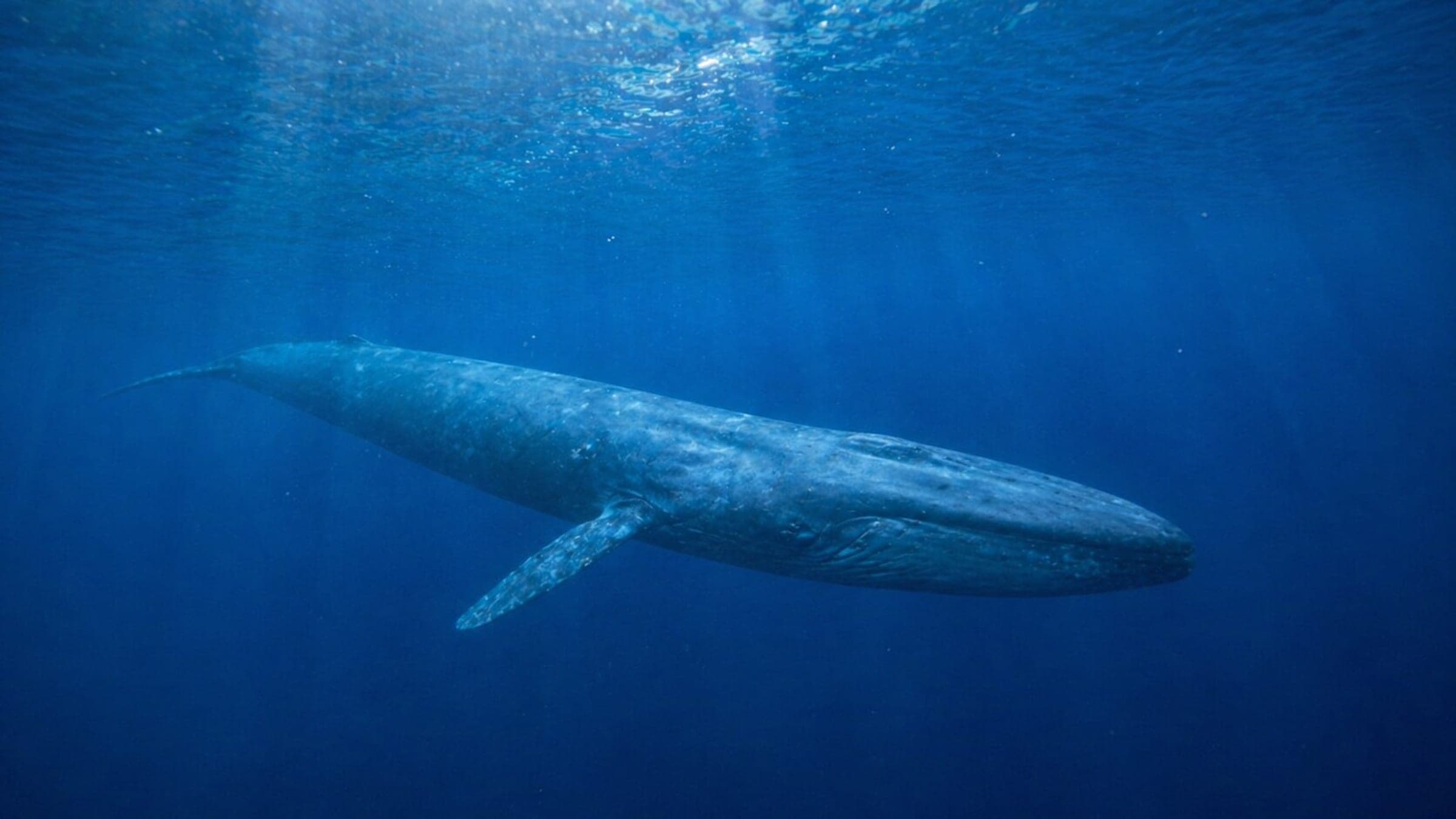
Species Guide
A clean field guide focused on habitat, identification, behavior, and conservation context without burying the useful parts.
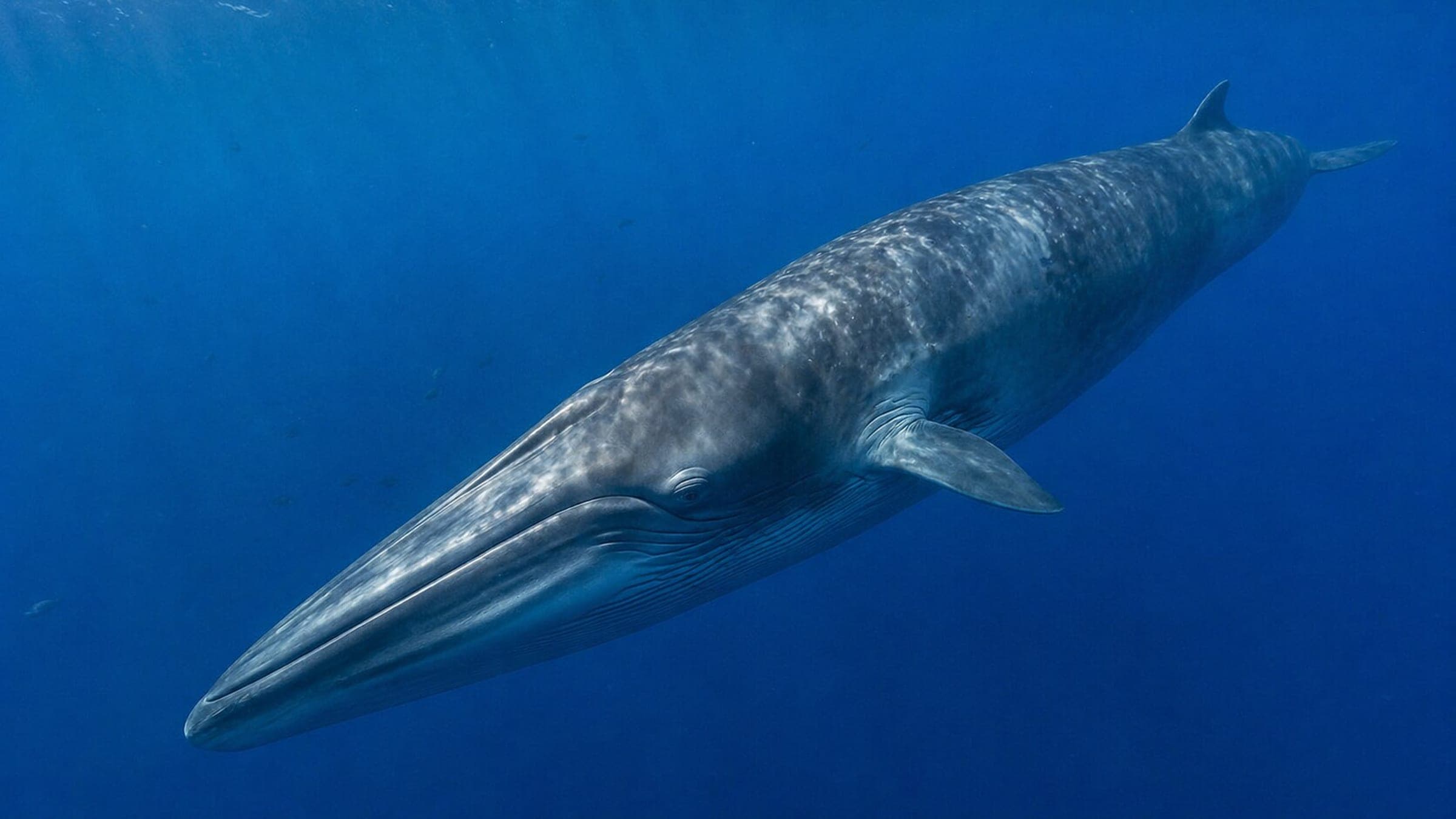
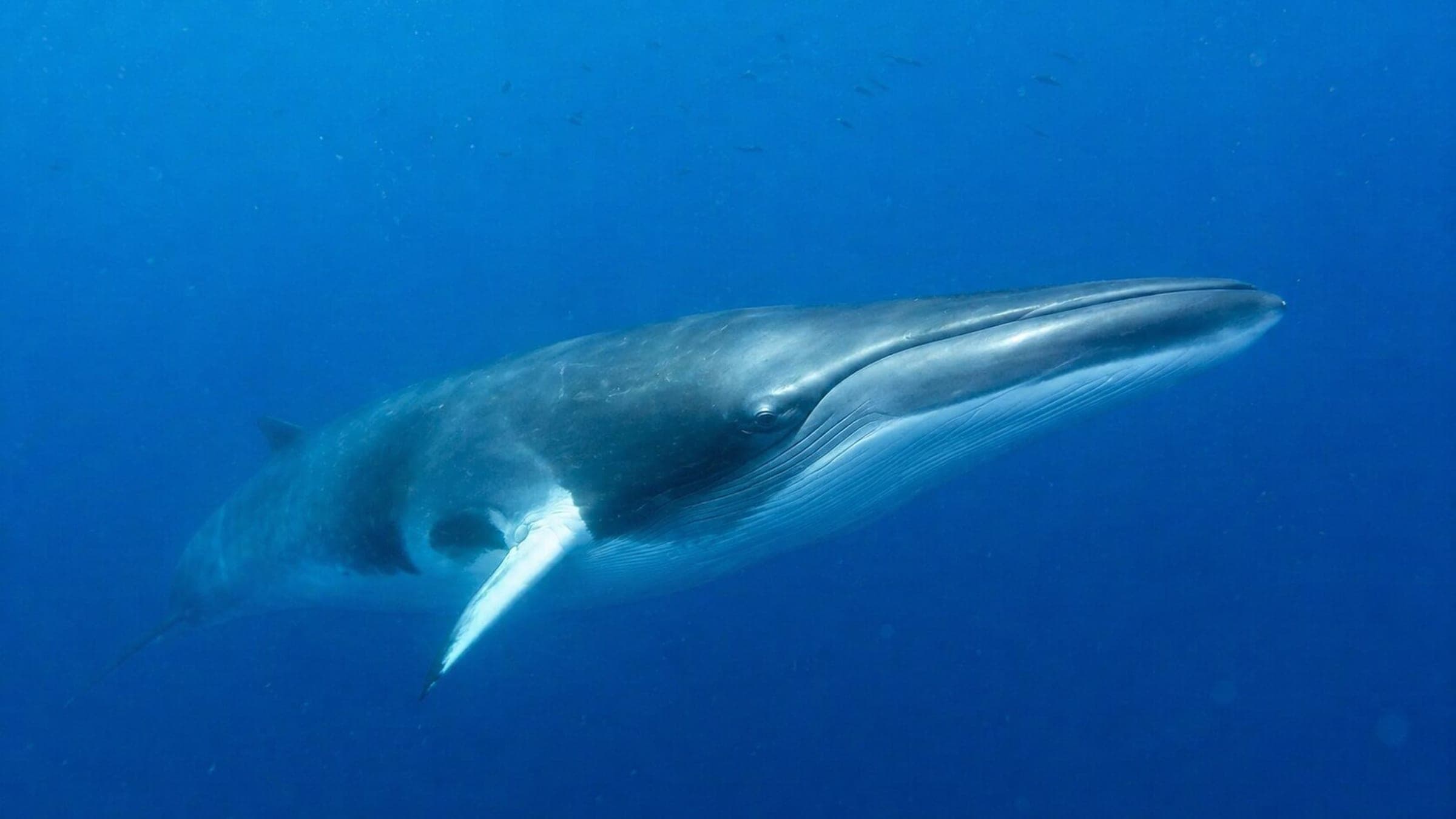
The blue whale (Balaenoptera musculus) is a baleen whale and the largest marine mammal in the rorqual family. Individuals reach confirmed lengths up to about 29.9–30.5 m and can weigh up to about 190–200 tonnes. Their long, slender bodies are various shades of greyish-blue above and somewhat lighter underneath. Four subspecies are recognized across ocean basins, with at least one additional population off Chile that may represent a fifth. Blue whales generally migrate between summer feeding areas near the poles and winter breeding grounds nearer the tropics, although some populations show year-round residency or partial (age- or sex-related) migration. They are filter feeders that consume almost exclusively krill, are typically solitary or occur in small groups, and show strong mother–calf bonds. Blue whales vocalize at very low frequencies (fundamental frequency roughly 8–25 Hz), with calls that vary by region, season, behavior, and time of day. The species was hunted heavily until mid-20th century whaling bans; it is listed as Endangered by the IUCN and continues to face threats from ship strikes, pollution, ocean noise, and climate change.
Blue whales were heavily hunted until mid-20th century and remain listed as Endangered; current threats include ship strikes, pollution, ocean noise, and climate change.
Generally migrate between summer feeding areas near the poles and winter breeding grounds near the tropics; some populations show year-round residency or partial/age- and sex-based migration.
At the country level, the clearest linked starting points on this guide currently point to Canada for divers looking for blue whales.
Identification
The visual markers divers can use underwater, plus the species most likely to cause confusion.
Extremely large: up to about 29.9–30.5 m in length and up to ~190–200 tonnes in weight.
Long, slender body typical of rorquals.
Various shades of greyish-blue on the upper surface and somewhat lighter underneath.
Range and Movement
The broad range, seasonal movement, or migratory behavior that shapes where divers encounter this species.
Generally migrate between summer feeding areas near the poles and winter breeding grounds near the tropics; some populations show year-round residency or partial/age- and sex-based migration.
Diet
Useful feeding context that often explains habitat, movement, and encounter style.
Filter feeder that feeds almost exclusively on krill.
Conservation
Status, pressure, and protection context grounded in cited sources rather than filler.
Blue whales were heavily hunted until mid-20th century and remain listed as Endangered; current threats include ship strikes, pollution, ocean noise, and climate change.
Blue whales were hunted almost to the point of extinction by whalers prior to international protections.
Collisions with vessels are listed as a continuing man-made threat.
Pollution in the marine environment is a cited threat.
Anthropogenic ocean noise can affect blue whale behavior and communication.
Changing climate is identified as a threat, with potential impacts on prey distribution and habitat.
The IWC banned blue whale hunting in 1966.
Listed as Endangered on the IUCN Red List (assessment year 2018).
Responsible Encounters
Conservation-minded guidance for divers who want the encounter without adding pressure.
Give blue whale space, avoid blocking the animal's path, and follow local site and operator rules for wildlife interactions with whales.
Field Notes
Useful species context that makes the encounter more meaningful once you are underwater.
The blue whale is the largest animal known to have ever existed.
Their vocalizations have fundamental frequencies around 8–25 Hz.
Top Countries
The strongest country-level starting points currently linked to this species.
Top Dive Spots
Directly linked dive spots where this species already shows up in the planning data.

Sheltered cold-water anemone bay with easy shore access
FAQ
Clear planning and conservation answers written for search visibility and AI retrieval.
Research Sources
Primary and credible references behind the field-guide and conservation claims on this page.
Primary wildlife guide source.
Supporting wildlife source.
Supporting wildlife source.
Supporting wildlife source.
Related Species
Related species guides in the same encounter family.