Genus and size
Pilot whales belong to the genus Globicephala and are among the largest oceanic dolphins, second in size only to the orca.
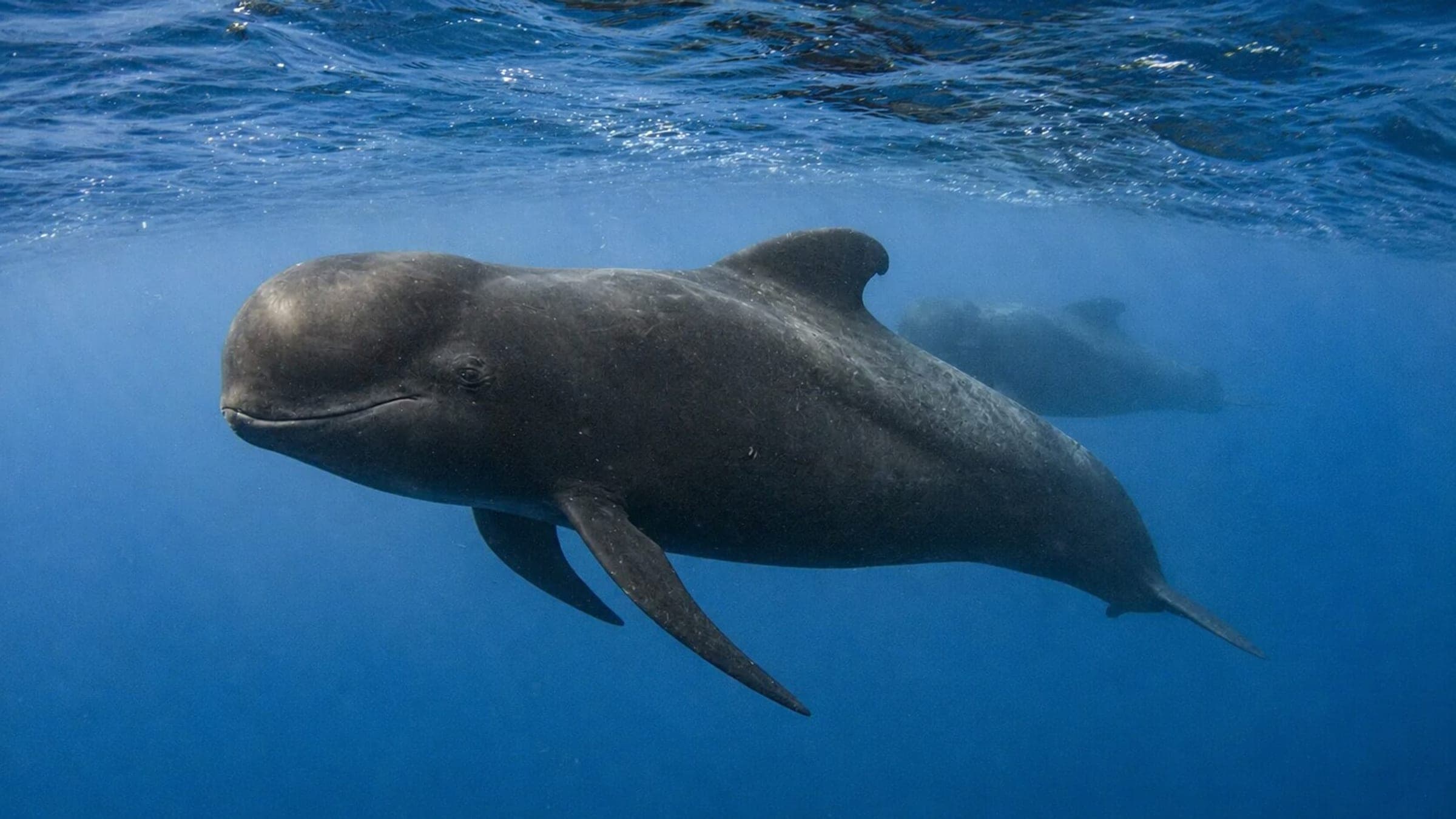
Pilot whales are large, highly social oceanic dolphins in the genus Globicephala found across many oceans.
Species Guide
A clean field guide focused on habitat, identification, behavior, and conservation context without burying the useful parts.
Pilot whales are cetaceans of the genus Globicephala with two extant species: the long-finned pilot whale (G. melas) and the short-finned pilot whale (G. macrorhynchus). They are among the largest oceanic dolphins, exceeded in size only by the orca, and are also referred to as blackfish. The two species are not readily distinguishable at sea; skull analysis is the most reliable method for species-level identification. Long-finned pilot whales inhabit colder waters, while short-finned pilot whales occur in tropical and subtropical waters. Pilot whales feed primarily on squid and will also hunt large demersal fish such as cod and turbot. They are highly social, often remaining with their birth pod for life. Short-finned pilot whale females undergo menopause and postreproductive females continue to contribute to their pods. Pilot whales are known to strand on beaches, and some research links strandings to damage to their inner ear from underwater noise pollution. The conservation status of both long-finned and short-finned pilot whales is assessed as Least Concern.
Both the long-finned and short-finned pilot whales have been assessed as Least Concern.
Highly social; individuals may remain with their birth pod throughout their lifetime.
The strongest linked planning options currently surface around destinations such as Cape Town, Guam, Raja Ampat and countries such as Guam, Indonesia, Northern Mariana Islands for divers building trips around pilot whales.
Last Updated Mar 9, 2026 · 2 sources
Identification
The visual markers divers can use underwater, plus the species most likely to cause confusion.
Pilot whales belong to the genus Globicephala and are among the largest oceanic dolphins, second in size only to the orca.
There are long-finned and short-finned species; long-finned occur in colder waters, short-finned in tropical and subtropical waters.
The two species are not readily distinguishable at sea; skull analysis is the most reliable identification method.
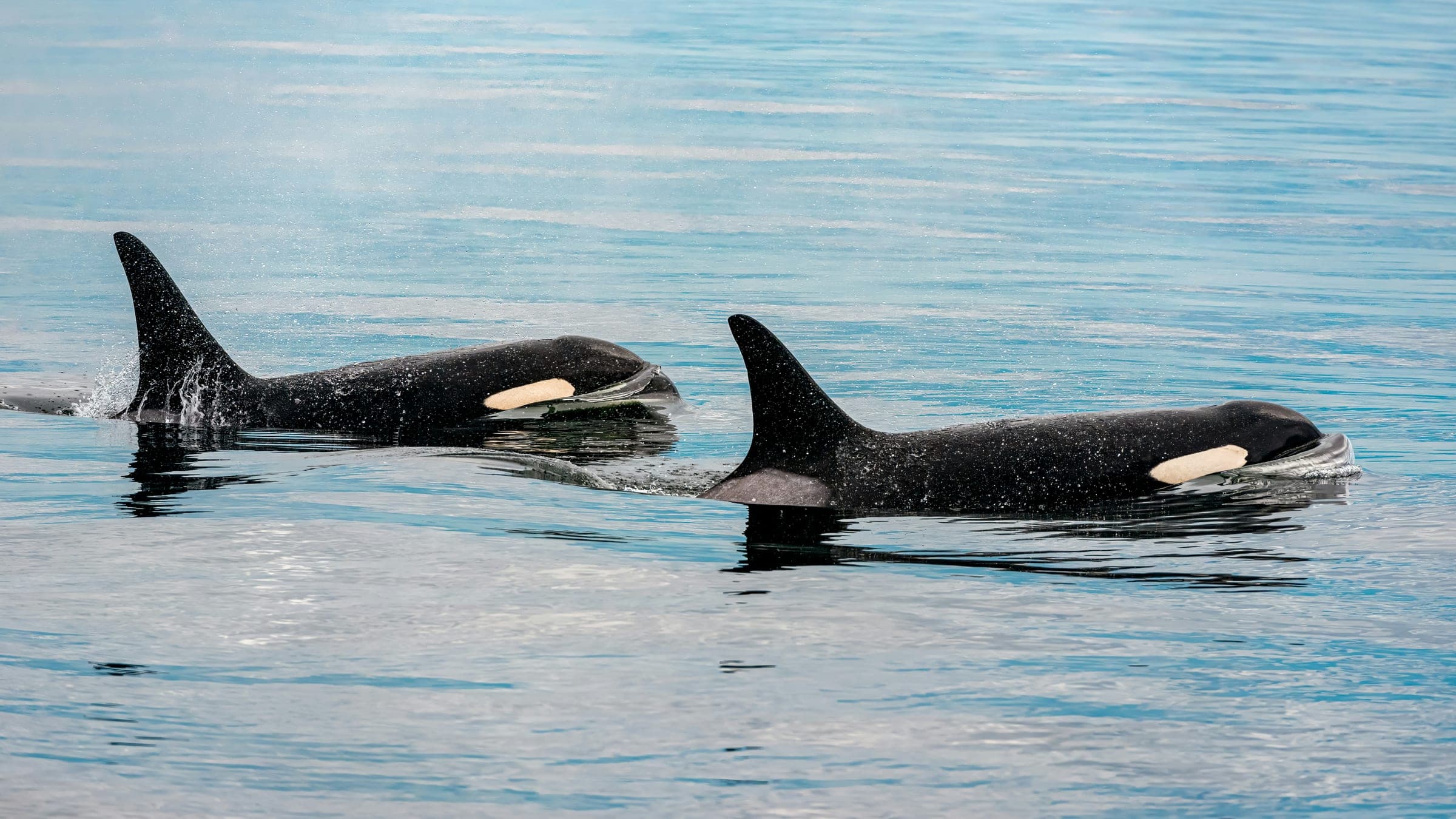
Orcas are larger than pilot whales; pilot whales are among the largest dolphins but are exceeded in size by orcas.
Range and Movement
The broad range, seasonal movement, or migratory behavior that shapes where divers encounter this species.
Highly social; individuals may remain with their birth pod throughout their lifetime.
Diet
Useful feeding context that often explains habitat, movement, and encounter style.
Primarily squid, and also large demersal fish such as cod and turbot.
Conservation
Status, pressure, and protection context grounded in cited sources rather than filler.
Both the long-finned and short-finned pilot whales have been assessed as Least Concern.
Underwater noise from sources such as cargo ships or military exercises can damage pilot whales' inner ear (their principal navigational sonar), which has been suggested as a factor in beach strandings.
Pilot whales are notable for mass strandings on beaches; the underlying reasons are not fully understood and may be linked to sensory impairment.
Responsible Encounters
Conservation-minded guidance for divers who want the encounter without adding pressure.
Give pilot whale space, avoid blocking the animal's path, and follow local site and operator rules for wildlife interactions with whales.
Field Notes
Useful species context that makes the encounter more meaningful once you are underwater.
Short-finned pilot whale females undergo menopause and postreproductive females continue to play a role in their pods.
Pilot whales are notorious for stranding themselves on beaches, a phenomenon not fully understood.
Top Destinations
Destinations surfaced from the linked dive spots associated with this species.
Top Countries
The strongest country-level starting points currently linked to this species.
Top Dive Spots
Directly linked dive spots where this species already shows up in the planning data.
Crazy Eight is a boat-accessed Red Sea reef with a deep drop-off.
Gam-side pinnacle dive with sharks and current
Boat-accessed Bohol Sea site with drift walls and marine life.
Sharks Pit: boat-accessed WWII pinnacle and macro site.
Sunlit cavern dive on Saipan's northeast coast.
A boat-based Cape Point shark trip with blue and mako sharks.
FAQ
Clear planning and conservation answers written for search visibility and AI retrieval.
Research Sources
Primary and credible references behind the field-guide and conservation claims on this page.
Primary wildlife guide source.
Supporting wildlife source.
Related Species
Related species guides in the same encounter family.