Size
Adults reach about 14.9–15.2 m (49–50 ft) in length and weigh roughly 41–45 tonnes.
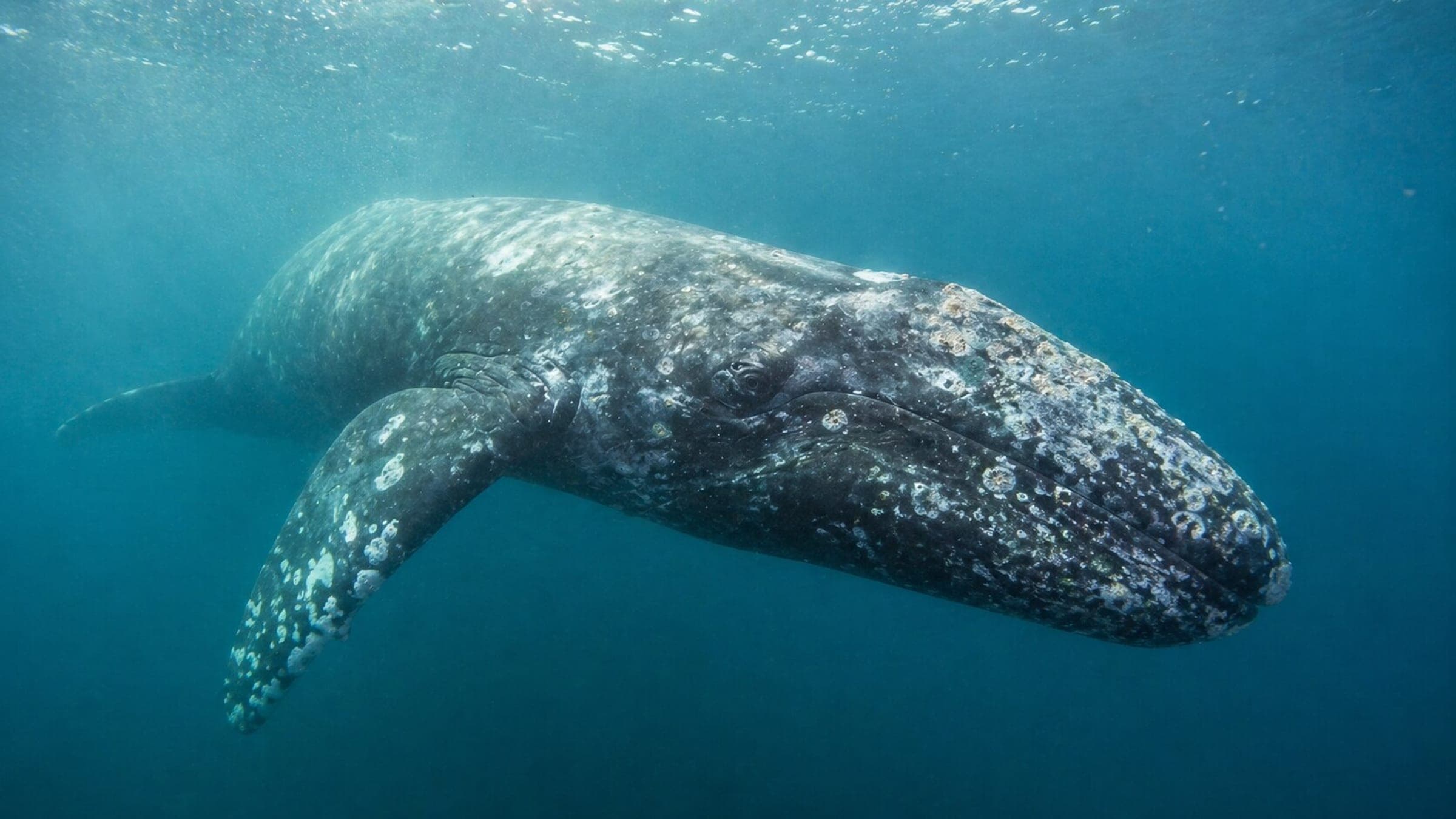
Eschrichtius robustus
The gray whale is a baleen whale that migrates annually between feeding and breeding grounds and can reach about 15 m in length.
Species Guide
A clean field guide focused on habitat, identification, behavior, and conservation context without burying the useful parts.
The gray whale (Eschrichtius robustus) is a baleen whale known for annual migrations between feeding and breeding grounds. Adults reach about 14.9–15.2 m (49–50 ft) in length and can weigh roughly 41–45 tonnes. Its dark skin shows gray patches and white mottling, which give the species its common name. Gray whales can live many decades, commonly 55–70 years, with some individuals estimated older. The species includes a Northeast Pacific population and an endangered Northwest Pacific population. North Atlantic populations were extirpated historically, though rare sightings in Atlantic and Mediterranean waters have occurred in the 2010s and 2020s.
The species includes a Northeast Pacific population and an endangered Northwest Pacific population; North Atlantic populations were extirpated historically, and rare Atlantic and Mediterranean sightings have occurred in the 2010s–2020s.
Gray whales undertake annual migrations between feeding and breeding grounds.
At the country level, the clearest linked starting points on this guide currently point to United States of America for divers looking for grey whales.
Identification
The visual markers divers can use underwater, plus the species most likely to cause confusion.
Adults reach about 14.9–15.2 m (49–50 ft) in length and weigh roughly 41–45 tonnes.
Last Updated Mar 9, 2026 · 3 sources
Dark skin with gray patches and white mottling; common name derives from this patterning.
Individuals commonly live 55–70 years, with some estimated older.
Range and Movement
The broad range, seasonal movement, or migratory behavior that shapes where divers encounter this species.
Gray whales undertake annual migrations between feeding and breeding grounds.
Diet
Useful feeding context that often explains habitat, movement, and encounter style.
Baleen whale that feeds by filter-feeding on small prey using baleen.
Conservation
Status, pressure, and protection context grounded in cited sources rather than filler.
The species includes a Northeast Pacific population and an endangered Northwest Pacific population; North Atlantic populations were extirpated historically, and rare Atlantic and Mediterranean sightings have occurred in the 2010s–2020s.
Responsible Encounters
Conservation-minded guidance for divers who want the encounter without adding pressure.
Give grey whale space, avoid blocking the animal's path, and follow local site and operator rules for wildlife interactions with whales.
Field Notes
Useful species context that makes the encounter more meaningful once you are underwater.
Gray whales are the only living species in the genus Eschrichtius and historically the only living genus in family Eschrichtiidae.
Some recent studies classify the gray whale within the family Balaenopteridae.
They were once called 'devil fish' due to fighting behavior when hunted.
Some individuals have been estimated to reach ages beyond the common 55–70 year range.
Top Countries
The strongest country-level starting points currently linked to this species.
Top Dive Spots
Directly linked dive spots where this species already shows up in the planning data.
Lone Ranch Beach is a kelp-lined shore dive with surf and boulder access.
Boat-only Channel Islands diving with kelp, walls, and sheltered snorkeling.
FAQ
Clear planning and conservation answers written for search visibility and AI retrieval.
Research Sources
Primary and credible references behind the field-guide and conservation claims on this page.
Primary wildlife guide source.
Supporting wildlife source.
Taxonomy reference.
Related Species
Related species guides in the same encounter family.