Streamlined body with a single blowhole
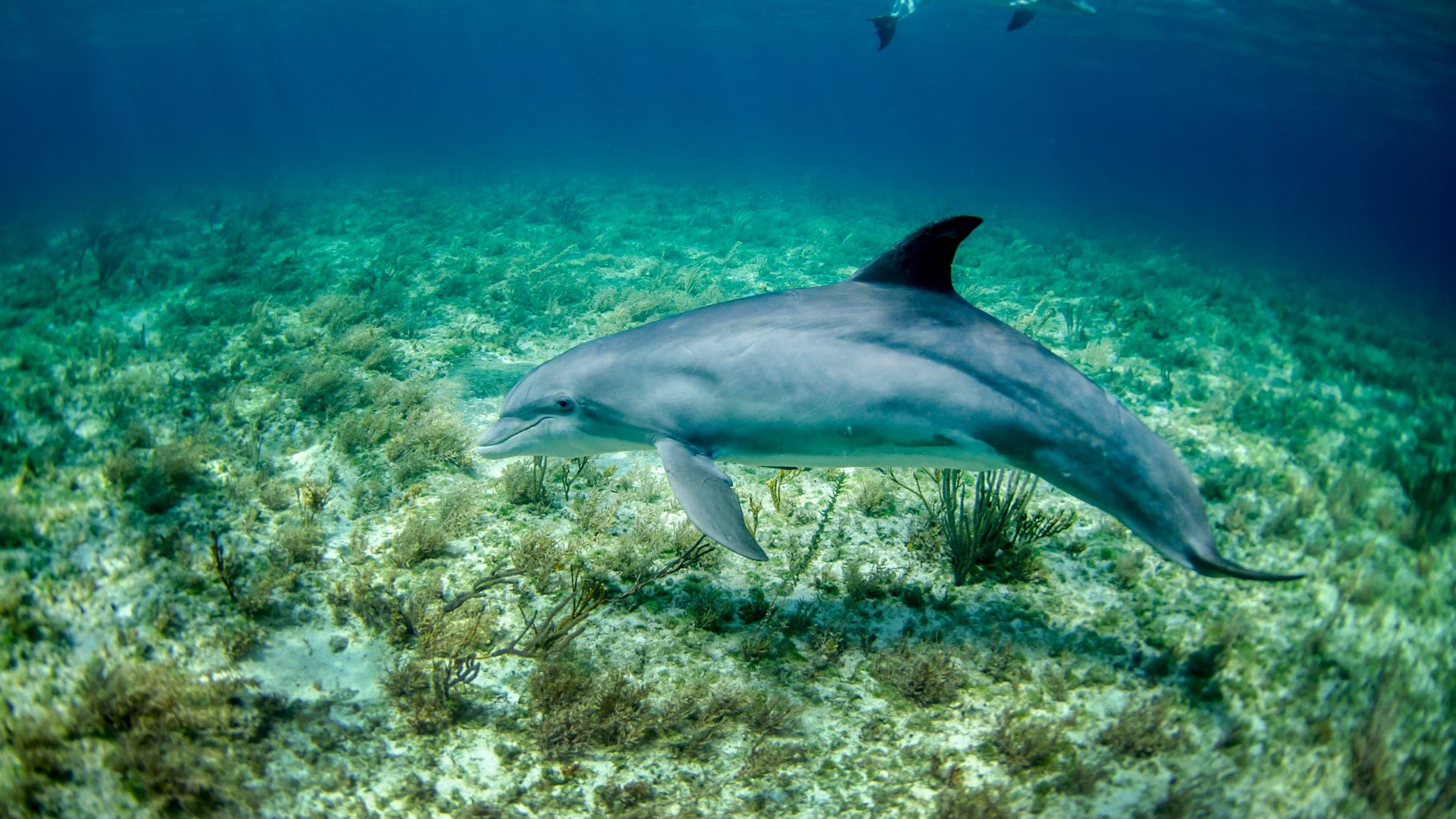
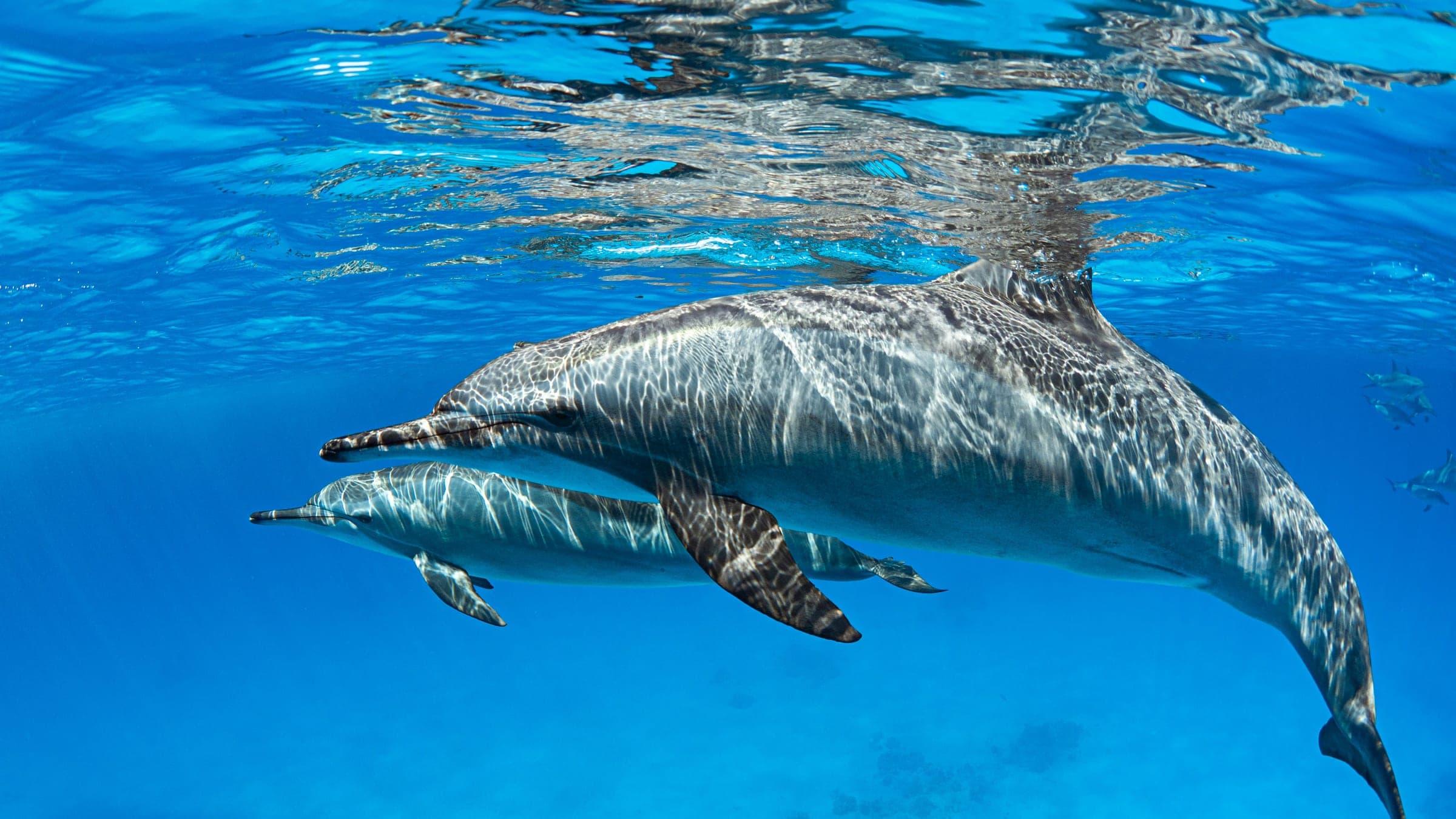
Most dolphins show a smooth torpedo-shaped body, a single blowhole, and a central dorsal fin suited for fast, efficient swimming.
Dolphins are fast, social toothed cetaceans whose best dive encounters depend on calm boat handling, clear water, and letting the pod choose whether to stay.
Group Guide
A group-level field guide built to move divers from broad intent into the right species, destinations, and encounter planning.
Dolphins are among the most dynamic animals divers encounter, but they are also among the least controllable. Many pods move quickly, change direction without warning, and decide within seconds whether to investigate or leave. For trip planning, that means successful dolphin dives usually depend on respectful boat work, strong visibility, and local operators who understand when not to push an interaction.
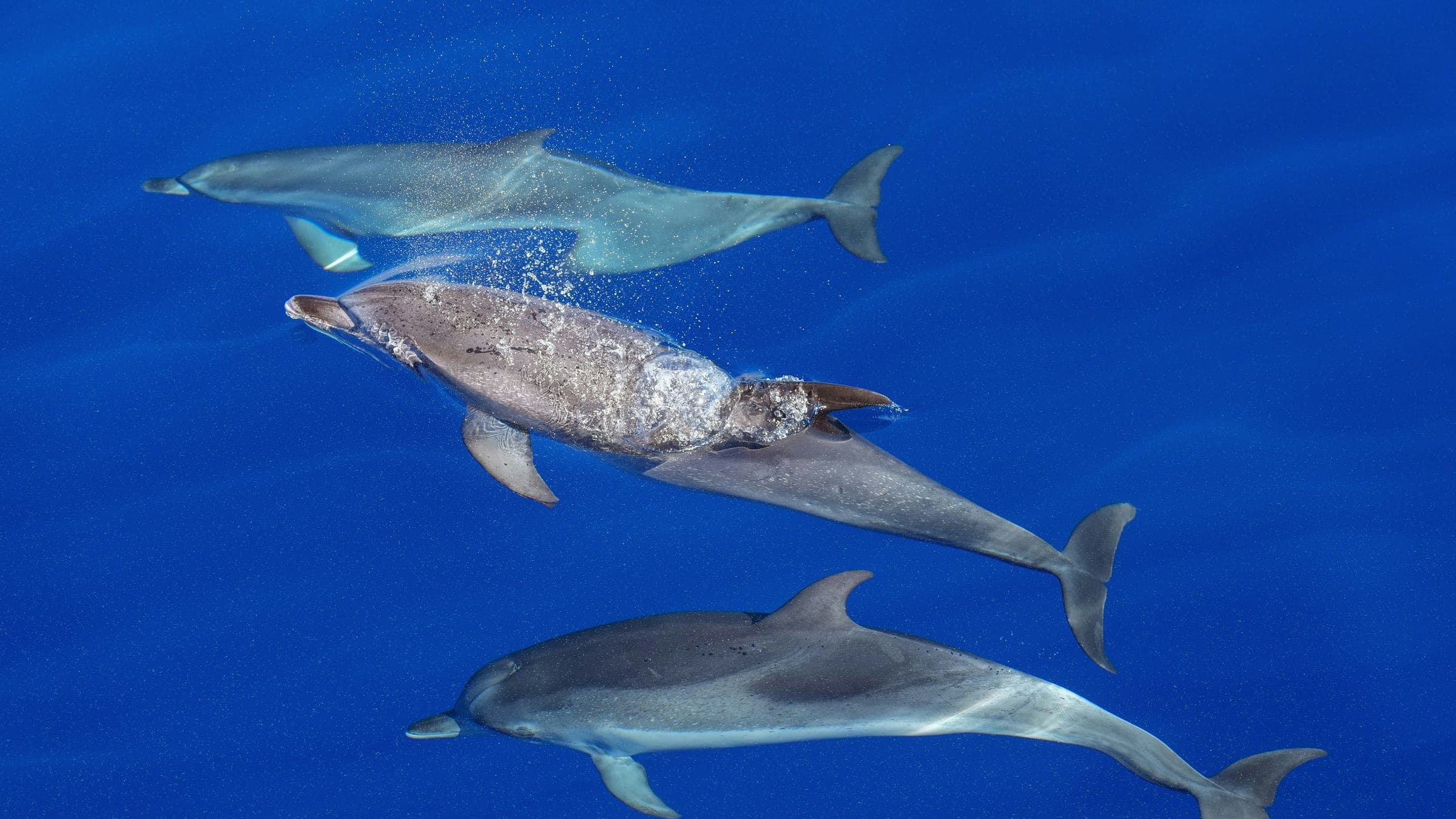
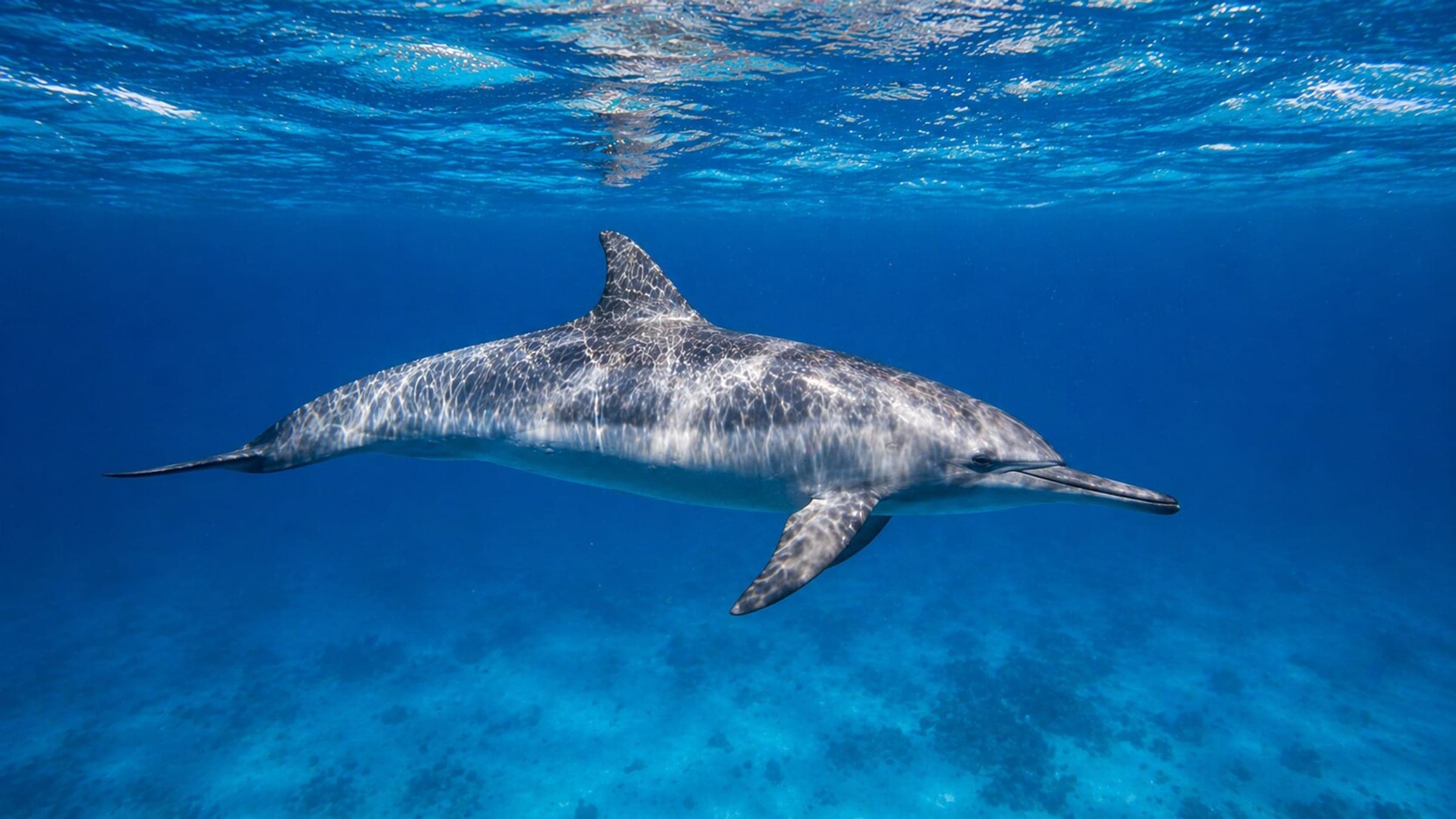
Most dolphins share a streamlined body, a pronounced dorsal fin, a single blowhole, and rows of tapered teeth. The big field marks are body shape, beak length, dorsal-fin profile, flank patterning, and pod behavior. Spinners, bottlenose dolphins, common dolphins, and larger members of the dolphin family such as orcas all sit inside a broad group that can look similar at first glance but behaves very differently in the water.
Dolphin encounters are commonest in clear coastal water, offshore current edges, and bays or channels used for feeding, resting, or travel. Some destinations are known for resident or semi-resident pods, but many famous sightings still depend on weather, sea state, and whether the animals are travelling, feeding, socializing, or resting.
This group page should narrow your search toward the right species and destinations rather than promise an interaction. Wild dolphins can be curious, but repeated drops, aggressive repositioning, and attempts to block the pod usually shorten the encounter rather than improve it.
This group guide pulls together 4 published Dolphins guides so divers can move from broad trip intent to the right species pages, destinations, and dive spots faster.
Dolphin conservation is highly species- and population-specific, but the recurring pressures are clear across the group: bycatch and entanglement, disturbance from vessels and tourism, chemical and noise pollution, habitat degradation, and prey disruption. Regional agreements, fishery rules, and marine mammal protections help, but divers should assume that some local populations are far more fragile than the ease of a sighting suggests.
Dolphin movement is driven by prey, social structure, and local oceanography. Some populations use a coastline or bay repeatedly enough to feel resident, while others roam widely across shelves, current lines, and offshore pelagic habitat. Even well-known pods can shift timing, depth, and surfacing behavior when conditions, vessel traffic, or feeding opportunities change.
Marsa Alam (Abu Dabbab and Elphinstone), Coral Coast, Viti Levu, and Algarve currently stand out as strong destination entry points for Dolphins planning.
Egypt, Spain, and Australia are some of the clearest country-level starting points for this group right now.
Most dolphins show a smooth torpedo-shaped body, a single blowhole, and a central dorsal fin suited for fast, efficient swimming.
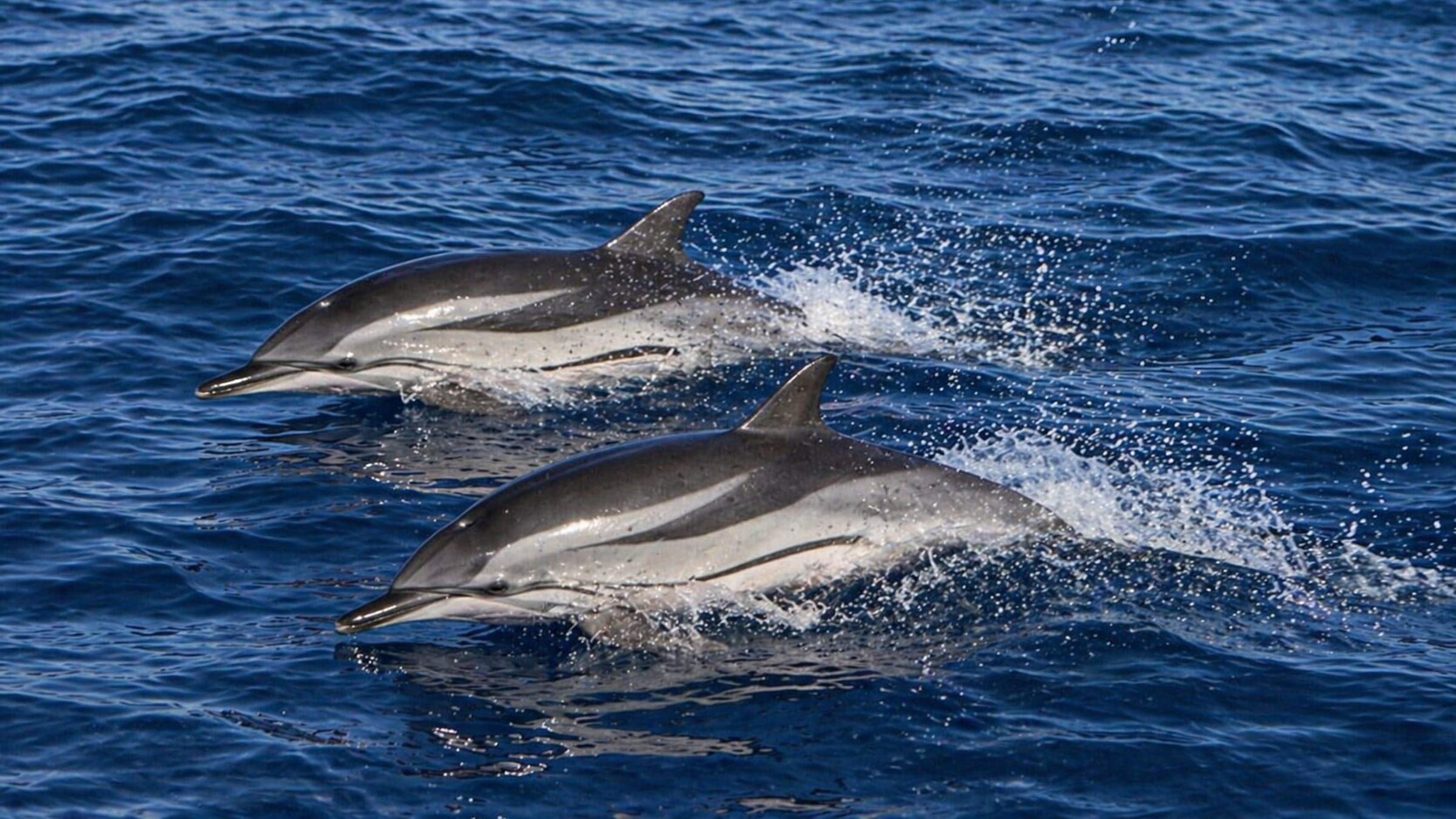
Beak length, dorsal-fin shape, and side markings are often the fastest clues for separating common coastal dolphins from bulkier or more oceanic species.
Travel style, bow-riding, synchronized surfacing, and tight social grouping can help divers recognize dolphins even before species-level markings are clear.
The dolphin family ranges from familiar bottlenose dolphins to much larger members such as orcas, so behavior and body shape vary more than many divers expect.
Clicks, whistles, and burst-pulse sounds help dolphins navigate, hunt, and maintain social contact in ways that are often obvious to divers even when visibility is imperfect.
A pod that circles once or bow-rides near the boat has not agreed to a long interaction, which is why careful operators keep entries limited and non-intrusive.
Dolphin movement is driven by prey, social structure, and local oceanography. Some populations use a coastline or bay repeatedly enough to feel resident, while others roam widely across shelves, current lines, and offshore pelagic habitat. Even well-known pods can shift timing, depth, and surfacing behavior when conditions, vessel traffic, or feeding opportunities change.
Most dolphins feed on fish, squid, or both, and some larger species also take other marine mammals. Divers often see more dolphin activity where bait concentrations, current seams, reef edges, or productive offshore water stack prey into workable feeding zones.
Conservation
A group-level read on the pressures, protections, and diver behavior that matter most across these species.
Dolphin conservation is highly species- and population-specific, but the recurring pressures are clear across the group: bycatch and entanglement, disturbance from vessels and tourism, chemical and noise pollution, habitat degradation, and prey disruption. Regional agreements, fishery rules, and marine mammal protections help, but divers should assume that some local populations are far more fragile than the ease of a sighting suggests.
Do not chase, cut off, or surround a pod. Enter only when local rules allow it and when the operator can set divers ahead of a calm travel line without repeated drops. Keep your profile quiet, never try to touch the animals, and leave the water if the pod turns away, bunches tightly, or speeds up to avoid you.
Dolphins can be injured or killed in gillnets, purse seines, longlines, and other fishing gear, especially where their feeding routes overlap with intensive fisheries.
Repeated close approaches, noisy boats, and aggressive swim-with operations can disrupt resting, feeding, and calf-care behavior.
Chemical contamination, marine debris, and chronic noise can affect dolphin health, prey access, communication, and habitat use.
National marine mammal laws and protected-species rules can restrict harassment, direct take, and harmful fishery interactions.
CMS-linked regional agreements such as ACCOBAMS coordinate research, monitoring, and threat reduction for dolphins and other cetaceans.
CITES listings for relevant taxa and fishery rules such as dolphin-safe monitoring add extra pressure against harmful trade or fishing practices.
Species
Jump into the individual species pages that currently sit inside this wildlife group.
Top Destinations
Destinations surfaced from the linked dive spots associated with species in this group.
Top Countries
The strongest country-level starting points currently linked to this wildlife group.
Top Dive Spots
Directly linked dive spots where species in this group already show up in the planning data.
Easy shore-access house reef with calm, colorful reef life.
Boat-accessed triangle of three underwater pillars.
Shallow drift reef with pinnacles, caves, and dolphins.
Boat dive with a wall, pinnacle, and rich fish life.
Rocky shore dive off Toroni with monoliths, clear water, and close fish life.
Sandy drift slope with coral pinnacles
FAQ
Direct answers to the questions divers and planners tend to ask first.
Research Sources
Primary and supporting references used for the published group guide.
Group overview, social behavior, echolocation, and broad threat framing.
Distribution, feeding ecology, and research context for a common dive-encounter dolphin.
Regional cetacean agreements and major cross-border conservation pressures.
Trade-control context for listed dolphin taxa.
Cetacean monitoring, abundance, and documented human-pressure context in the ACCOBAMS region.