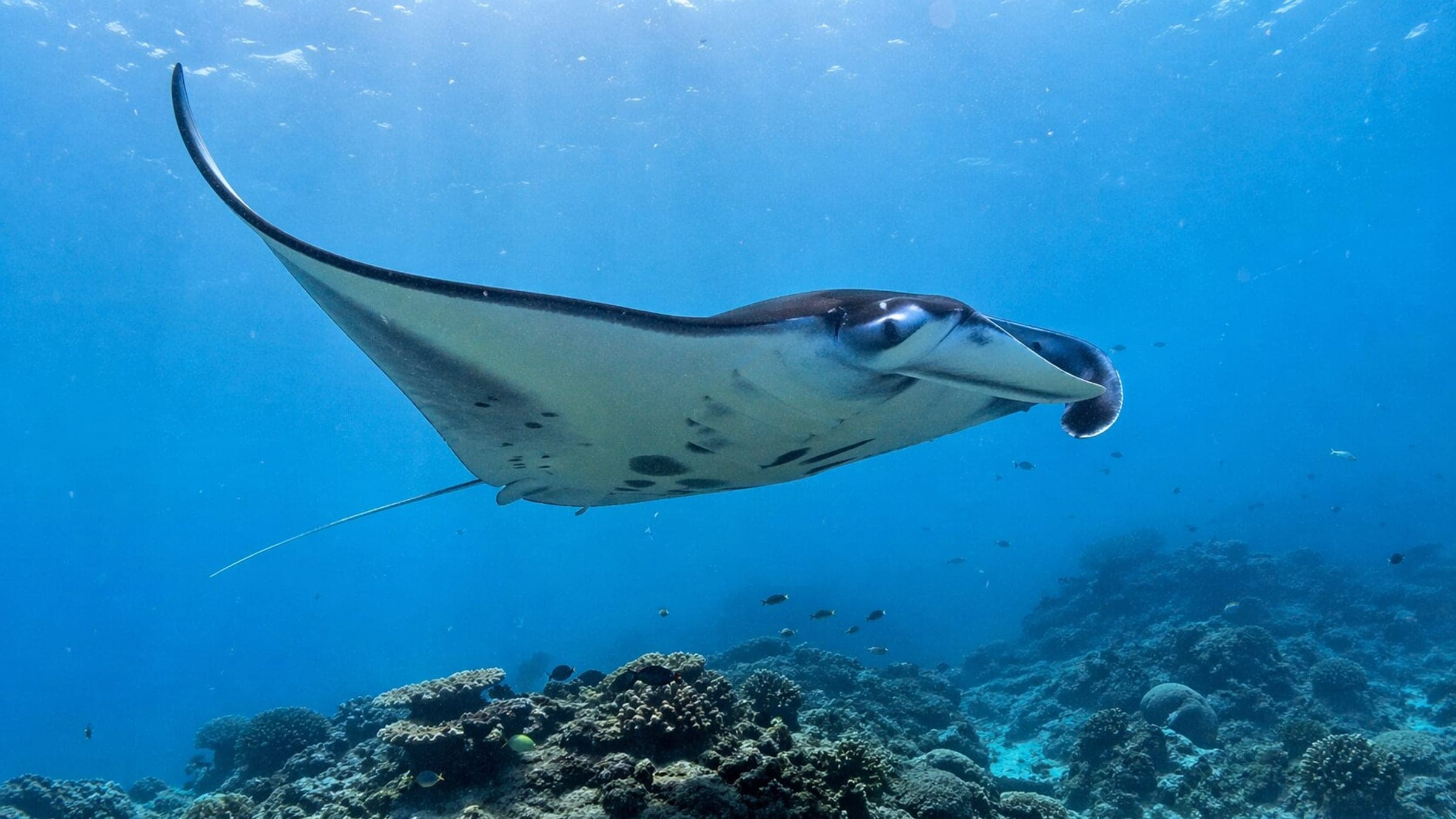
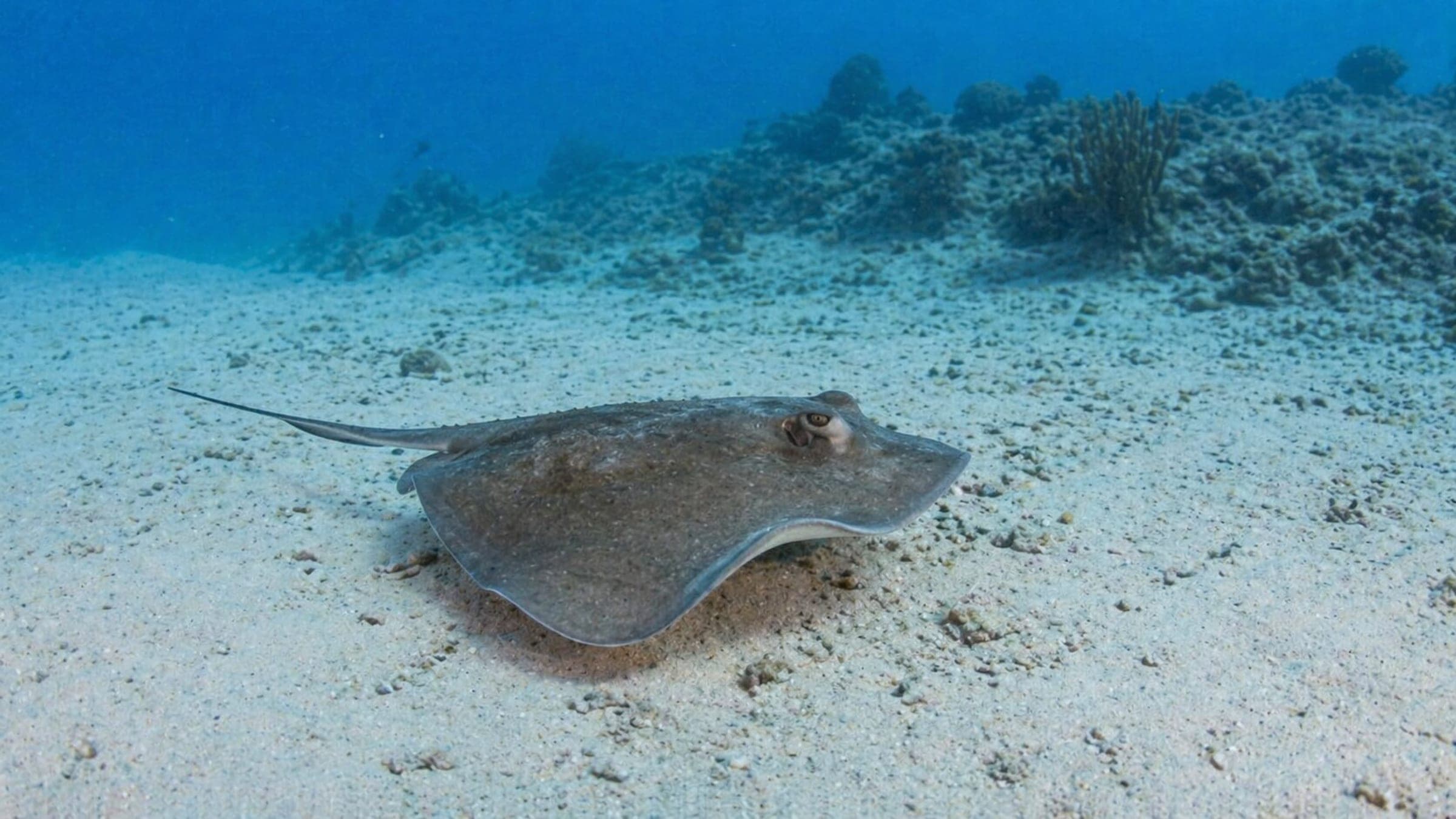
Distinctive snout
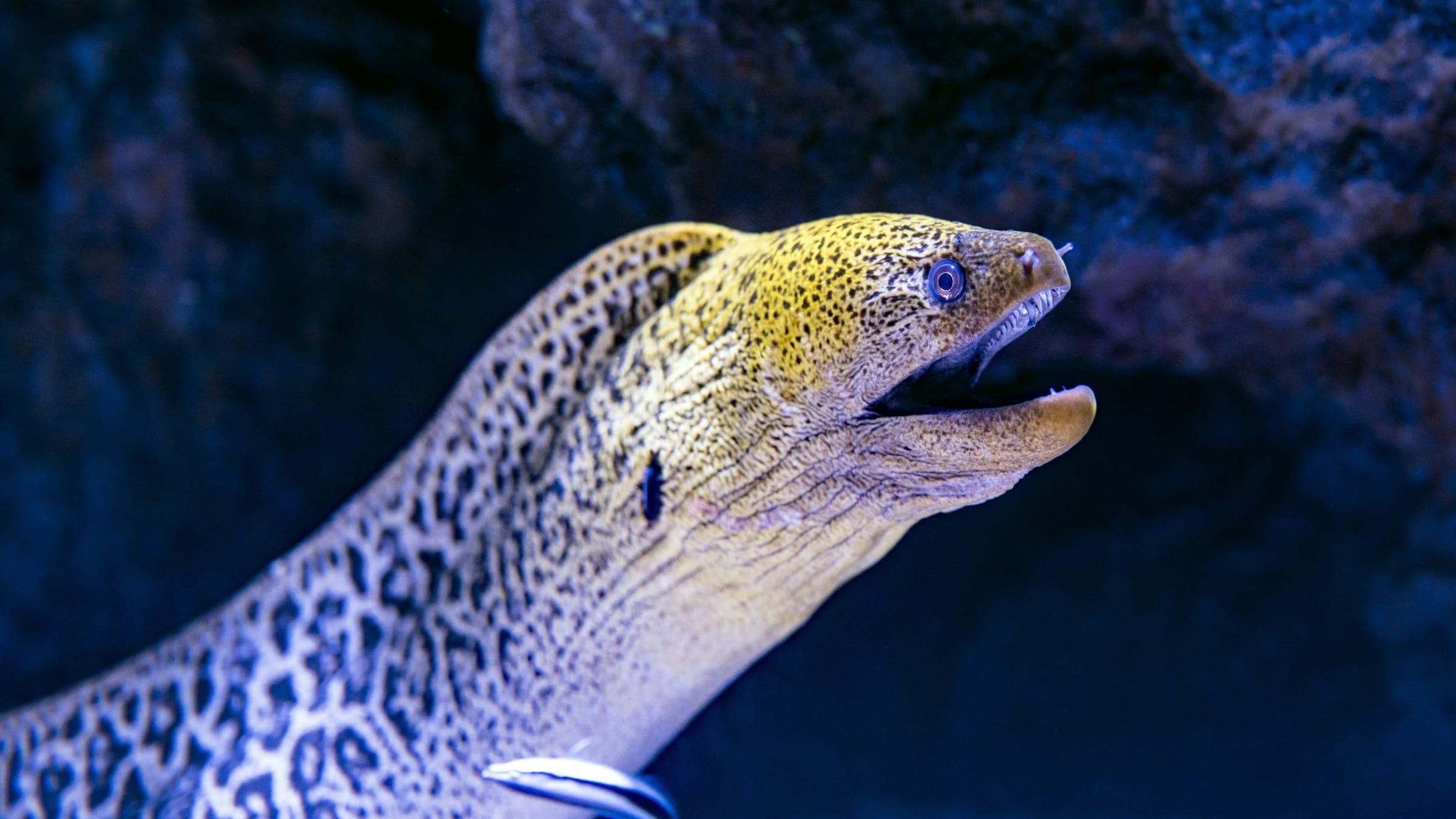
Often described as leaf-nosed or leaf-like, a notable feature mentioned in sources.
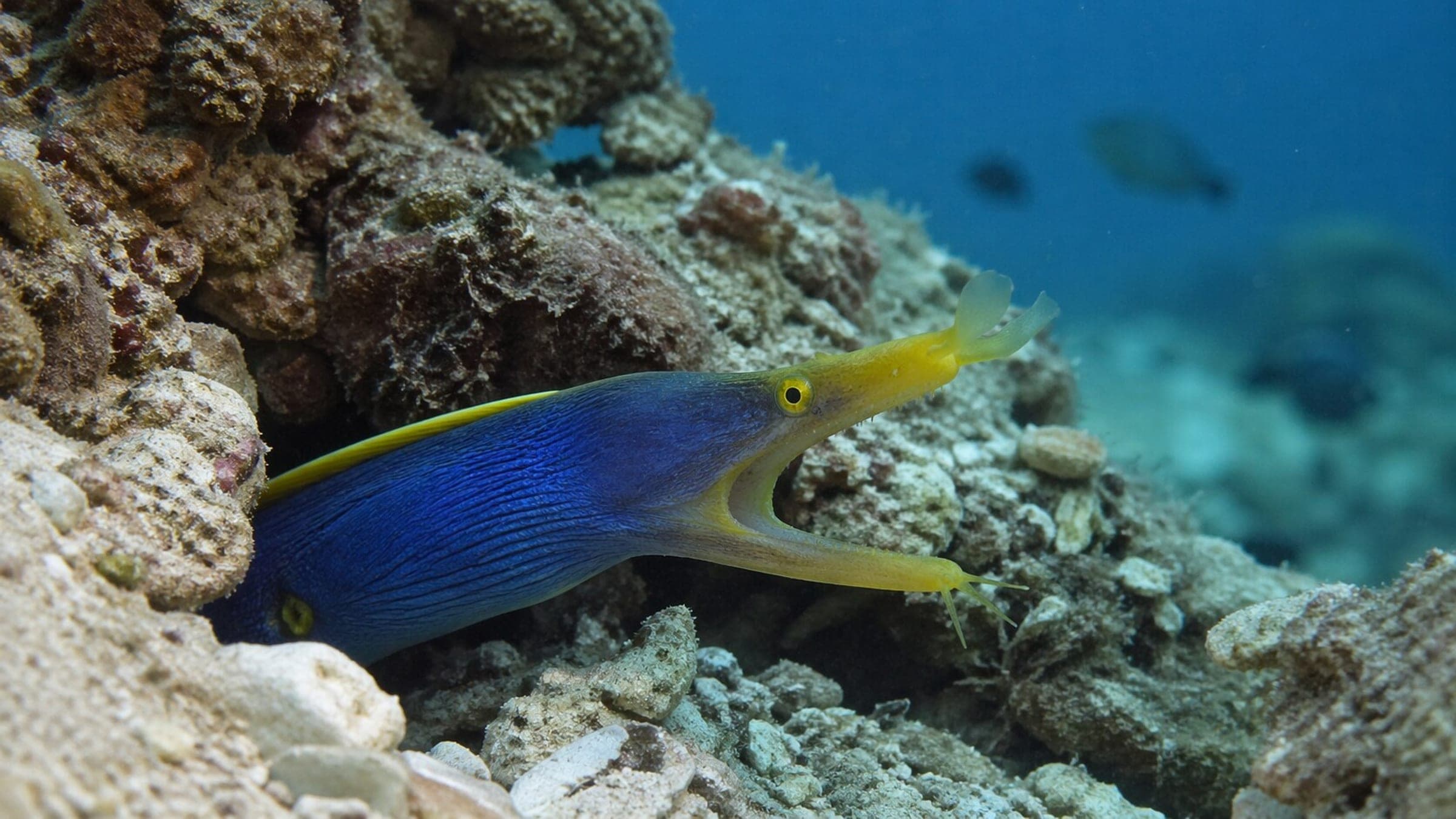
Rhinomuraena quaesita
A distinctive Indo-Pacific moray found in sand burrows and reefs, notable for its leaf-like snout and unique taxonomy.
Species Guide
A clean field guide focused on habitat, identification, behavior, and conservation context without burying the useful parts.
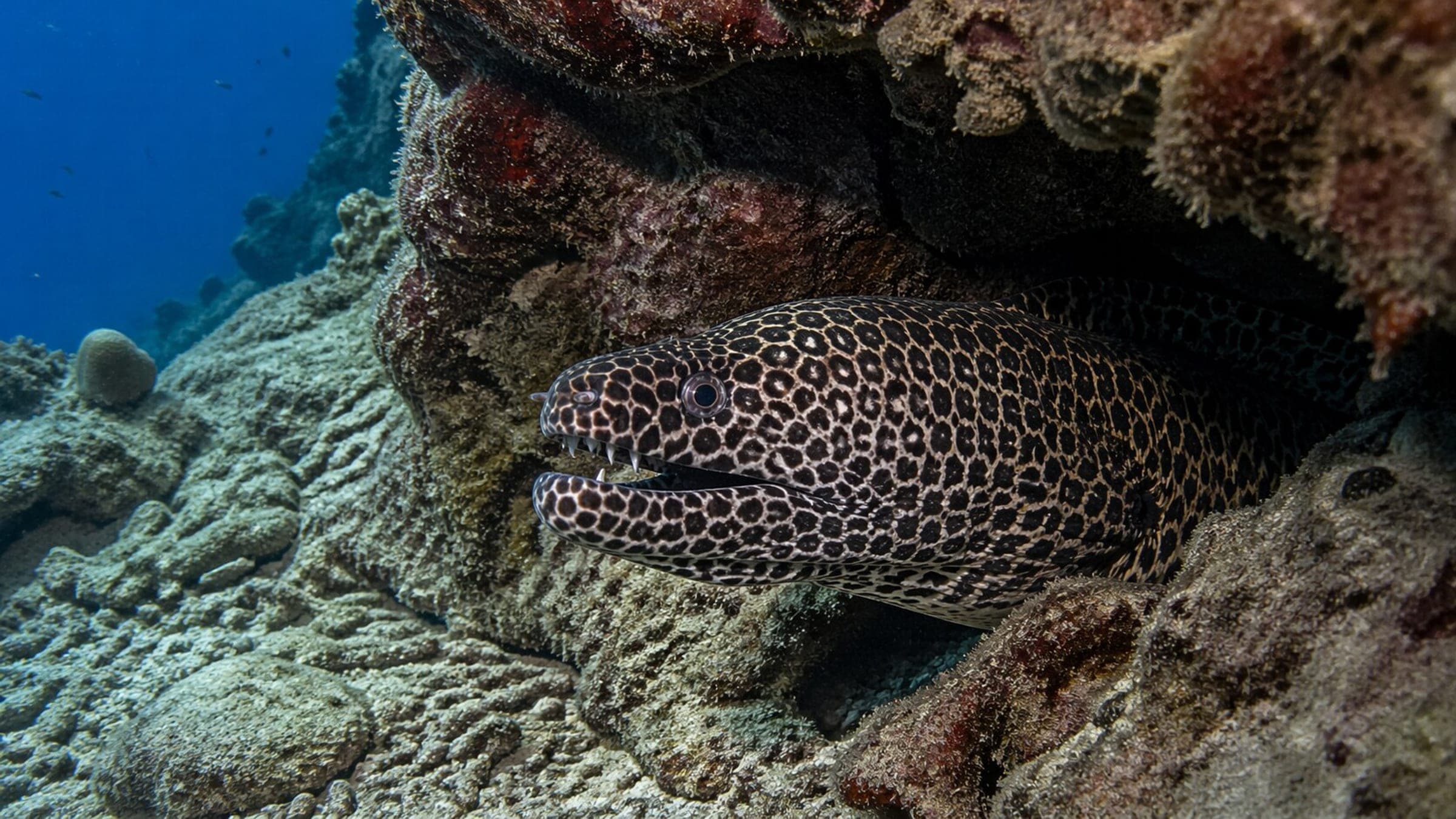
The ribbon eel (Rhinomuraena quaesita) is a species of moray eel found in the Indo-Pacific Ocean. It typically inhabits sand burrows and reef areas. The species is the only member of the genus Rhinomuraena. Although usually placed in the moray eel family Muraenidae, some authorities treat it in its own family, Rhinomuraenidae, because of several distinctive features.
The strongest linked planning options currently surface around destinations such as Bunaken and Manado (North Sulawesi), Okinawa, Phuket and countries such as Indonesia, Philippines, Japan for divers building trips around ribbon moray eel (ghost eel)s.
Identification
The visual markers divers can use underwater, plus the species most likely to cause confusion.
Often described as leaf-nosed or leaf-like, a notable feature mentioned in sources.
The species is the only member of the genus Rhinomuraena, reflecting its distinctiveness among moray eels.
Last Updated Mar 9, 2026 · 2 sources
Associated with sand burrows and reef habitats in the Indo-Pacific.
Responsible Encounters
Conservation-minded guidance for divers who want the encounter without adding pressure.
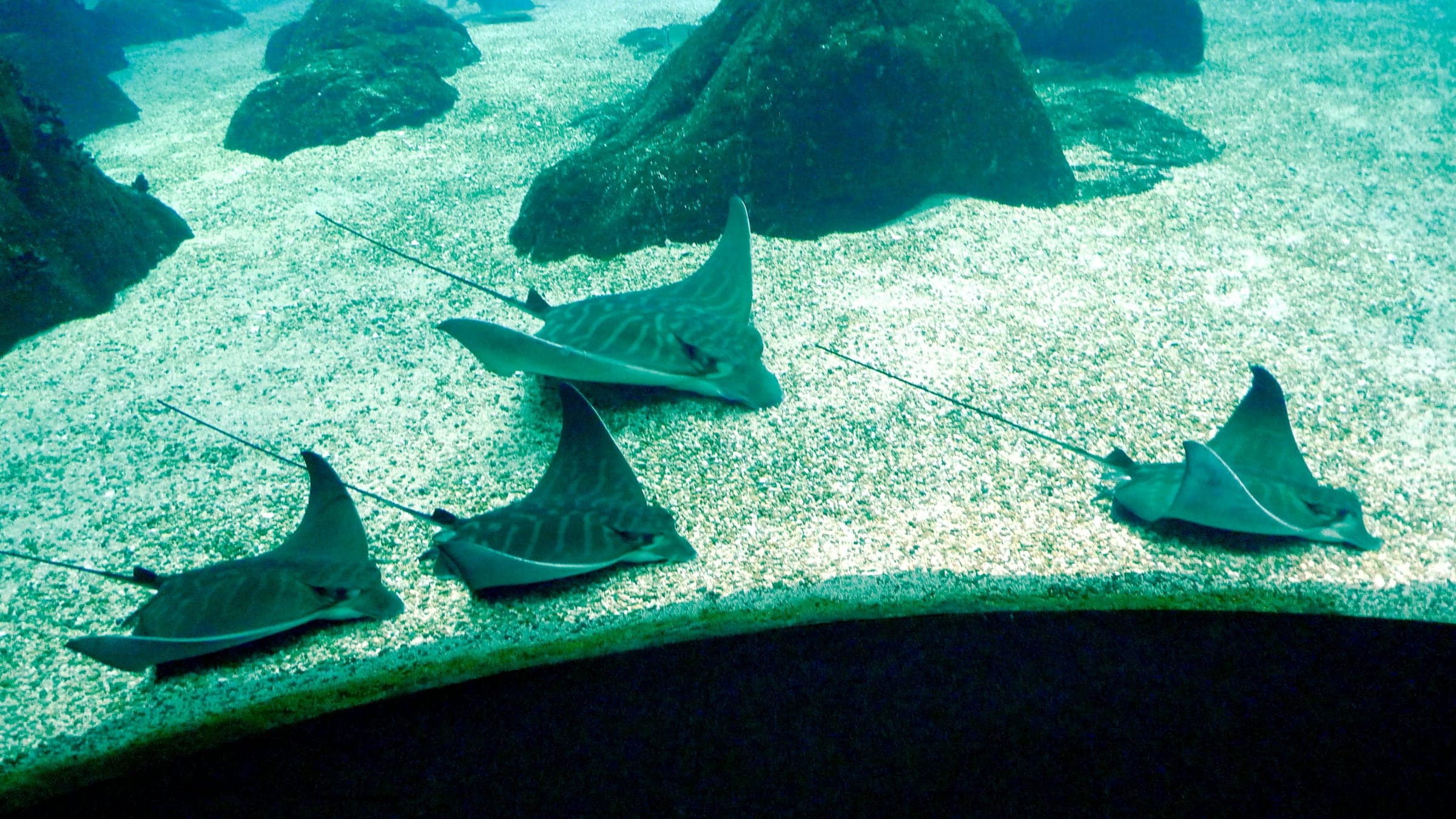
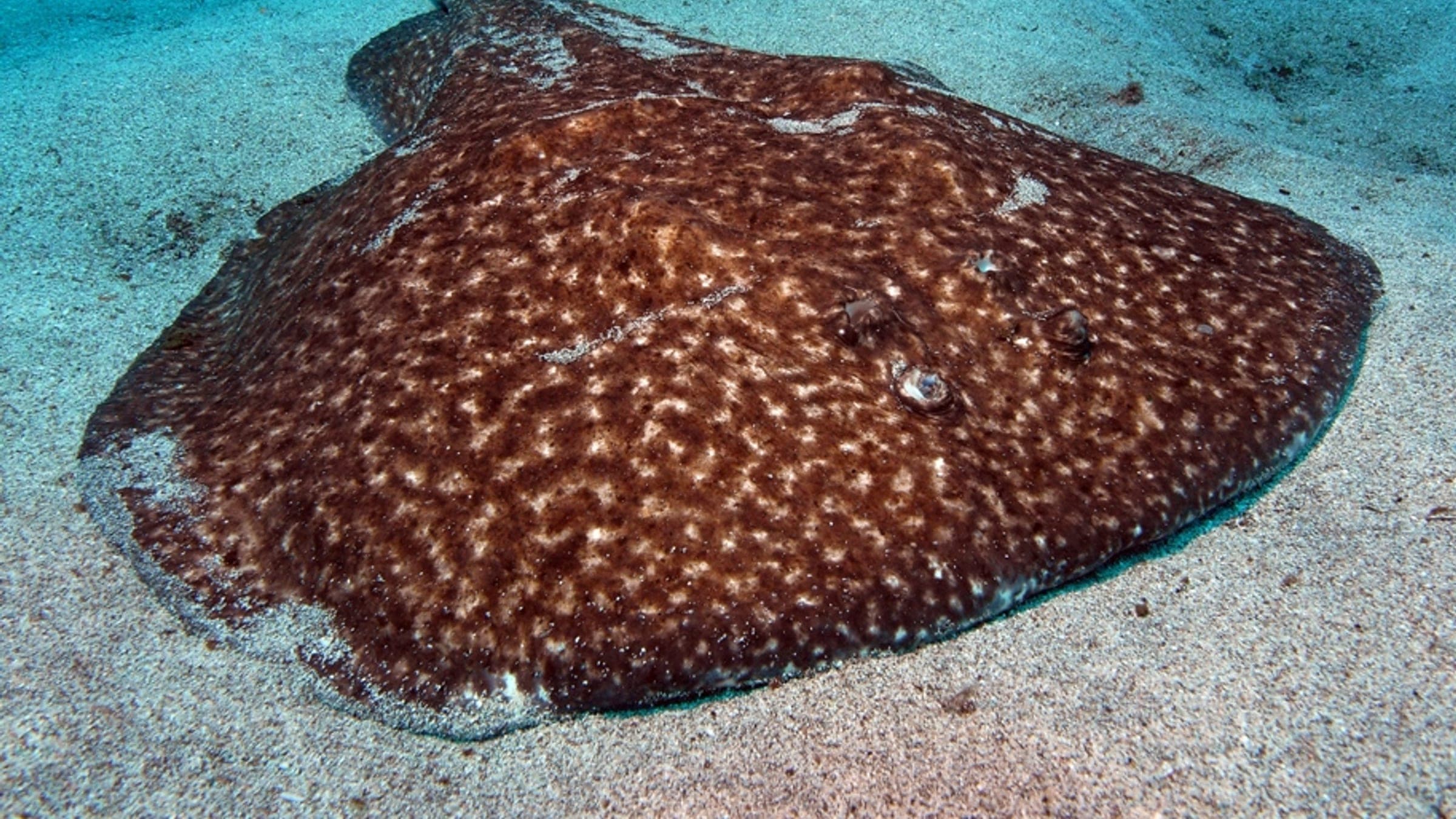
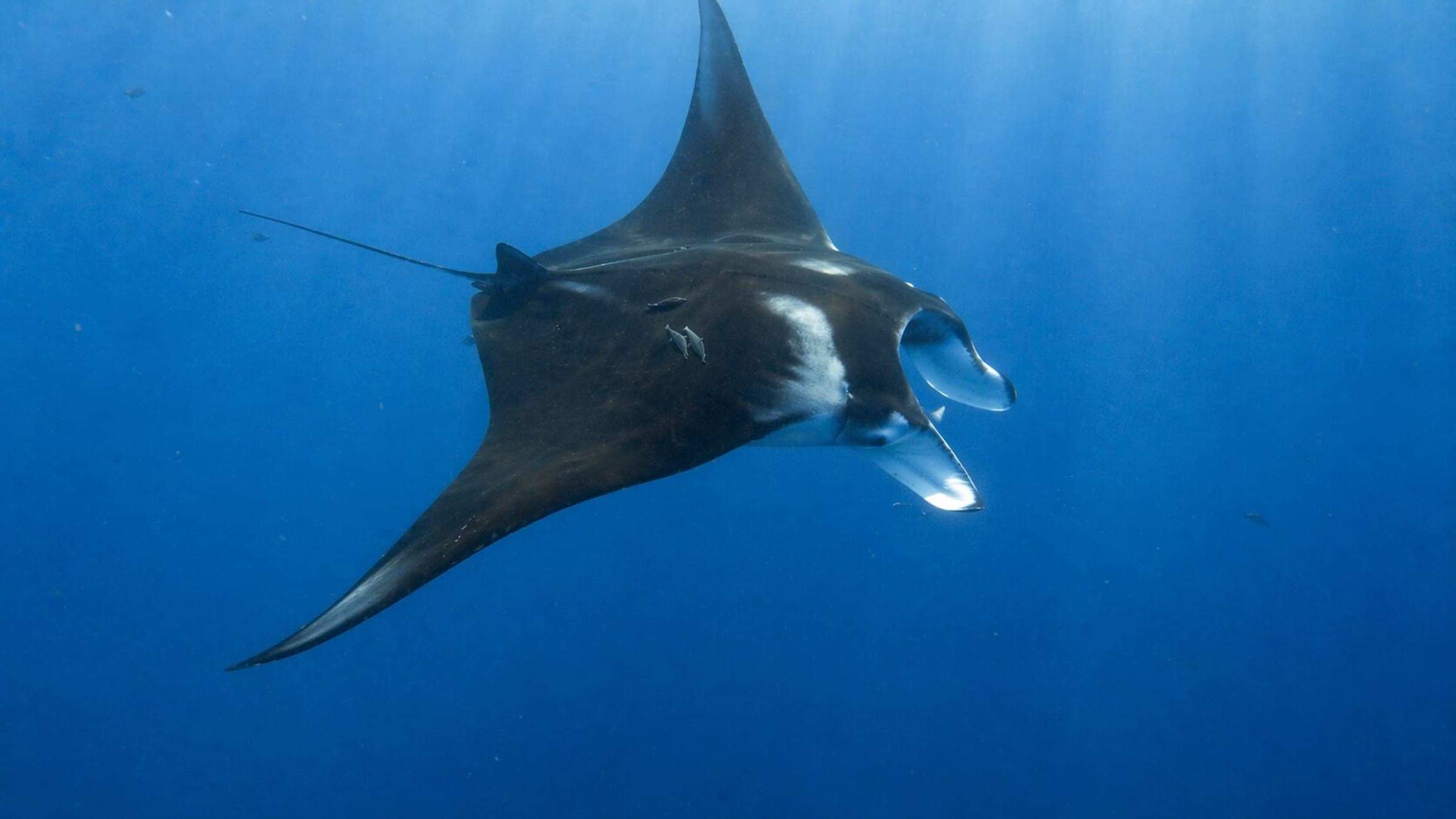
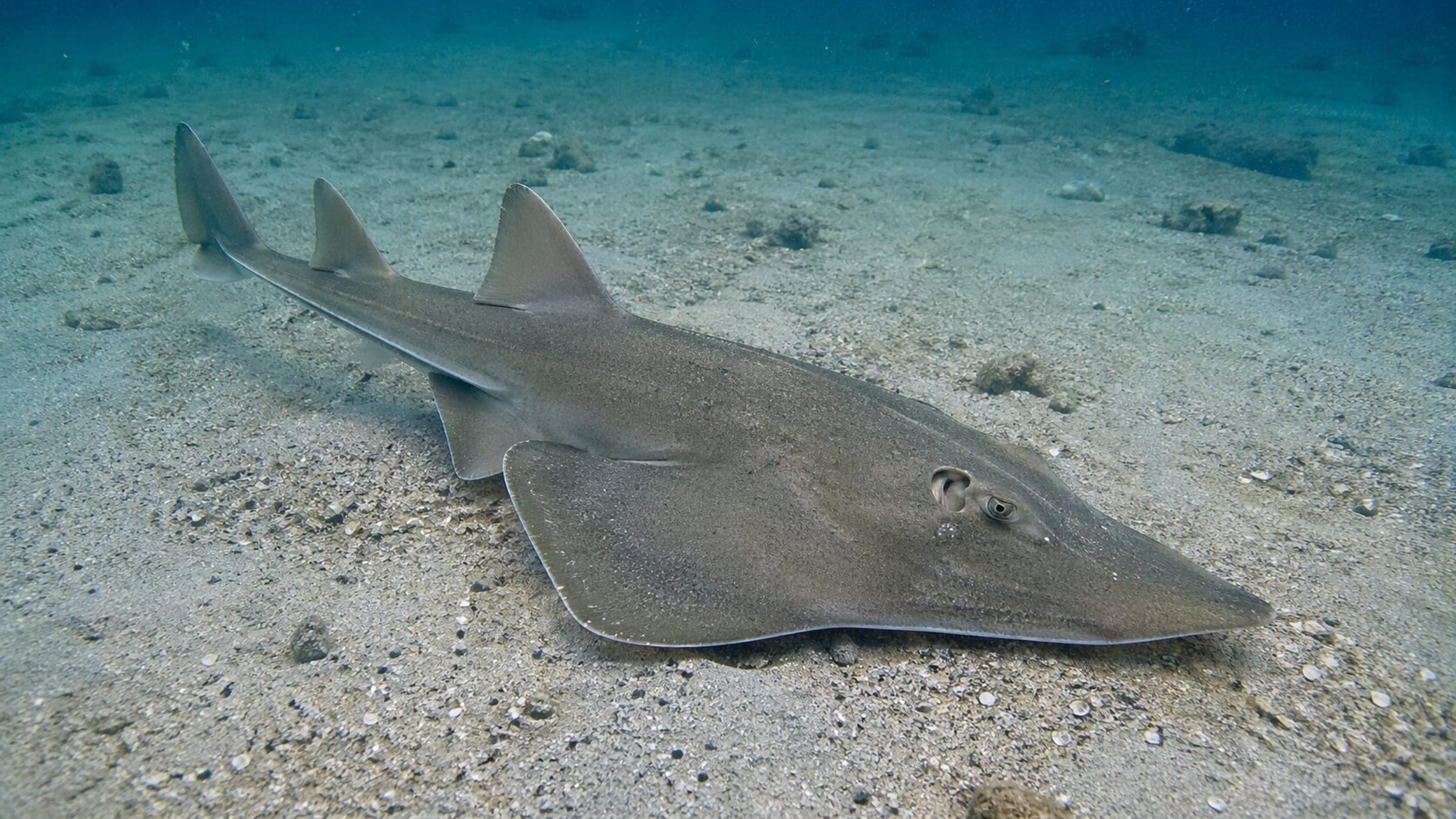
Give ribbon moray eel (ghost eel) space, avoid blocking the animal's path, and follow local site and operator rules for wildlife interactions with rays.
Field Notes
Useful species context that makes the encounter more meaningful once you are underwater.
Rhinomuraena quaesita is the sole member of the genus Rhinomuraena.
Although usually placed in family Muraenidae, some authorities place it in its own family, Rhinomuraenidae, because of its distinctive features.
Top Destinations
Destinations surfaced from the linked dive spots associated with this species.
Top Countries
The strongest country-level starting points currently linked to this species.
Top Dive Spots
Directly linked dive spots where this species already shows up in the planning data.

Acca Spot is a calm limestone reef with rich coral life.
Padang Bai boat wall dive with rich coral and macro life.
Beginner-friendly macro dive with sand, seagrass, and coral gardens
Padang Bai drop-off with slope, wall section, and critter-rich reef.
Kubu slope dive with artificial reef and macro life.
Comfortable Solomon Islands liveaboard with reefs, wrecks, and mantas.
FAQ
Clear planning and conservation answers written for search visibility and AI retrieval.
Research Sources
Primary and credible references behind the field-guide and conservation claims on this page.
Primary wildlife guide source.
Taxonomy reference.
Related Species
Related species guides in the same encounter family.