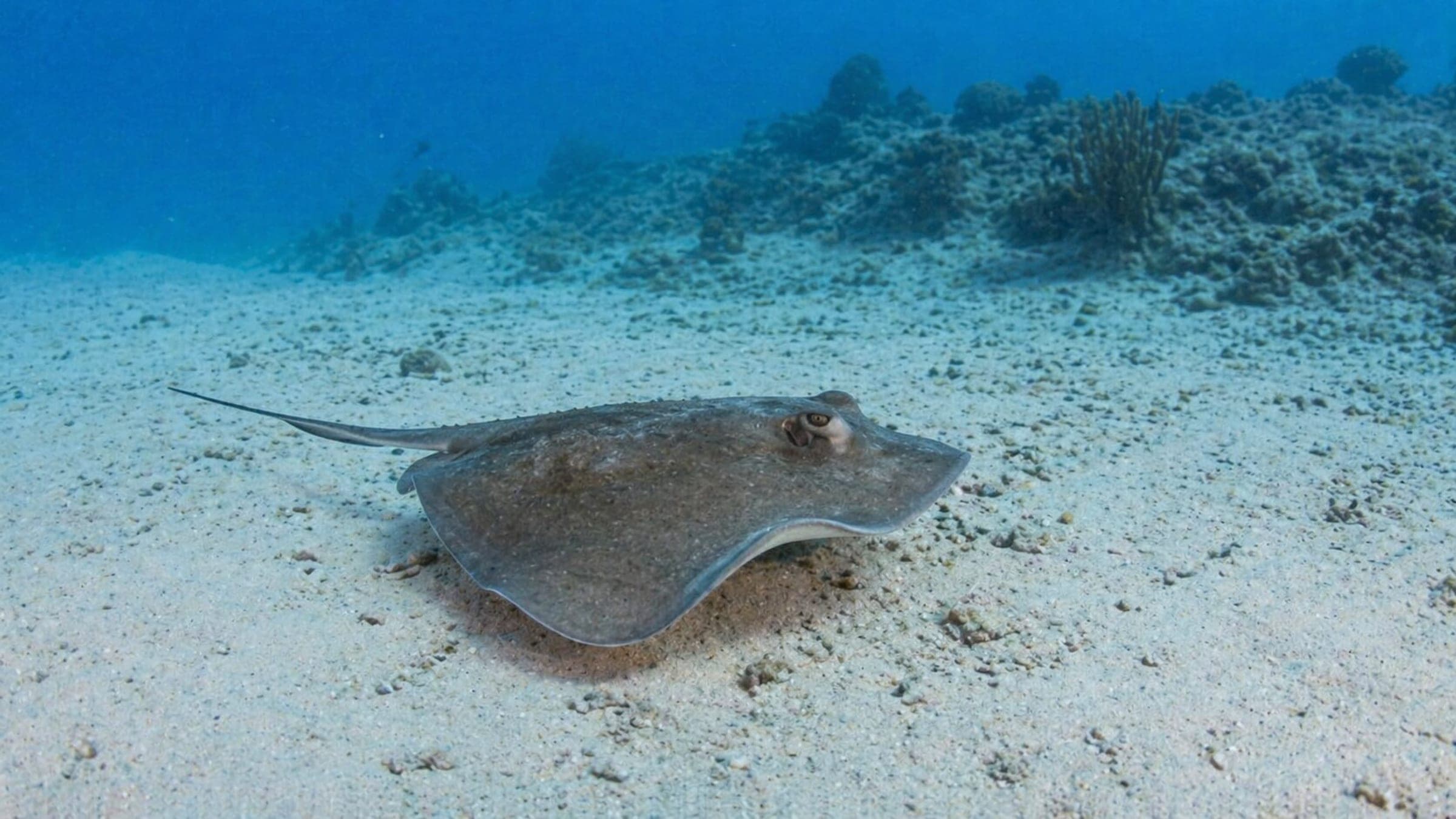
Body shape
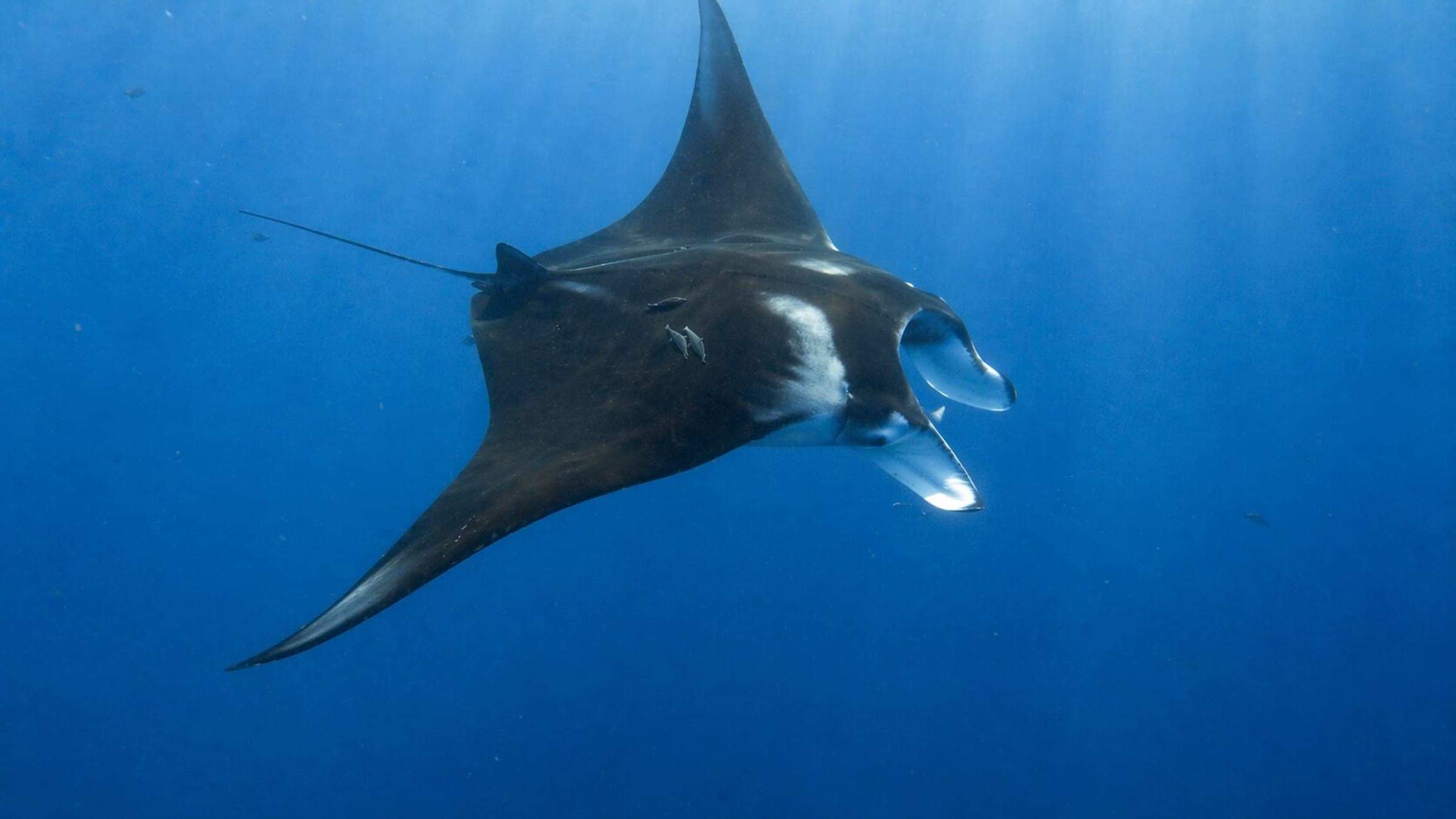
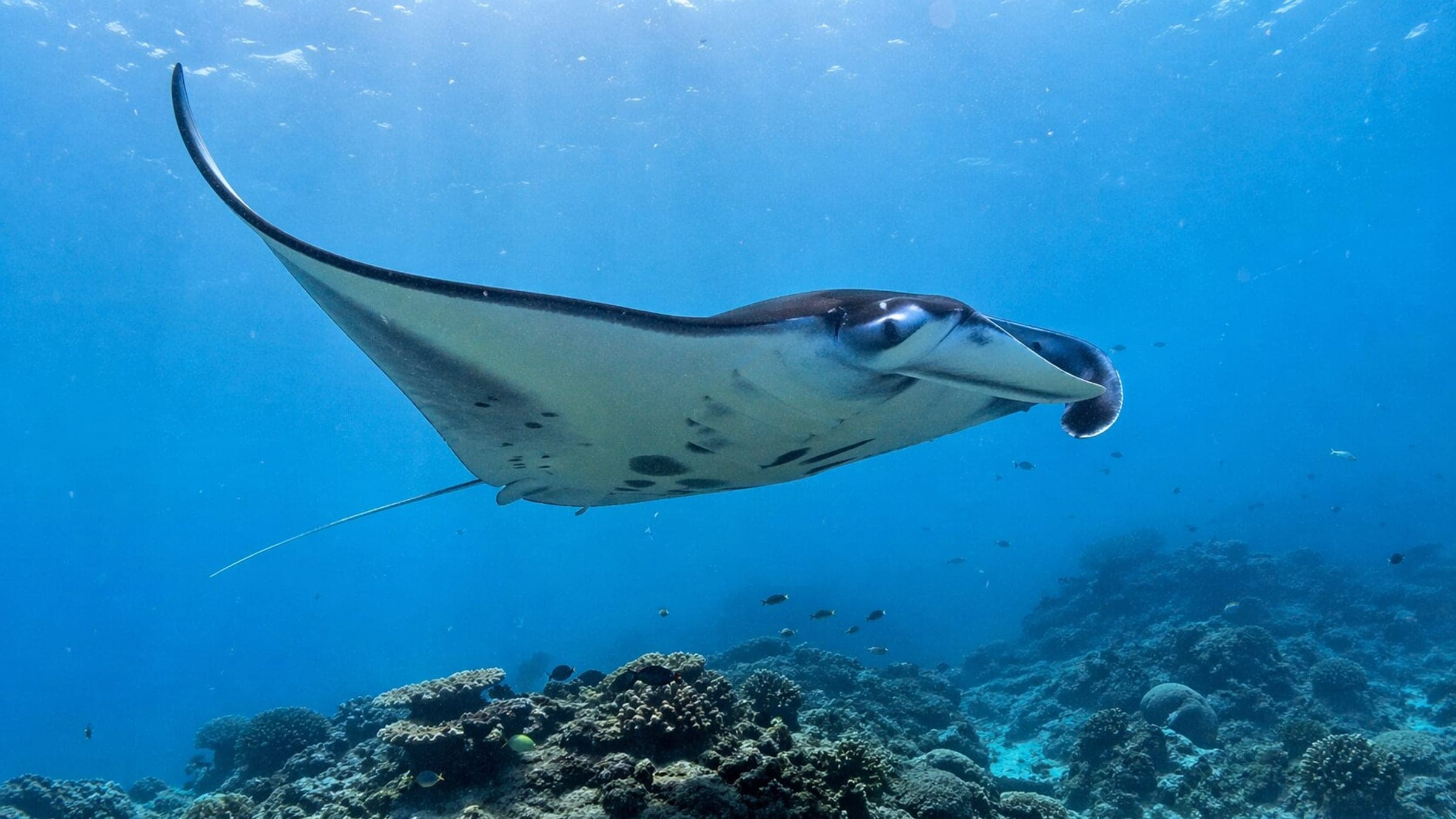
Well-defined, rhomboidal body compared with many other rays.
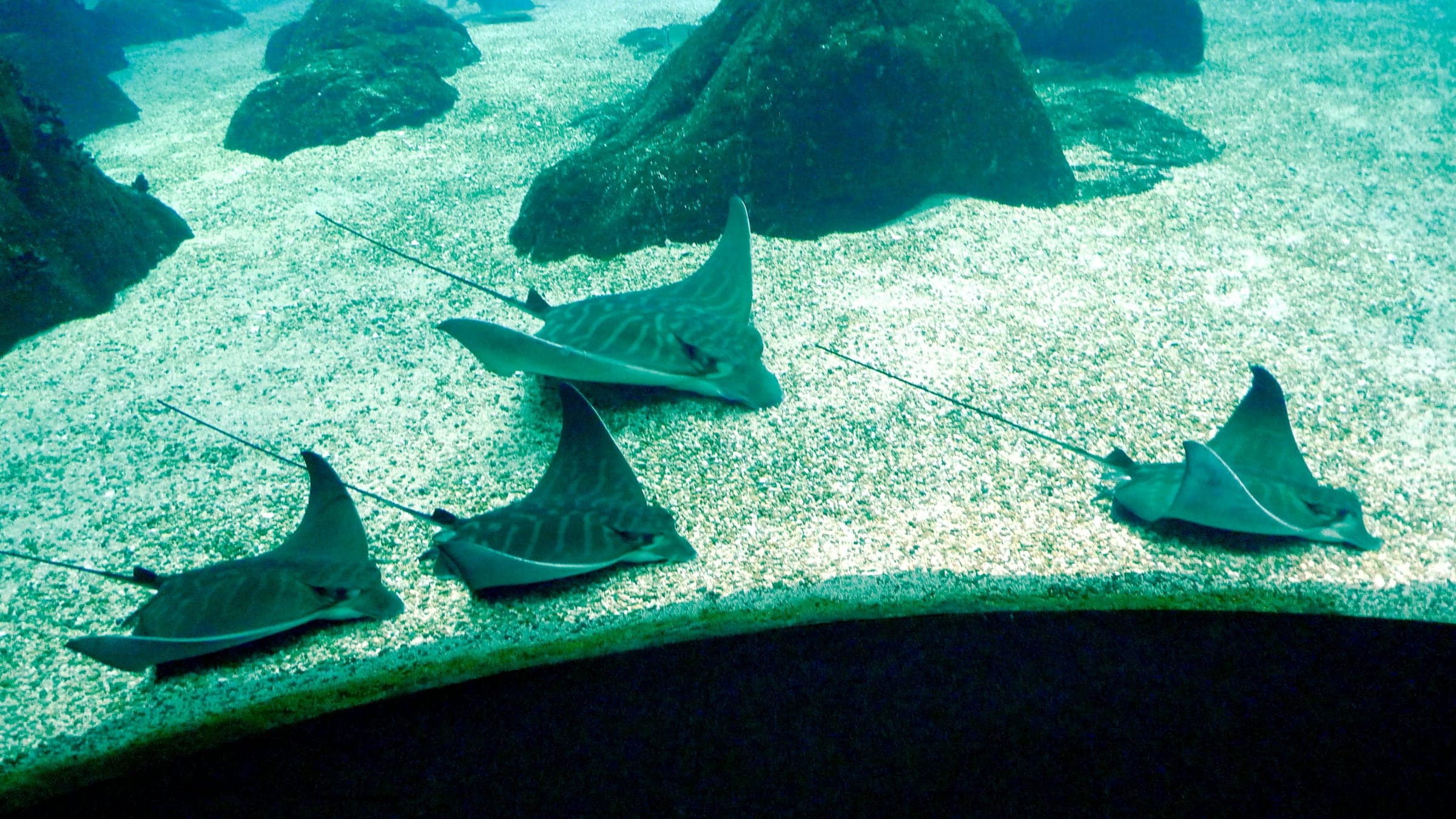
Eagle rays are large, open-ocean cartilaginous fishes in the family Myliobatidae with long tails and rhomboidal bodies.
Last Updated Mar 9, 2026 ·
Species Guide
A clean field guide focused on habitat, identification, behavior, and conservation context without burying the useful parts.
Eagle rays are a group of cartilaginous fishes in the family Myliobatidae that mostly inhabit the open ocean rather than the sea bottom. They typically have well-defined, rhomboidal bodies and relatively long tails compared with other rays. Sizes range from about 0.48 to 5.1 m in length, with wingspans reported up to around 7 m. Eagle rays are excellent swimmers and can breach the water by several meters. They feed on mollusks and crustaceans, crushing shells with flattened teeth. Reproduction is ovoviviparous, with females giving birth to as many as six young at a time.
Mostly inhabit the open ocean rather than the sea bottom; are strong swimmers and can breach the surface by several meters.
Feed on mollusks and crustaceans, crushing their shells with flattened teeth.
The strongest linked planning options currently surface around destinations such as Caye Caulker, San Pedro (Ambergris Caye), Belize, Bayahibe and Dominicus and countries such as Belize, Egypt, Maldives for divers building trips around eagle rays.
Identification
The visual markers divers can use underwater, plus the species most likely to cause confusion.
Well-defined, rhomboidal body compared with many other rays.
Relatively long tail compared with other rays.
Range from about 0.48 to 5.1 m in length, wingspan up to around 7 m.
Excellent swimmers that can breach the water by several meters.
Range and Movement
The broad range, seasonal movement, or migratory behavior that shapes where divers encounter this species.
Mostly inhabit the open ocean rather than the sea bottom; are strong swimmers and can breach the surface by several meters.
Diet
Useful feeding context that often explains habitat, movement, and encounter style.
Feed on mollusks and crustaceans, crushing their shells with flattened teeth.
Responsible Encounters
Conservation-minded guidance for divers who want the encounter without adding pressure.
Give eagle ray space, avoid blocking the animal's path, and follow local site and operator rules for wildlife interactions with rays.
Field Notes
Useful species context that makes the encounter more meaningful once you are underwater.
Eagle rays are ovoviviparous and may give birth to up to six young at a time.
They are capable of breaching the water up to several meters above the surface.
Reported lengths range from about 0.48 to 5.1 m, with wingspans up to around 7 m.
Top Destinations
Destinations surfaced from the linked dive spots associated with this species.
Top Countries
The strongest country-level starting points currently linked to this species.
Top Dive Spots
Directly linked dive spots where this species already shows up in the planning data.
Miyaru Kandu is a protected shark channel with a strong drift.
Boat-access canyon dive in front of San Pedro Town.
Boat-access reef and canyon diving off Ambergris Caye.
Beginner-friendly bommie reef off Beau Vallon
Bayahibe boat-dive base for reefs, wrecks, and park sites.
Bloody Bay Wall is a world-class wall dive off Little Cayman.
FAQ
Clear planning and conservation answers written for search visibility and AI retrieval.
Research Sources
Primary and credible references behind the field-guide and conservation claims on this page.
Primary wildlife guide source.
Supporting wildlife source.
Supporting wildlife source.
Supporting wildlife source.
Related Species
Related species guides in the same encounter family.