Large head
Head can represent up to one-third of total body length and contains spermaceti.
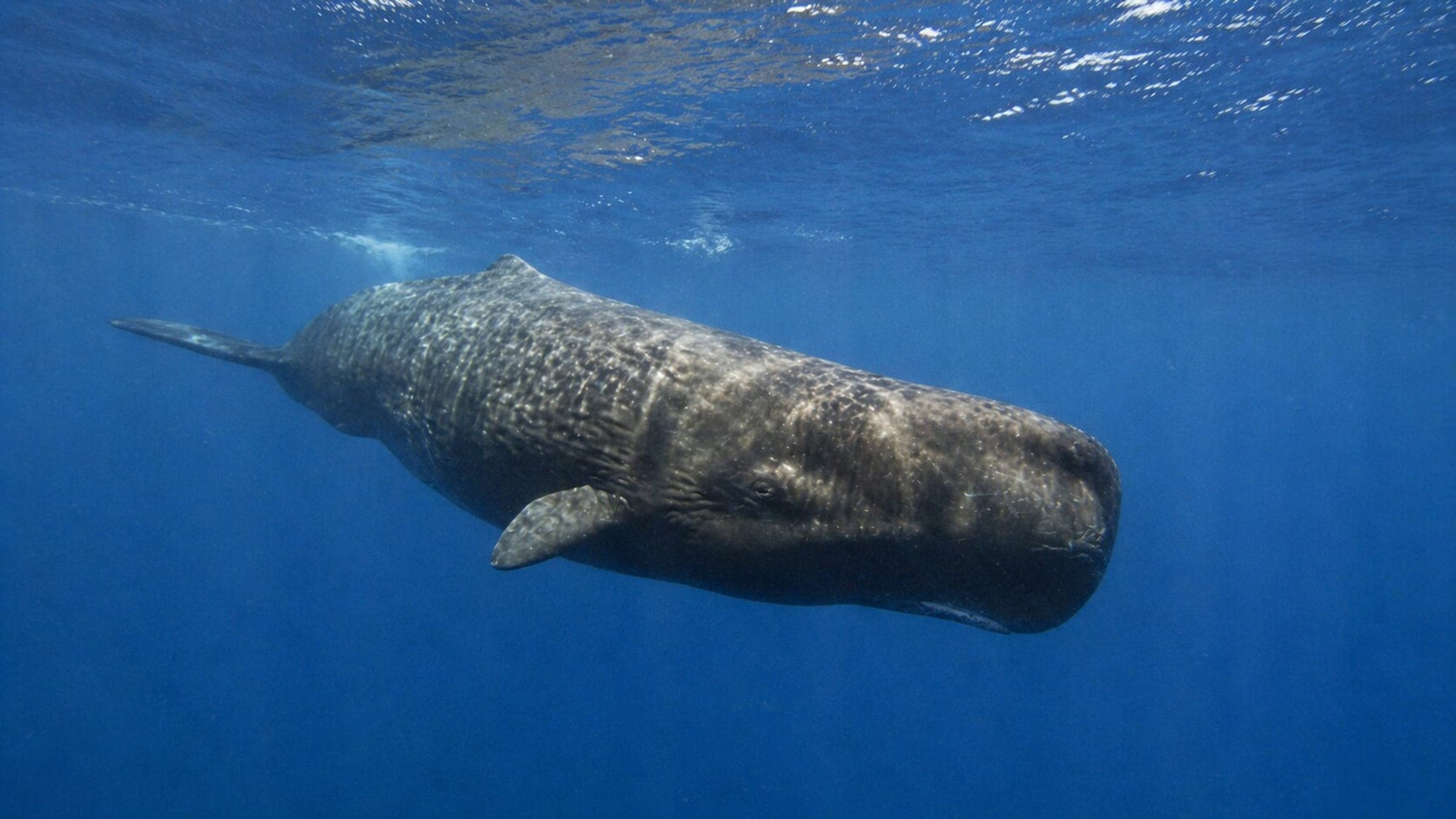
Physeter macrocephalus
The sperm whale is the largest toothed whale, a deep-diving pelagic species with worldwide range and complex social structure.
Species Guide
A clean field guide focused on habitat, identification, behavior, and conservation context without burying the useful parts.
The sperm whale (Physeter macrocephalus) is the largest of the toothed whales and the largest toothed predator. It is the only living member of the genus Physeter and one of three extant species in the sperm whale superfamily Physeteroidea, alongside the pygmy and dwarf sperm whales (genus Kogia). Sperm whales are pelagic with a worldwide range and migrate seasonally for feeding and breeding. Females and young males live in groups and cooperate to protect and nurse young, while mature males are largely solitary outside the mating season. Females give birth every four to twenty years and care for calves for more than a decade. Mature males average about 16 metres in length, with the head representing up to one-third of total length. Sperm whales are capable of very deep dives (documented to about 2,250 metres) and use echolocation and powerful vocalizations (reported source levels up to 236 dB re 1 μPa m). Their heads contain spermaceti, and ambergris is sometimes produced in their digestive system. Lifespan can exceed 70 years. The species was heavily targeted by historic whaling for spermaceti and ambergris; it is currently protected by the International Whaling Commission moratorium and listed as Vulnerable by the IUCN.
Listed as Vulnerable by the IUCN and protected under the International Whaling Commission moratorium; historically heavily impacted by commercial whaling for spermaceti and ambergris.
Pelagic with a worldwide distribution; individuals migrate seasonally for feeding and breeding. Females and young males form groups while mature males are largely solitary outside the mating season.
The strongest linked planning options currently surface around destinations such as Cape Town, Khao Lak (Similan and Surin Islands) and countries such as Greece, South Africa, Thailand for divers building trips around sperm whales.
Last Updated Mar 9, 2026 · 3 sources
Identification
The visual markers divers can use underwater, plus the species most likely to cause confusion.
Head can represent up to one-third of total body length and contains spermaceti.
Mature males average about 16 metres in length.
Sperm whales are the largest of the toothed whales and the largest toothed predator.
Known to dive to around 2,250 metres.
Other extant members of the sperm whale superfamily Physeteroidea; smaller than Physeter macrocephalus.
Range and Movement
The broad range, seasonal movement, or migratory behavior that shapes where divers encounter this species.
Pelagic with a worldwide distribution; individuals migrate seasonally for feeding and breeding. Females and young males form groups while mature males are largely solitary outside the mating season.
Conservation
Status, pressure, and protection context grounded in cited sources rather than filler.
Listed as Vulnerable by the IUCN and protected under the International Whaling Commission moratorium; historically heavily impacted by commercial whaling for spermaceti and ambergris.
Spermaceti and ambergris were major targets for the whaling industry, and sperm whaling was a major 19th-century industry.
The species is protected by the IWC moratorium on commercial whaling.
Listed as Vulnerable by the International Union for Conservation of Nature.
Responsible Encounters
Conservation-minded guidance for divers who want the encounter without adding pressure.
Give sperm whale space, avoid blocking the animal's path, and follow local site and operator rules for wildlife interactions with whales.
Field Notes
Useful species context that makes the encounter more meaningful once you are underwater.
Sperm whale vocalizations have been measured with source levels as loud as 236 decibels re 1 μPa m, among the loudest of any animal.
Sperm whales have the largest brain of any animal, more than five times heavier than a human brain.
Their heads contain spermaceti; ambergris is sometimes produced in their digestive system and has been valued commercially.
Individuals can live 70 years or more.
Capable of plunging to depths around 2,250 metres.
Top Destinations
Destinations surfaced from the linked dive spots associated with this species.
Top Countries
The strongest country-level starting points currently linked to this species.
Top Dive Spots
Directly linked dive spots where this species already shows up in the planning data.

Remote Aegean wall dive with pelagic sightings
Boat-accessed Bohol Sea site with drift walls and marine life.
Seasonal granite-island marine park with big reef life.
A boat-based Cape Point shark trip with blue and mako sharks.
FAQ
Clear planning and conservation answers written for search visibility and AI retrieval.
Research Sources
Primary and credible references behind the field-guide and conservation claims on this page.
Primary wildlife guide source.
Supporting wildlife source.
Taxonomy reference.
Related Species
Related species guides in the same encounter family.