Body plan
Soft-bodied, eight limbs with a beaked mouth at the center, bilateral symmetry, and two eyes.
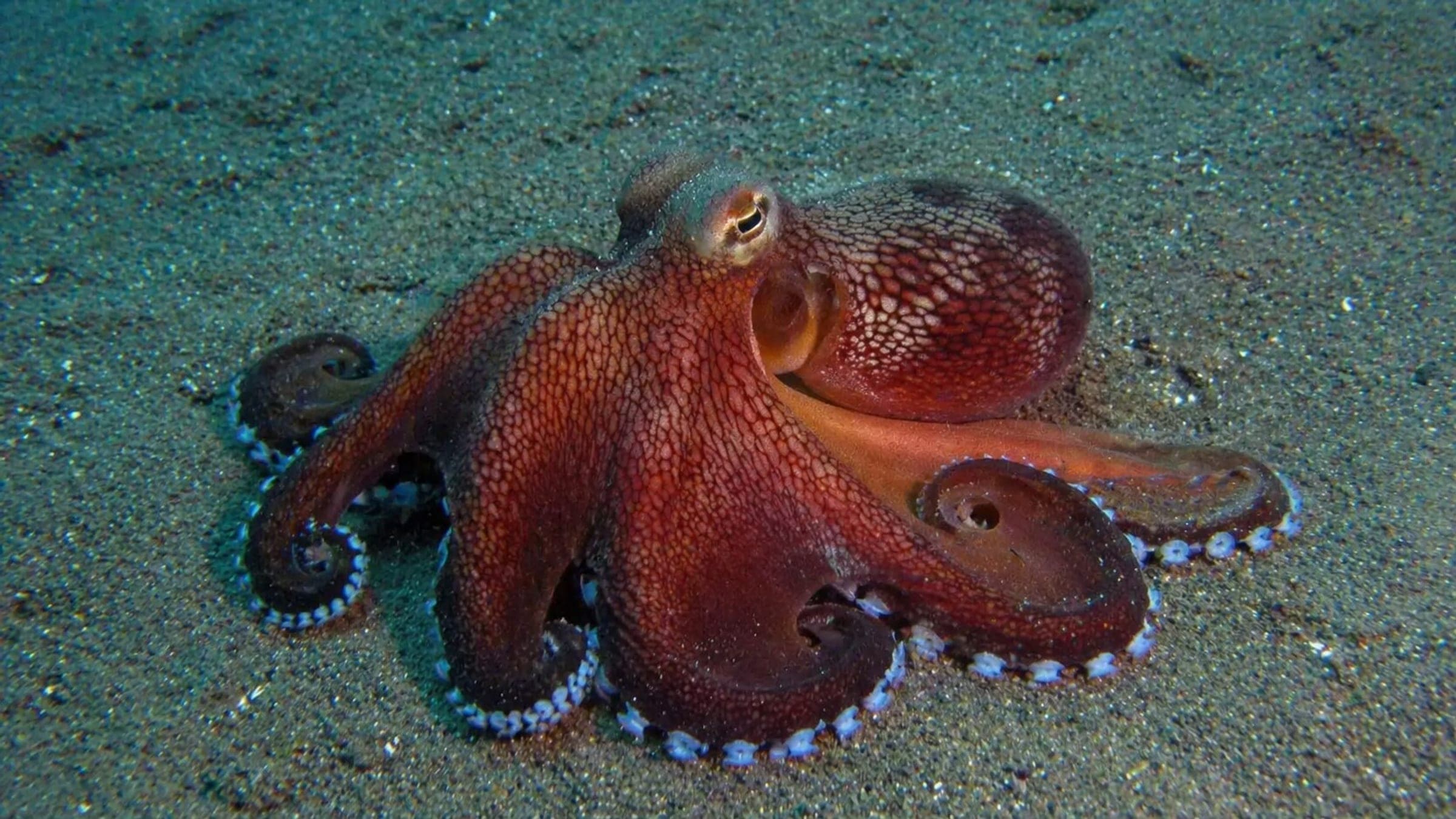
Octopuses are soft-bodied, eight-limbed cephalopods known for intelligence, camouflage, jet propulsion, and diverse habitats from reefs to abyssal depths.
Last Updated Mar 9, 2026 ·
Species Guide
A clean field guide focused on habitat, identification, behavior, and conservation context without burying the useful parts.
Octopuses are soft-bodied, eight-limbed molluscs of the order Octopoda within the class Cephalopoda (alongside squids, cuttlefish, and nautiloids). The order includes about 300 species. They are bilaterally symmetric with two eyes and a beaked mouth at the center of their eight limbs. Octopuses can radically deform their shape to squeeze through small gaps and trail their appendages behind them when swimming backwards. They use a siphon for respiration and for locomotion via water jet propulsion. Octopuses have a complex nervous system, excellent sight, and are among the most intelligent and behaviourally diverse invertebrates. They inhabit a range of ocean habitats from coral reefs and pelagic waters to the seabed, including intertidal zones and abyssal depths. Most species grow quickly, mature early, and are short-lived. Reproduction typically involves the male delivering sperm with a specially adapted arm into the female's mantle cavity; the male then becomes senescent and dies. The female deposits fertilised eggs in a den and cares for them until they hatch, after which she also dies. Octopuses are predators that hunt crustaceans, bivalves, gastropods, and fish. Defensive strategies include expelling ink, camouflage, threat displays, rapid jetting to escape, hiding, and deceit. All octopuses are venomous; only blue-ringed octopuses are known to be deadly to humans. Octopuses appear in mythology and literature and are eaten as a delicacy in many parts of the world, notably the Mediterranean and Asia.
Octopuses use jet propulsion via a siphon and often swim backwards while trailing their limbs; they can also rapidly change shape to move through tight spaces.
Predators that hunt crustaceans, bivalves, gastropods, and fish.
The strongest linked planning options currently surface around destinations such as Mahé, Cape Town, Coral Coast, Viti Levu and countries such as Spain, Italy, Seychelles for divers building trips around octopuses.
Identification
The visual markers divers can use underwater, plus the species most likely to cause confusion.
Soft-bodied, eight limbs with a beaked mouth at the center, bilateral symmetry, and two eyes.
Use a siphon for respiration and water jet propulsion; often swim backwards trailing their appendages.
Can radically deform their shape to squeeze through small gaps.
Complex nervous system and excellent sight.
Range and Movement
The broad range, seasonal movement, or migratory behavior that shapes where divers encounter this species.
Octopuses use jet propulsion via a siphon and often swim backwards while trailing their limbs; they can also rapidly change shape to move through tight spaces.
Diet
Useful feeding context that often explains habitat, movement, and encounter style.
Predators that hunt crustaceans, bivalves, gastropods, and fish.
Responsible Encounters
Conservation-minded guidance for divers who want the encounter without adding pressure.
Give octopus space, avoid blocking the animal's path, and follow local site and operator rules for wildlife interactions with molluscs.
Field Notes
Useful species context that makes the encounter more meaningful once you are underwater.
Octopuses belong to the order Octopoda and the class Cephalopoda, which also includes squids, cuttlefish, and nautiloids.
Most species grow quickly, mature early, have short lifespans, and show semelparous reproduction where parents die after offspring hatch.
Octopuses appear in mythology and literature and are also consumed as a delicacy in many cultures.
Top Destinations
Destinations surfaced from the linked dive spots associated with this species.
Top Countries
The strongest country-level starting points currently linked to this species.
Top Dive Spots
Directly linked dive spots where this species already shows up in the planning data.
Boat-access rocky plateau in Cap Corse
Historic offshore Djerba wreck with compact profile
Coral-head cluster with swim-throughs and a strong night dive.
Maze-like pinnacle line with multiple swim-throughs.
Closed Similan reef with a shallow sandy slope.
Sheltered beginner bay with calm water and easy boat access.
FAQ
Clear planning and conservation answers written for search visibility and AI retrieval.
Research Sources
Primary and credible references behind the field-guide and conservation claims on this page.
Related Species
Related species guides in the same encounter family.