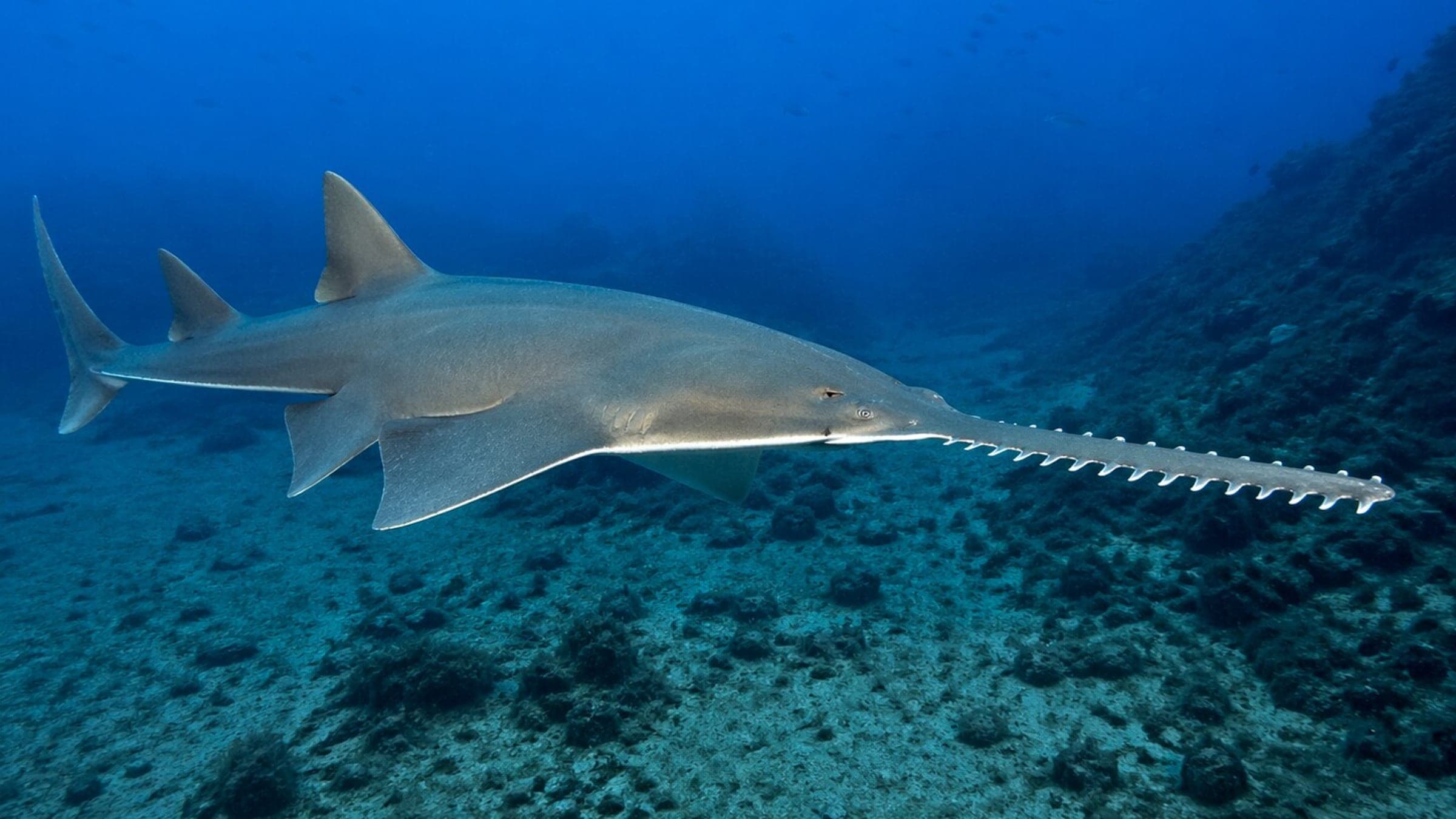
Rostrum
Long, saw-like snout or bill edged with sharp teeth.
Species Guide
A clean field guide focused on habitat, identification, behavior, and conservation context without burying the useful parts.
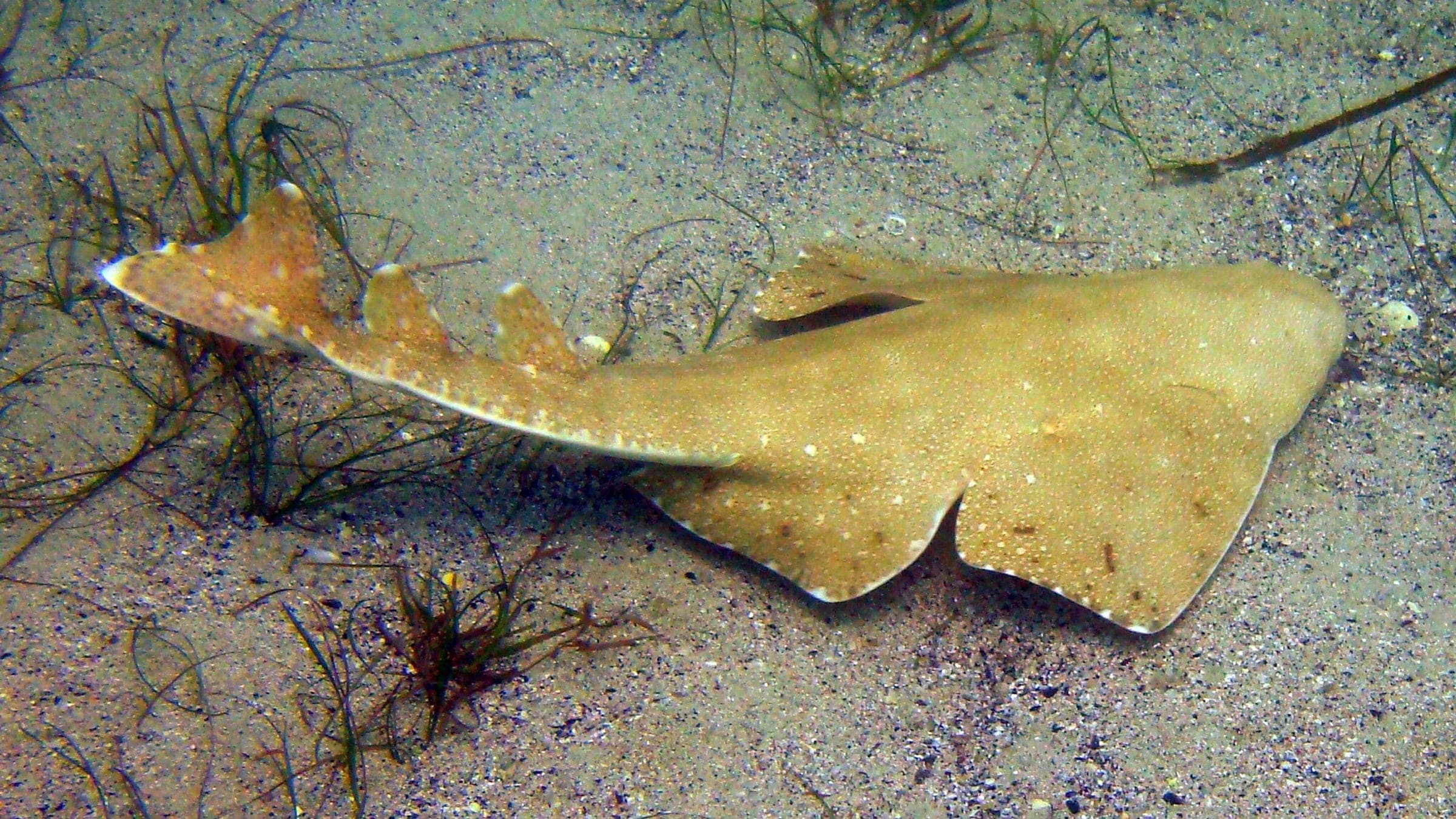
Sawsharks (order Pristiophoriformes) bear a distinctive long, saw-like rostrum (snout or bill) edged with sharp teeth. The rostrum is used to slash and disable prey. There are ten recognized species within the order, including the longnose (Pristiophorus cirratus), shortnose (Pristiophorus nudipinnis), Japanese (Pristiophorus japonicas), Bahamas (Pristiophorus schroederi), three sixgill species in Pliotrema, and several other Pristiophorus species. Sawsharks occur in many areas around the world, most commonly from the Indian Ocean to the southern Pacific Ocean. They are normally found at depths around 40–100 m, though some species occur much deeper in tropical regions. The Bahamas sawshark has been recorded from 640 m to 915 m in the northwestern Caribbean.
Sawsharks use their saw-like rostrum to slash and disable prey.
The strongest linked planning options currently surface around destinations such as Derawan Islands, Marseille, the Calanques and Côte Bleue, Murcia: Cabo de Palos and Islas Hormigas and countries such as France, Spain, United States of America for divers building trips around sawsharks.
Identification
The visual markers divers can use underwater, plus the species most likely to cause confusion.
Long, saw-like snout or bill edged with sharp teeth.
Members of the order Pristiophoriformes; there are ten recognized species.
Diet
Useful feeding context that often explains habitat, movement, and encounter style.
Sawsharks use their saw-like rostrum to slash and disable prey.
Responsible Encounters
Conservation-minded guidance for divers who want the encounter without adding pressure.
Give sawshark space, avoid blocking the animal's path, and follow local site and operator rules for wildlife interactions with sharks.
Field Notes
Useful species context that makes the encounter more meaningful once you are underwater.
Most sawsharks are normally found around 40–100 m, but some species occur much deeper in tropical regions.
The Bahamas sawshark has been recorded from 640 m to 915 m in the northwestern Caribbean.
The source lists ten species within the order Pristiophoriformes.
Top Destinations
Destinations surfaced from the linked dive spots associated with this species.
Top Countries
The strongest country-level starting points currently linked to this species.
Top Dive Spots
Directly linked dive spots where this species already shows up in the planning data.

Maratua boat dive with gentle slope, coral blocks, and rays
Sheltered Gran Canaria shore dive with canyons and arches
Offshore drift dive with a steep wall and coral.
Bandol boat dive with step-shaped rock formations.
FAQ
Clear planning and conservation answers written for search visibility and AI retrieval.
Research Sources
Primary and credible references behind the field-guide and conservation claims on this page.
Related Species
Related species guides in the same encounter family.