Cephalofoil shape
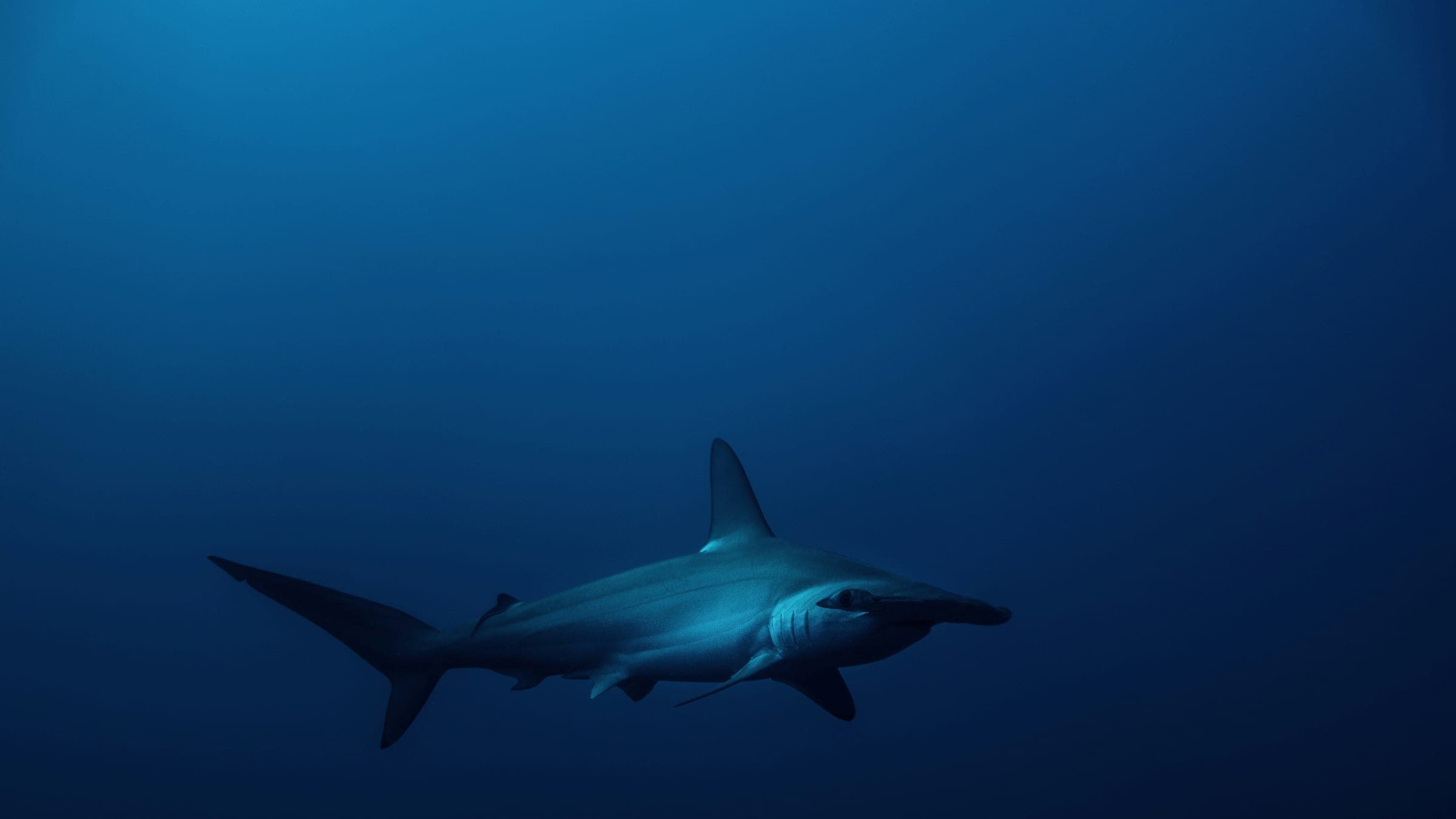
A wide cephalofoil with an almost straight front margin distinguishes it from other hammerheads.
Sphyrna mokarran
The great hammerhead is the largest hammerhead shark, a solitary apex predator found in tropical and warm temperate coastal waters worldwide.
Species Guide
A clean field guide focused on habitat, identification, behavior, and conservation context without burying the useful parts.
The great hammerhead (Sphyrna mokarran) is the largest species of hammerhead shark, reaching an average length of about 4.6 m and a maximum around 6.2 m. It occurs in tropical and warm temperate waters worldwide, typically inhabiting coastal areas and the continental shelf. Distinguishing features include a wide cephalofoil with an almost straight front margin, a tall sickle-shaped first dorsal fin, and strongly falcated pelvic fins. A solitary, strong-swimming apex predator, it feeds on a wide variety of prey—crustaceans, cephalopods, bony fish and smaller sharks—and observations suggest the cephalofoil is used to immobilize stingrays. Great hammerheads are viviparous, producing litters of up to about 50 pups roughly every two years. Although potentially dangerous, they rarely attack humans and can sometimes behave inquisitively toward divers. Heavy fishing for their large fins has driven substantial population declines.
Populations are declining substantially worldwide due to heavy fishing pressure for their large fins, prompting a Critically Endangered assessment by the IUCN in 2019.
Solitary and strong-swimming; occupies coastal areas and the continental shelf as an apex predator.
The strongest linked planning options currently surface around destinations such as North Male Atoll, Cairns & Great Barrier Reef, Coral Coast, Viti Levu and countries such as Maldives, Egypt, French Polynesia for divers building trips around great hammerhead sharks.
Last Updated Mar 9, 2026 · 2 sources
Identification
The visual markers divers can use underwater, plus the species most likely to cause confusion.
A wide cephalofoil with an almost straight front margin distinguishes it from other hammerheads.
A tall, sickle-shaped first dorsal fin.
Strongly falcated (sickle-shaped) pelvic fins.
Largest hammerhead species, averaging about 4.6 m and reaching up to roughly 6.2 m.
Other hammerhead sharks may appear similar but differ in cephalofoil shape and fin proportions.
Range and Movement
The broad range, seasonal movement, or migratory behavior that shapes where divers encounter this species.
Solitary and strong-swimming; occupies coastal areas and the continental shelf as an apex predator.
Diet
Useful feeding context that often explains habitat, movement, and encounter style.
Feeds on crustaceans, cephalopods, bony fish and smaller sharks; stingrays are a favored prey and the cephalofoil appears to aid in immobilizing them.
Conservation
Status, pressure, and protection context grounded in cited sources rather than filler.
Populations are declining substantially worldwide due to heavy fishing pressure for their large fins, prompting a Critically Endangered assessment by the IUCN in 2019.
Great hammerheads are heavily fished for their large fins, which are highly valued in shark fin markets.
Responsible Encounters
Conservation-minded guidance for divers who want the encounter without adding pressure.
Exercise caution around great hammerheads: do not provoke or corner them, keep a respectful distance, and avoid sudden movements; note they can be inquisitive but attacks are rare.
Field Notes
Useful species context that makes the encounter more meaningful once you are underwater.
The great hammerhead is the largest species in the hammerhead family.
Viviparous, with litters of up to about 50 pups roughly every two years.
Field observations indicate the cephalofoil may be used to immobilize stingrays.
Top Destinations
Destinations surfaced from the linked dive spots associated with this species.
Top Countries
The strongest country-level starting points currently linked to this species.
Top Dive Spots
Directly linked dive spots where this species already shows up in the planning data.
Miyaru Kandu is a protected shark channel with a strong drift.
Remote Saudi reef cluster with clear water, coral and pelagic life.
Deep Safaga outer reef with steep walls, strong current, and big fish.
Fakarava north-channel drift dive with sharks and canyon shelter.
Boat-access Coiba wall-and-formation dive with strong life.
Big Brother is a remote Red Sea liveaboard dive with sharks and wrecks.
FAQ
Clear planning and conservation answers written for search visibility and AI retrieval.
Research Sources
Primary and credible references behind the field-guide and conservation claims on this page.
Primary wildlife guide source.
Taxonomy reference.
Related Species
Related species guides in the same encounter family.