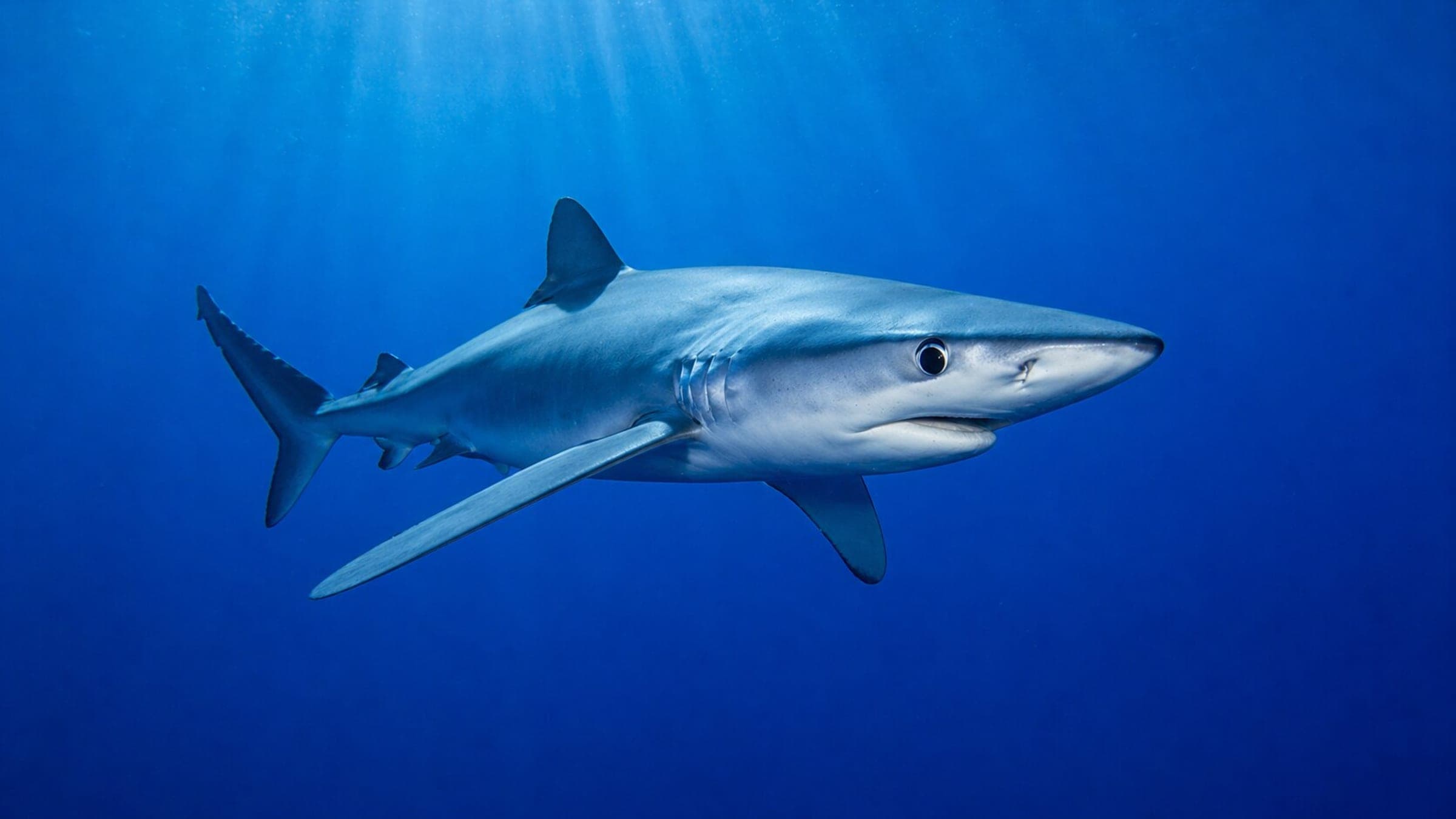
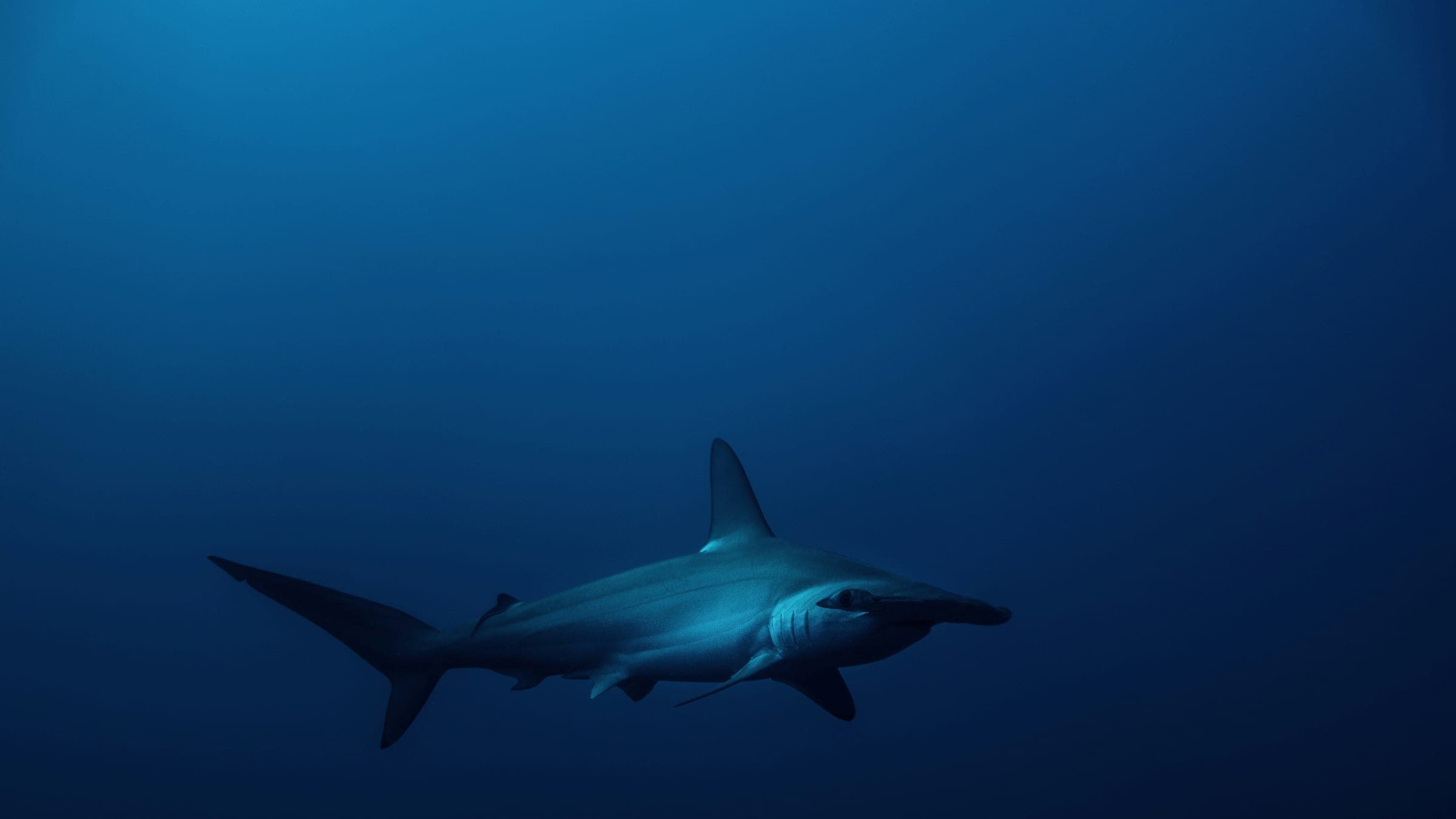
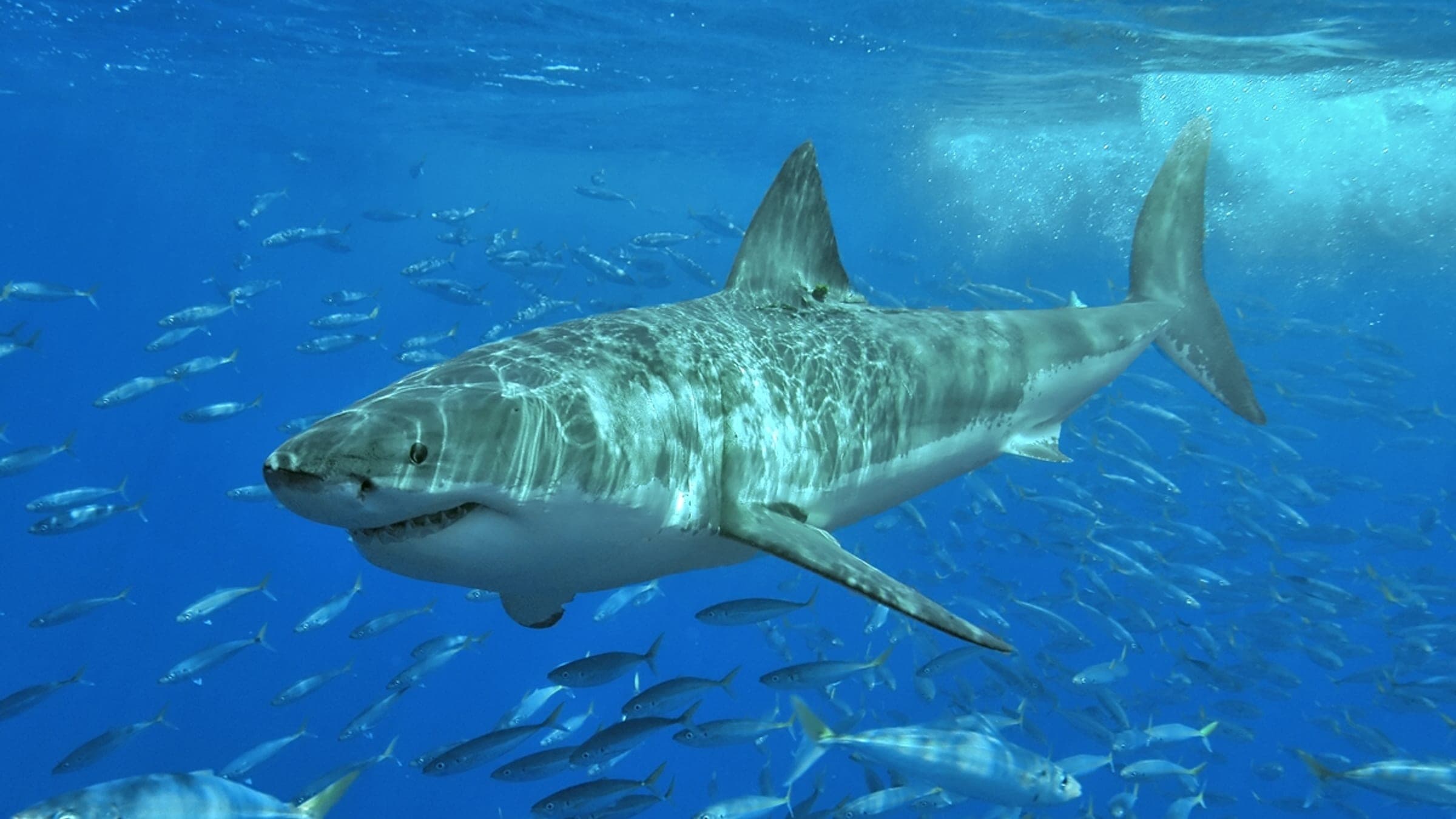
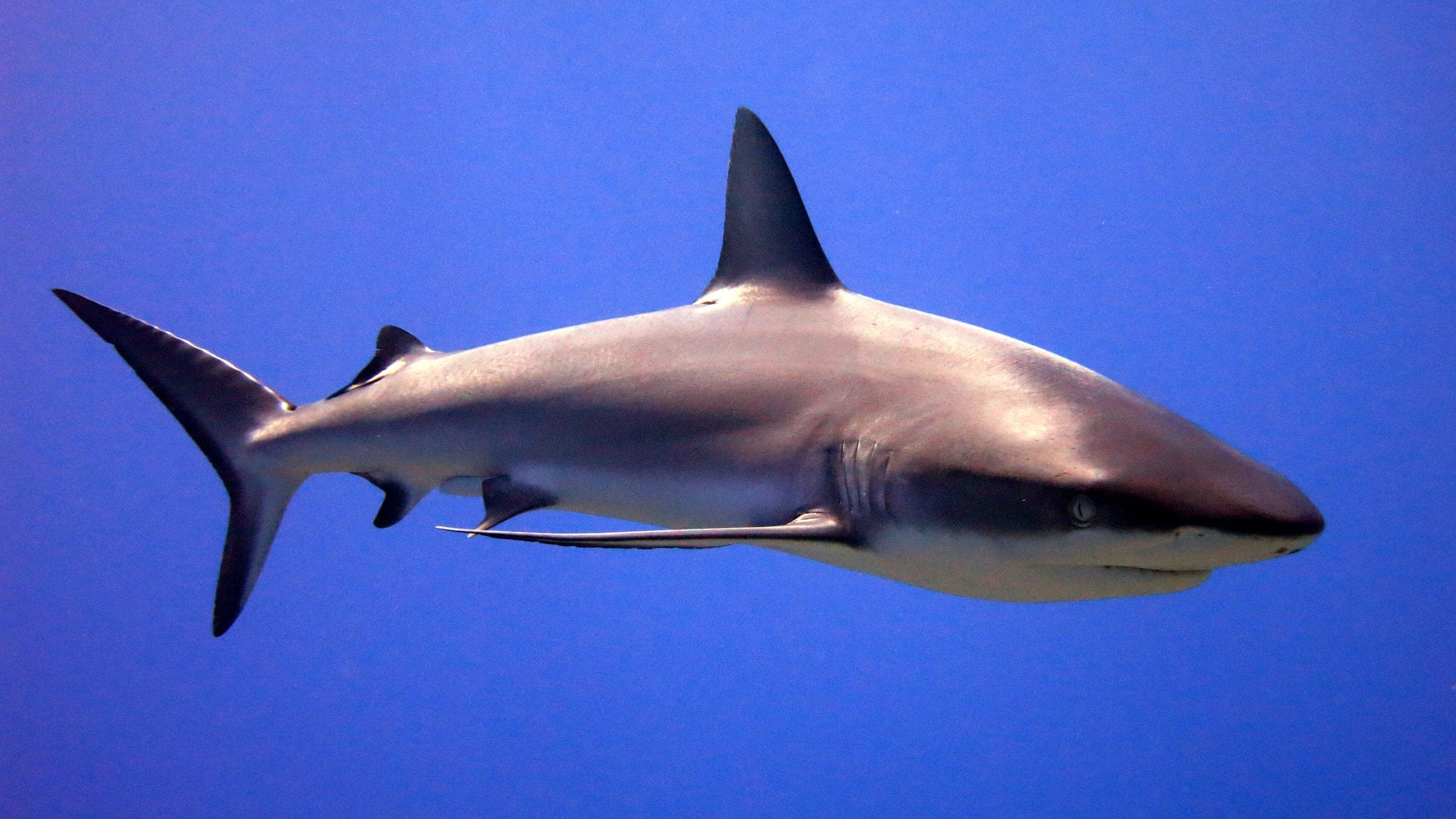
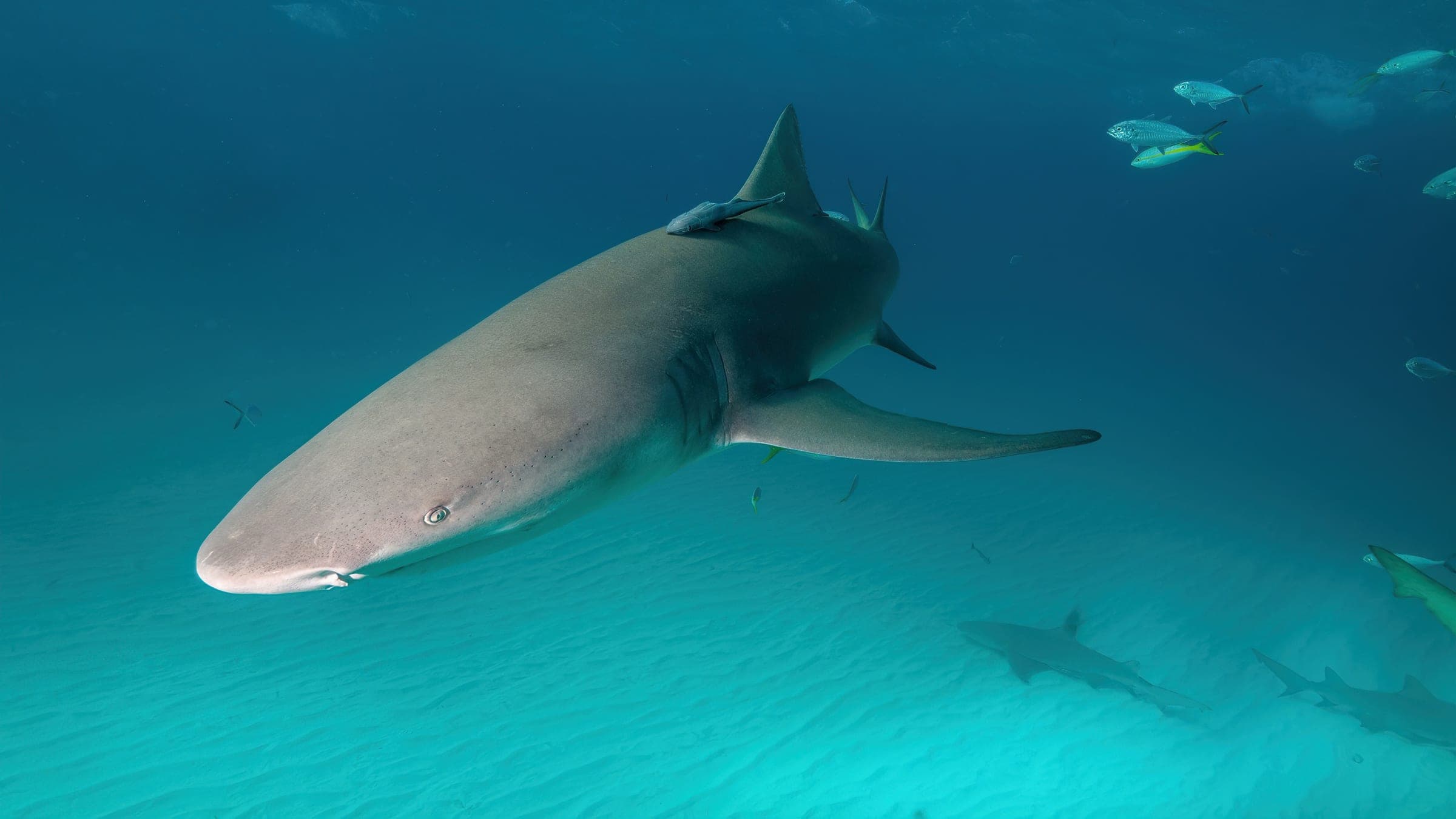
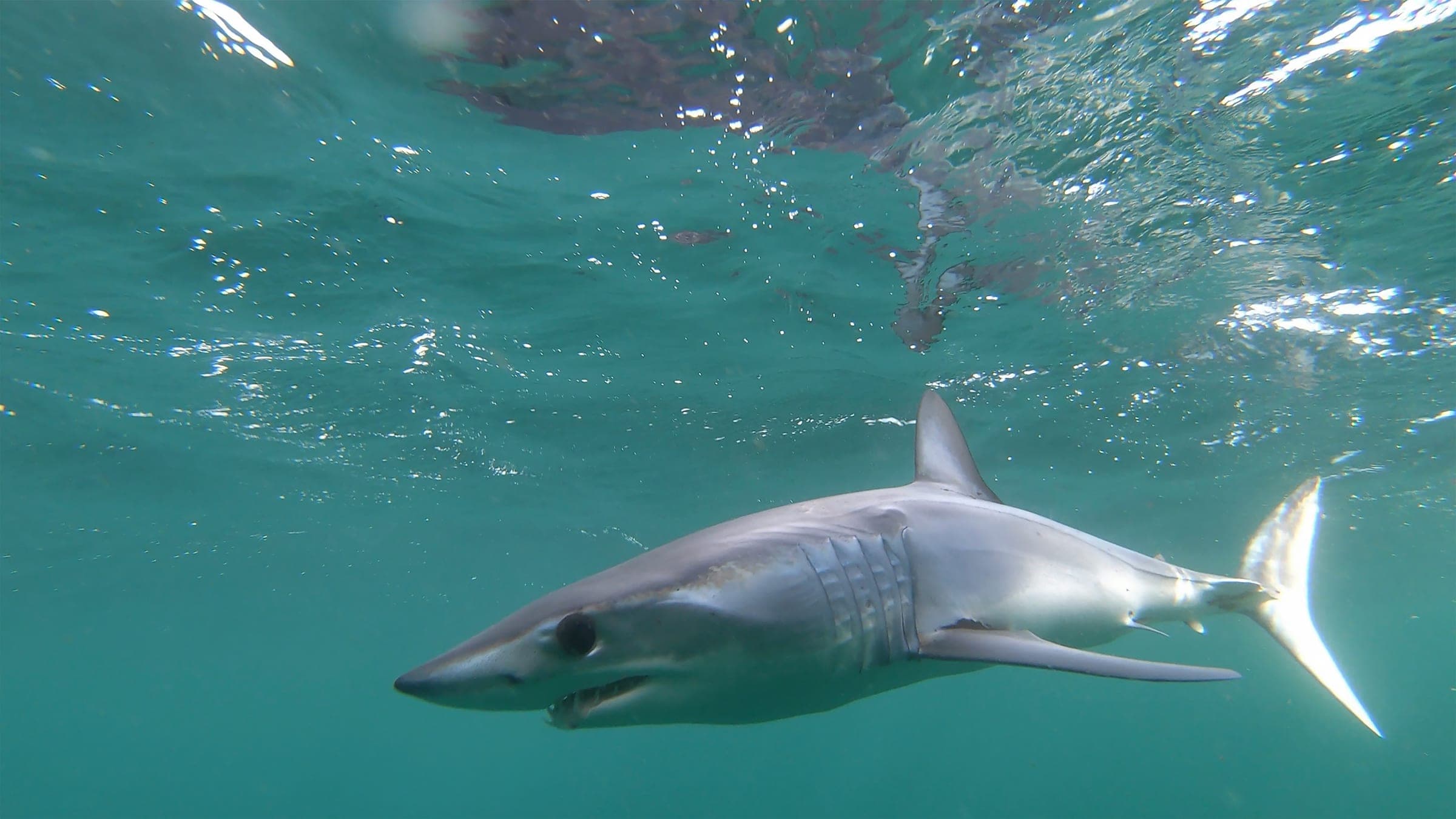
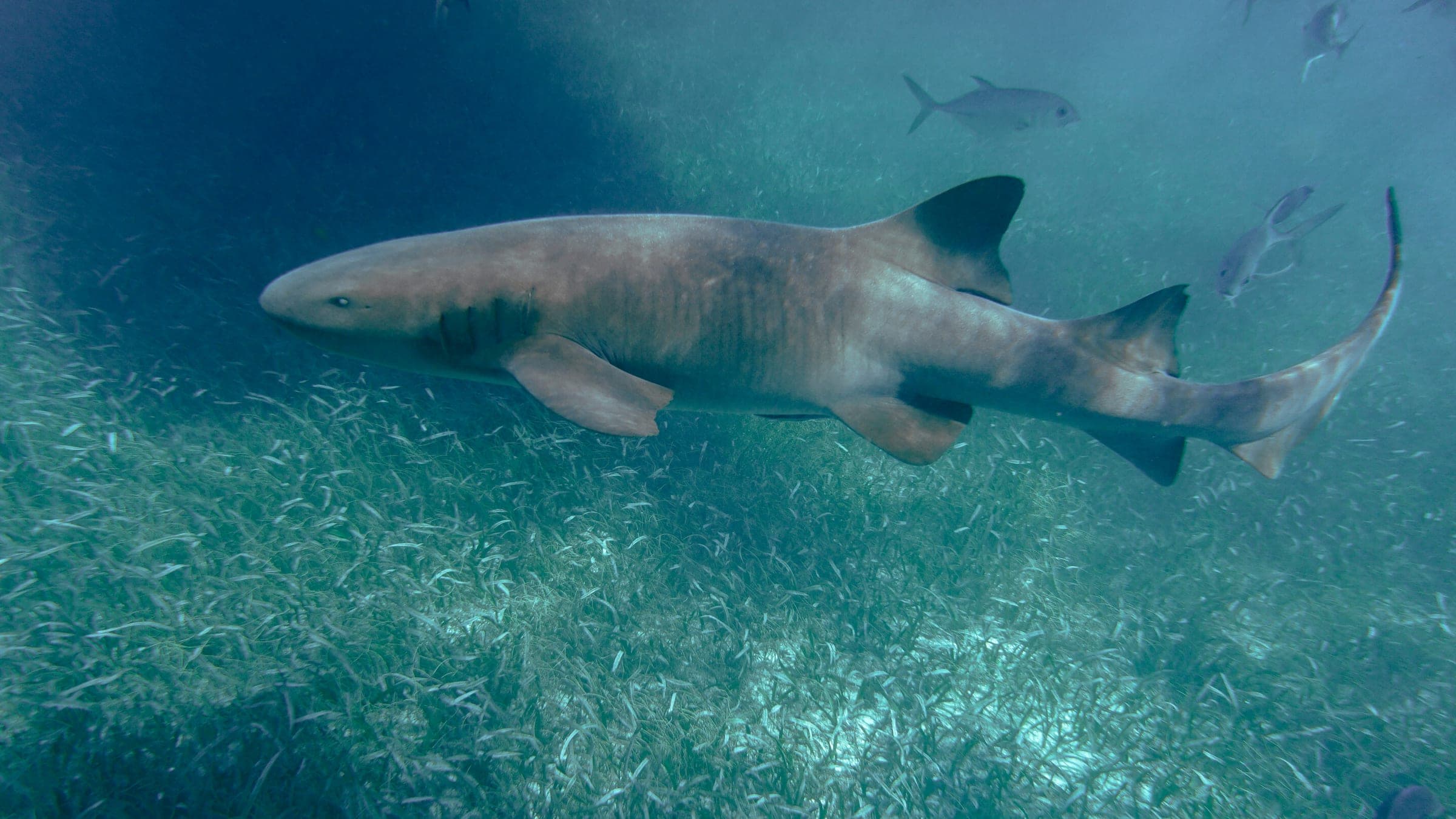
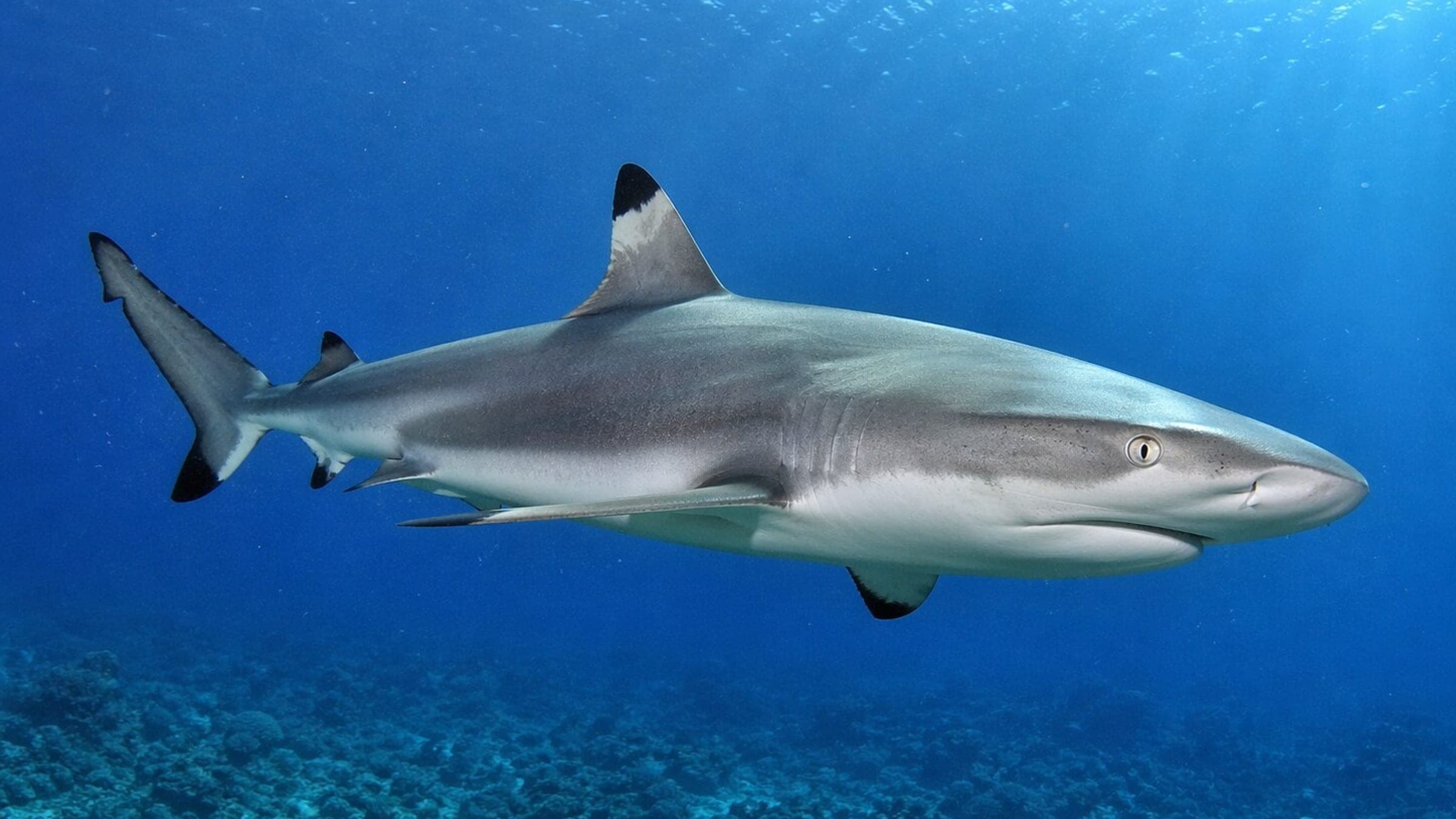
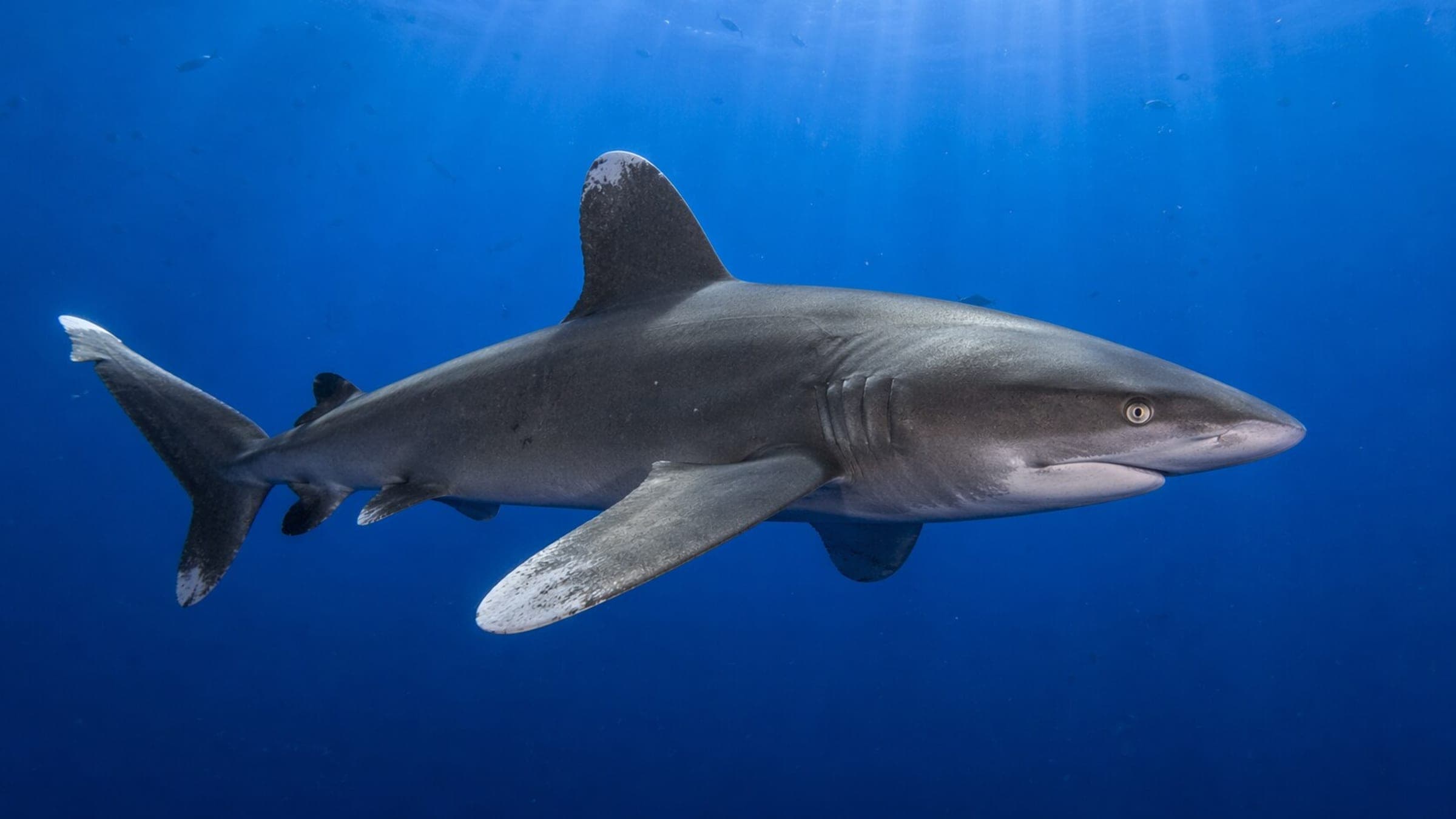
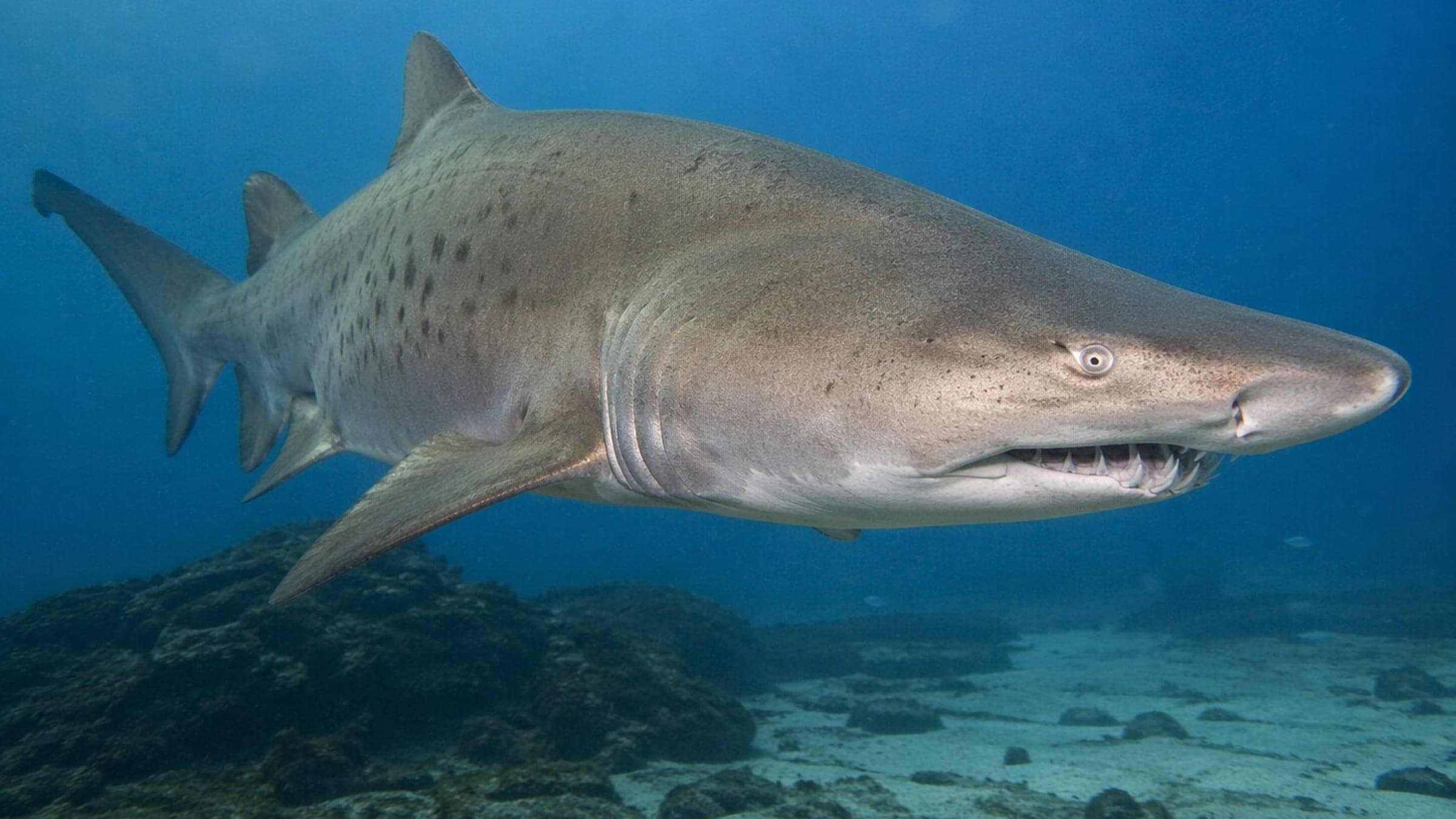
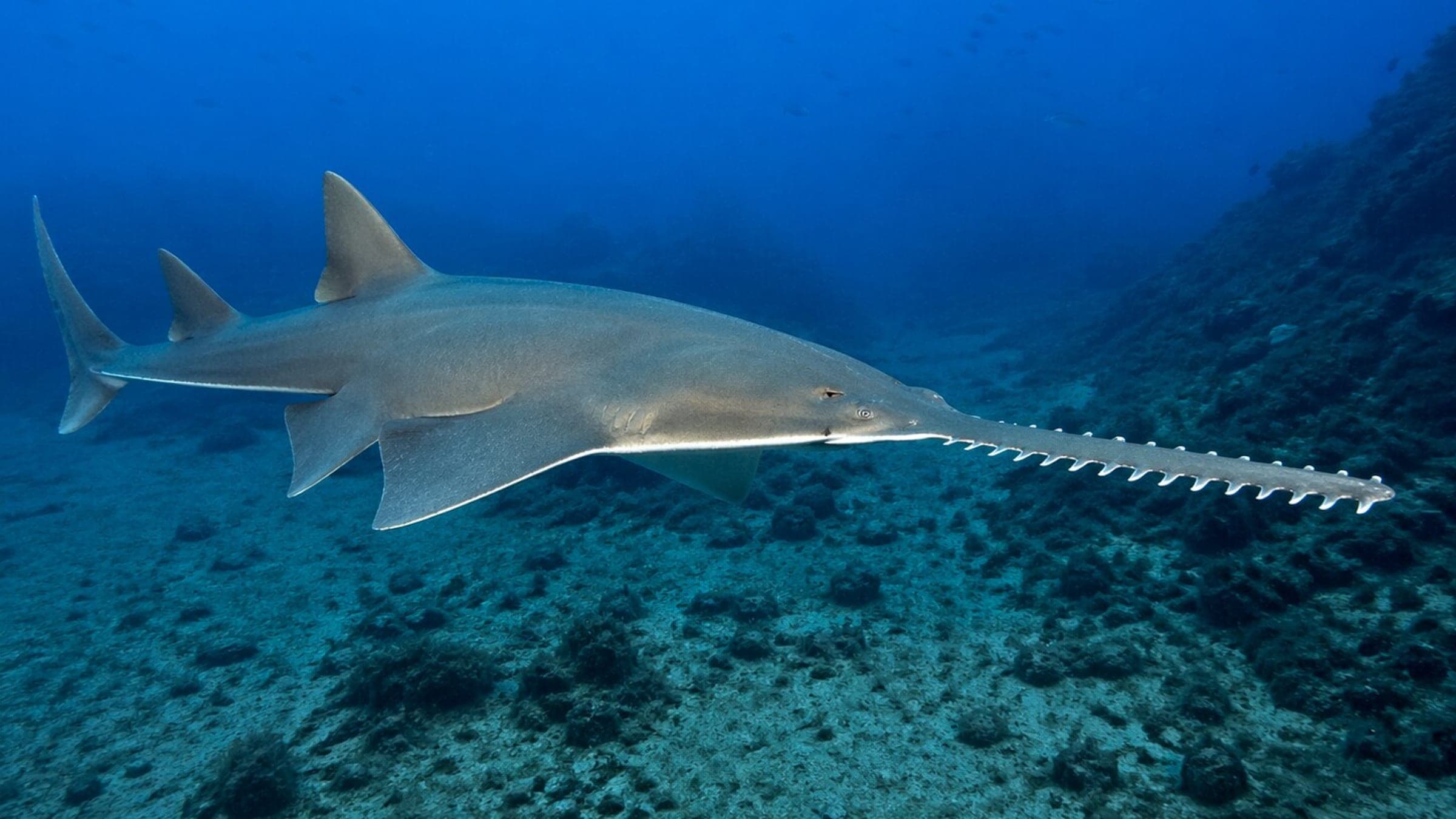
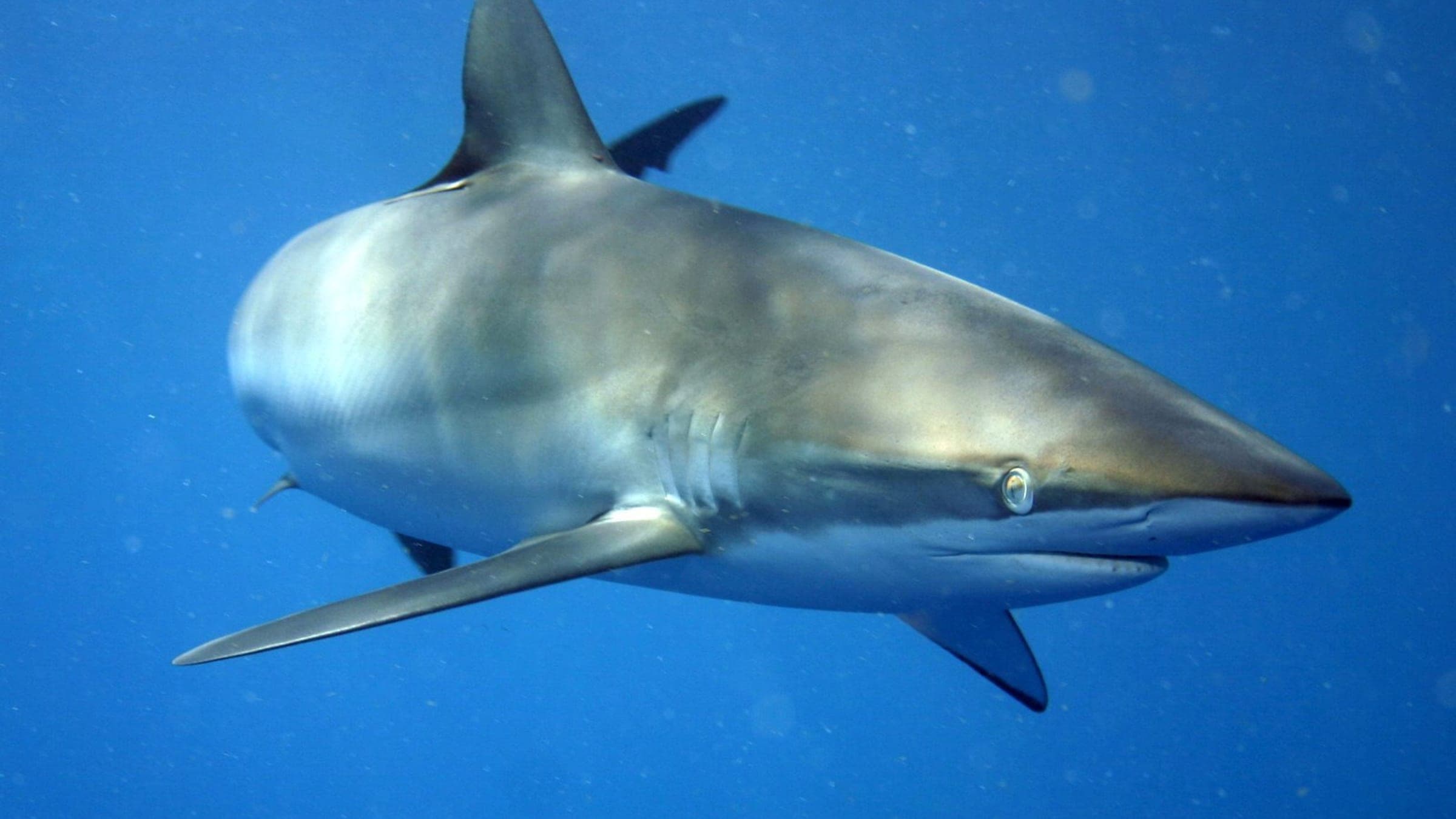
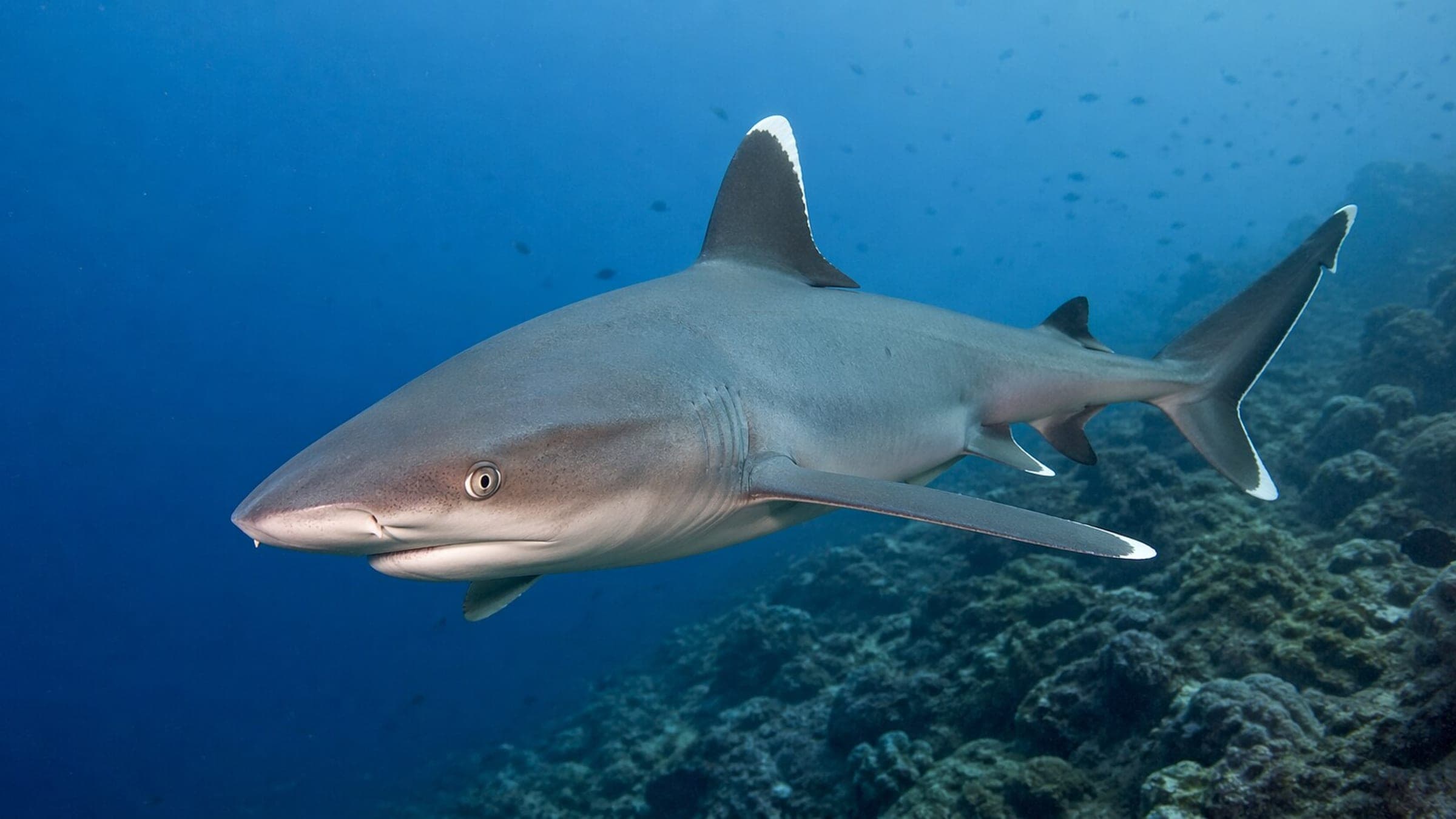
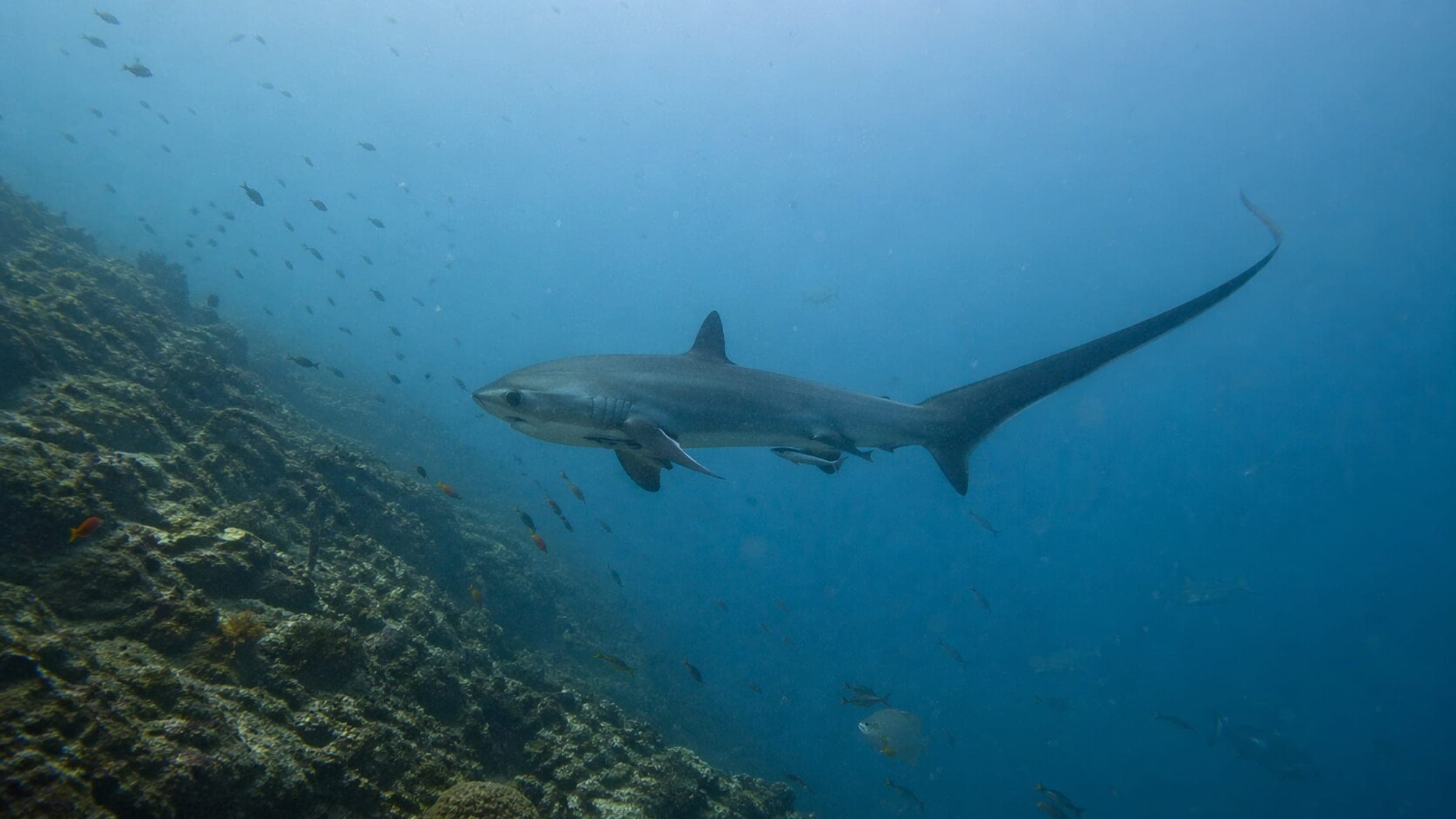
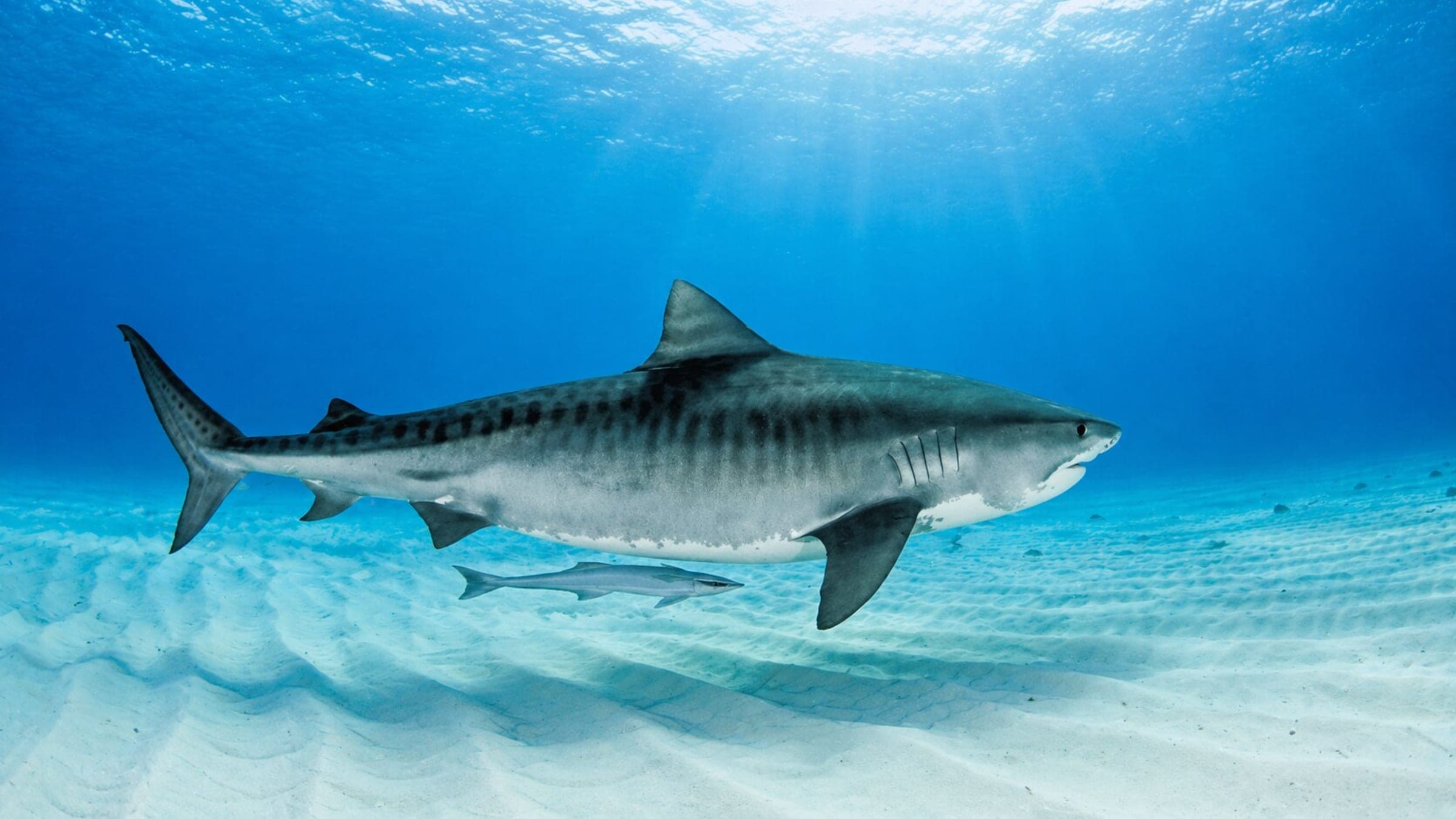
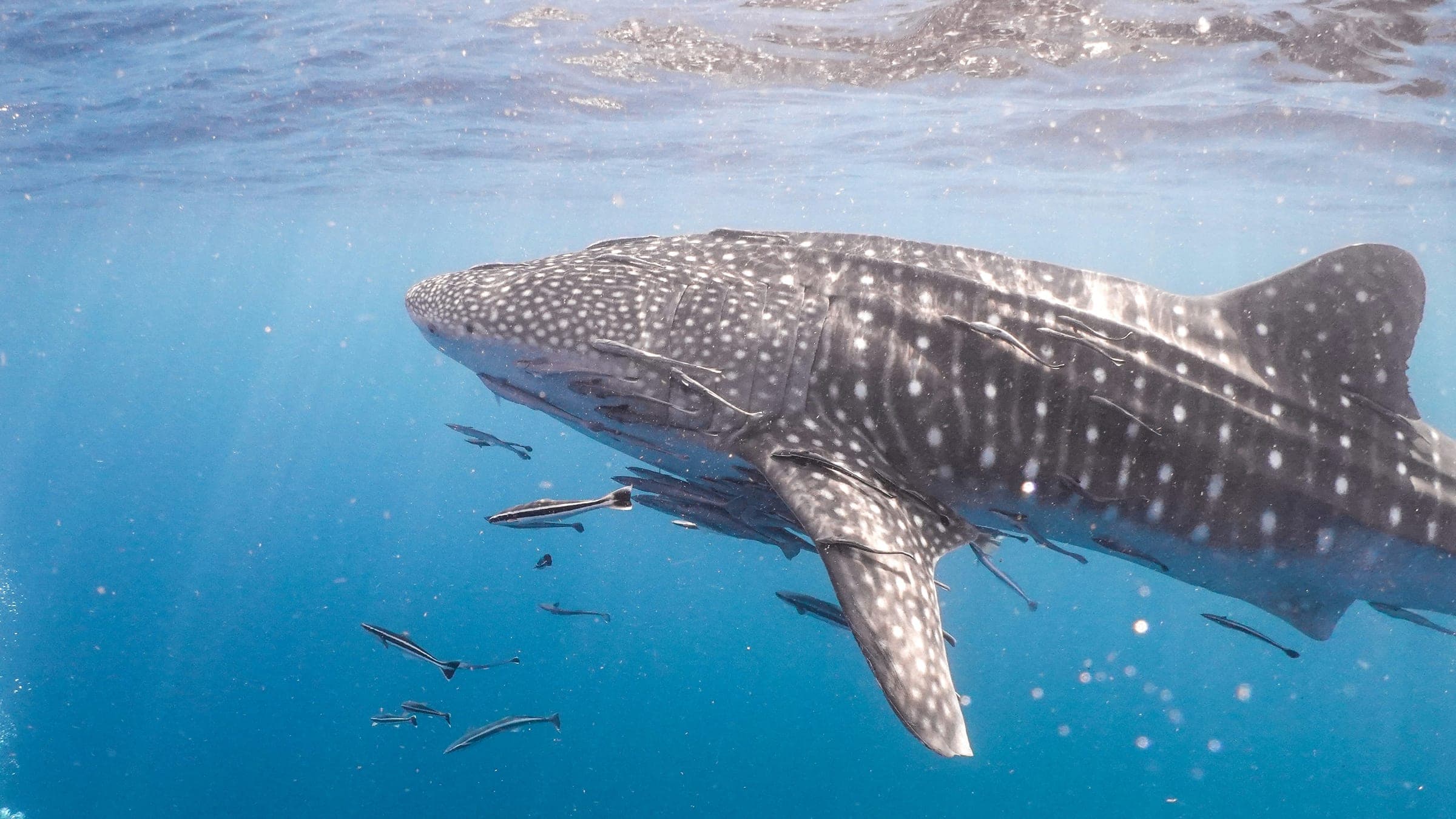
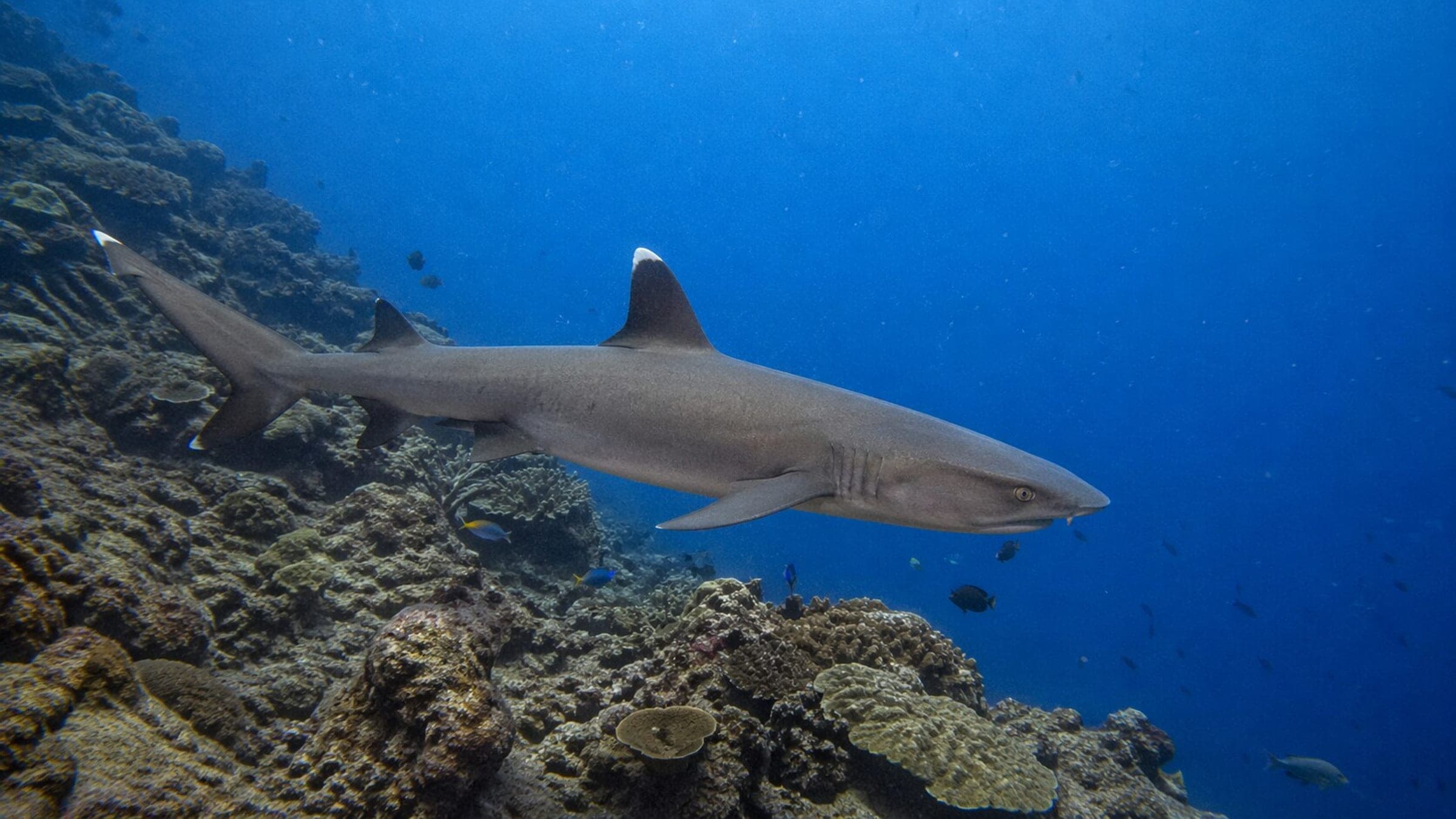
Exposed gill slits and cartilage-based build
Most sharks show multiple exposed gill slits instead of a single bony gill cover, and their lighter cartilage skeleton helps explain their buoyant, efficient movement underwater.
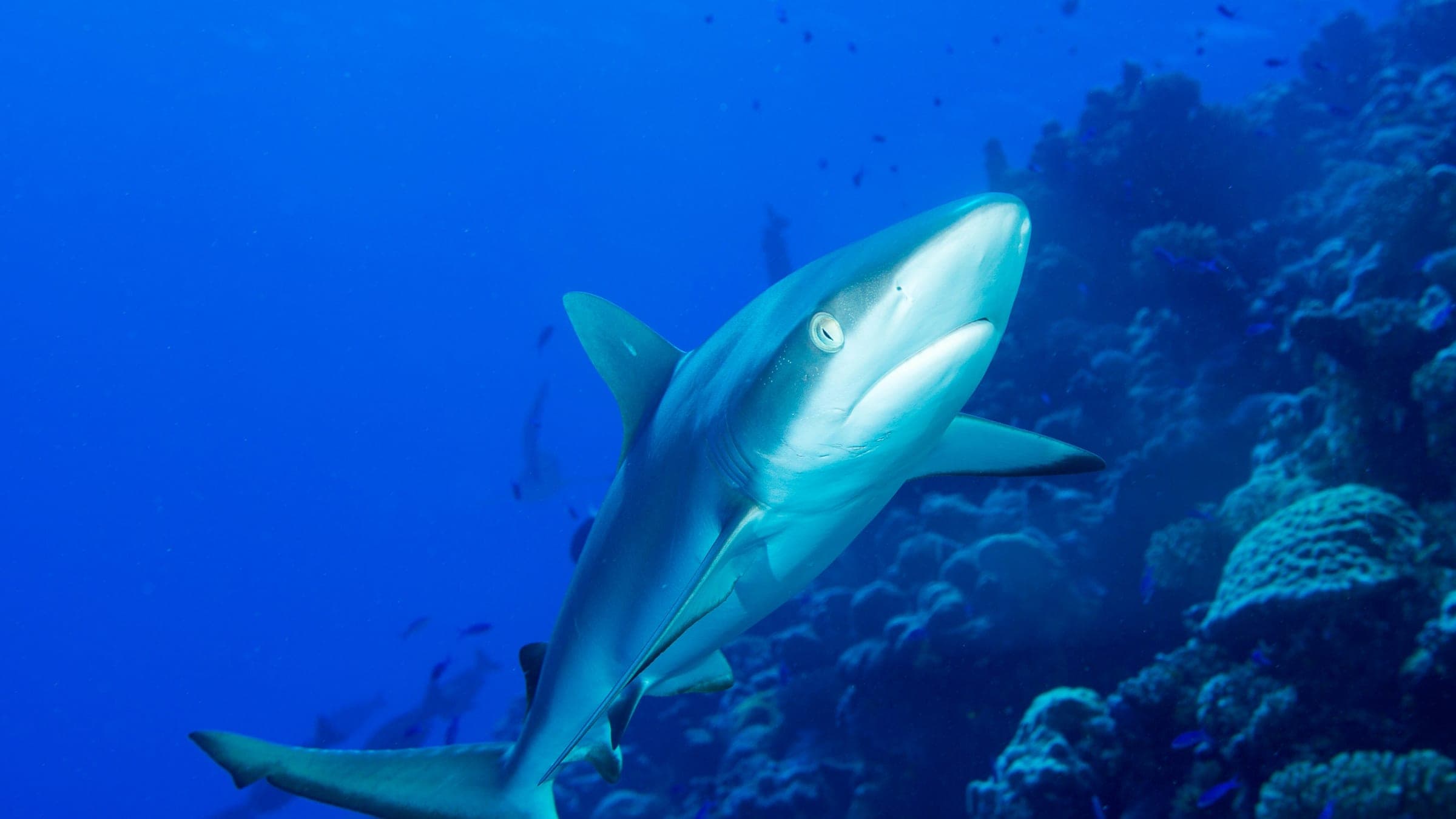
Sharks range from reef hunters to huge plankton feeders, and their body shape, habitat, and movement patterns change the kind of underwater encounter divers can expect.
Group Guide
A group-level field guide built to move divers from broad intent into the right species, destinations, and encounter planning.
Sharks span reef, pelagic, deep-water, and bottom-dwelling forms, so "shark diving" can mean anything from a current-swept reef pass to a blue-water drift. Good trip planning starts by narrowing the encounter type rather than treating sharks as one uniform bucket.
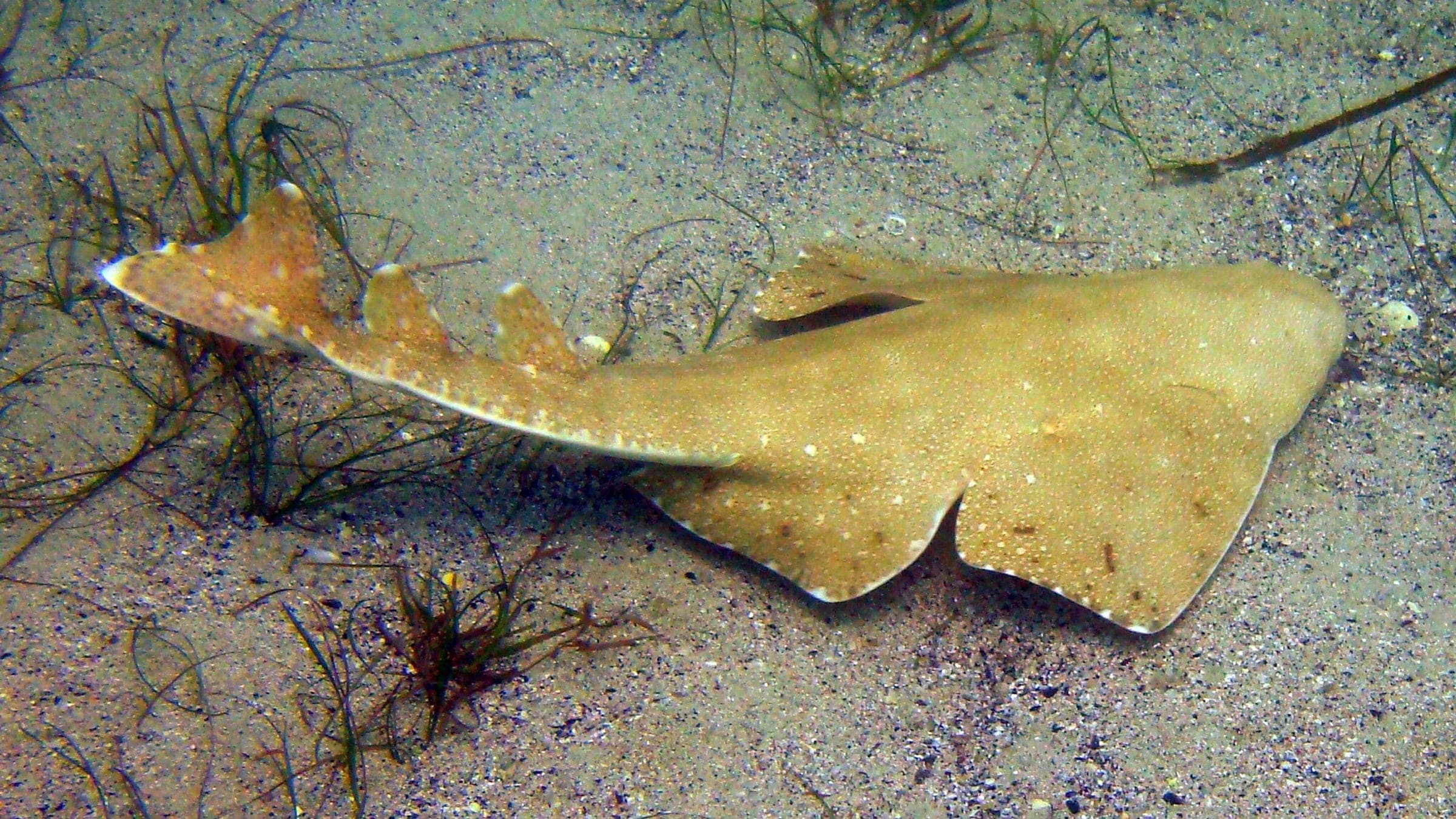
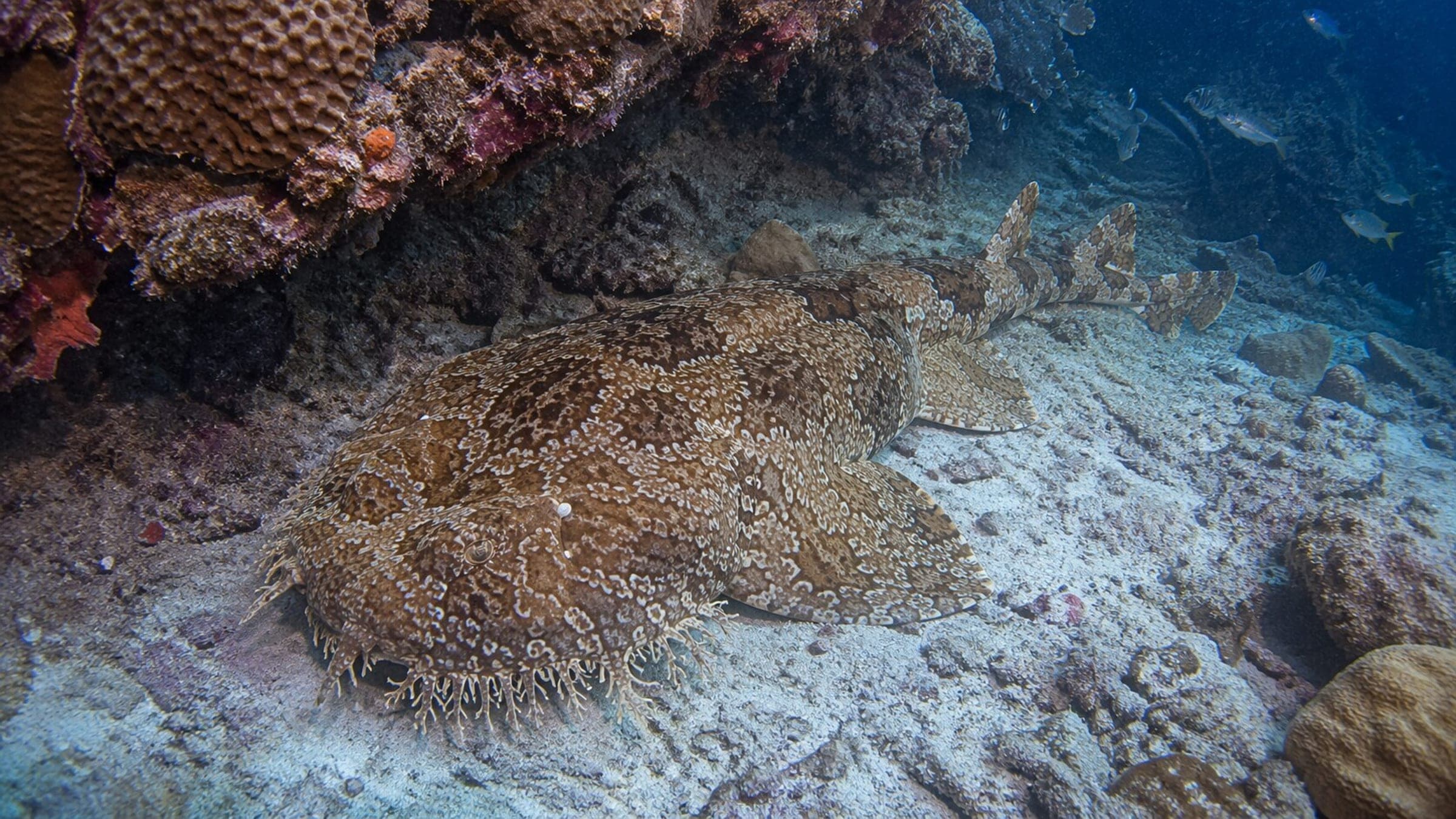
Habitat and silhouette are the fastest filters underwater. A bulky reef shark on a point, a cruising pelagic offshore, and a flattened ambush hunter such as angel sharks point to very different briefings, conditions, and photographer expectations.
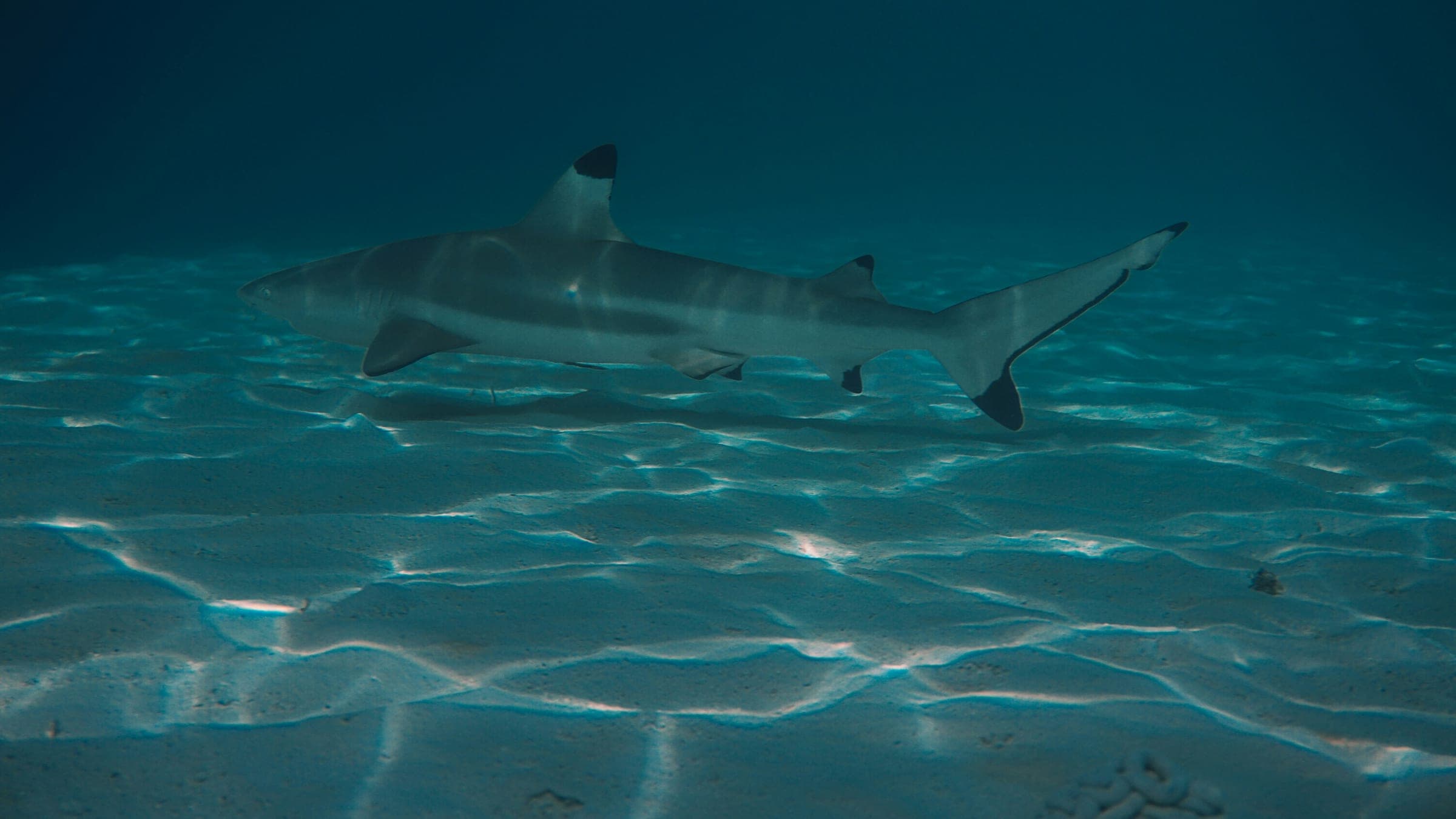
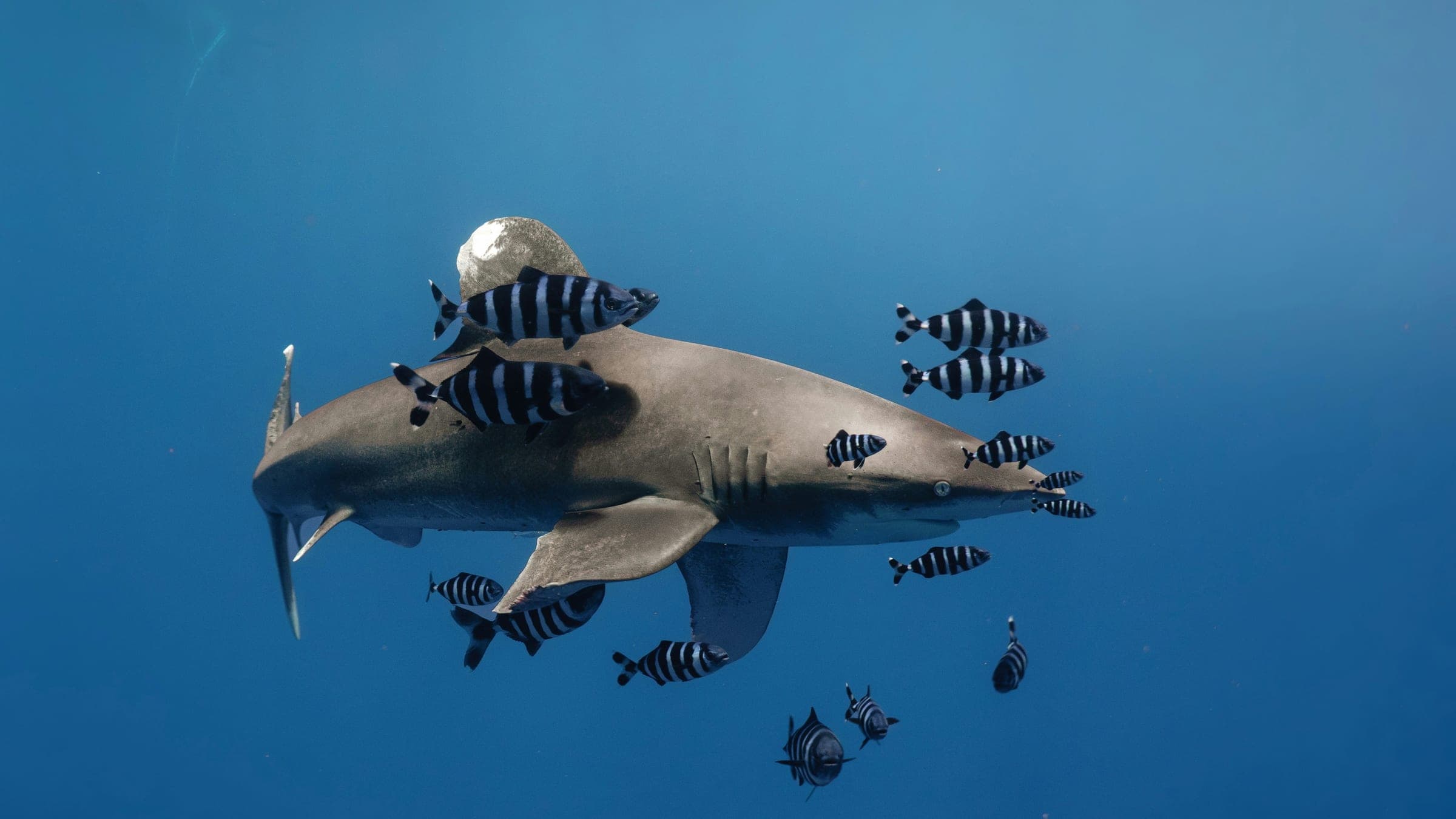
Most sharks share exposed gill slits, replaceable teeth, and a tail built for lift, but divers usually separate them by head shape, first dorsal fin position, body proportions, and patterning. White tips, bars, spots, hammer-shaped heads, or a flattened body profile are often more useful than color alone.
Sharks occur from coral reefs and continental shelves to the open ocean, polar waters, and the deep sea. Some species stay closely tied to reefs, channels, or nursery areas, while others move across entire ocean basins, so season, current, and local habitat matter more than the broad group label.
Diet follows body plan. Many sharks feed on fishes, cephalopods, crustaceans, or rays; larger predatory species may also take turtles, seabirds, or marine mammals; and filter-feeding sharks specialize in dense plankton blooms.
This group guide pulls together 22 published Sharks guides so divers can move from broad trip intent to the right species pages, destinations, and dive spots faster.
Across the group, shark conservation outcomes are highly species- and region-specific, but the broad pattern is consistent: fishing pressure, bycatch, and wildlife trade have reduced many populations, and recovery can be slow because many sharks grow slowly and mature late. Divers should treat a strong local encounter rate as a site-level planning signal, not as proof that sharks are secure everywhere.
Sharks occupy nearly every marine setting used by divers, from shallow reefs and coastal shelves to offshore blue water and the deep sea. That range is why local briefings matter so much: a reef shark encounter is often built around structure and current, while pelagic encounters may depend on timing, bait concentration, or seasonal movement.
Movement also varies widely within the group. Some species remain closely tied to reefs, channels, or nursery areas, while others roam across very large distances between oceanic feeding grounds, coastal pupping areas, or seasonal hotspots.
Coral Coast, Viti Levu, Caye Caulker, and San Pedro (Ambergris Caye), Belize currently stand out as strong destination entry points for Sharks planning.
United States of America, French Polynesia, and Australia are some of the clearest country-level starting points for this group right now.
Most sharks show multiple exposed gill slits instead of a single bony gill cover, and their lighter cartilage skeleton helps explain their buoyant, efficient movement underwater.
Divers usually narrow sharks fastest by snout shape, the size and placement of the first dorsal fin, pectoral-fin posture, and the asymmetrical tail used for lift.
Tooth shape tracks feeding strategy: cutting teeth, grasping teeth, crushing teeth, or tiny filter-feeder teeth all point to different shark lineages and behaviors.
White tips, bars, spots, saddle markings, or a flattened bottom-resting posture are often more reliable than color tone alone when visibility is mixed.
Sharks include more than 500 species, from tiny deep-water species and bottom-resting ambush hunters to giant plankton-feeding whale sharks.
Rows of replacement teeth let sharks shed and replace worn teeth throughout life, with tooth shape changing dramatically across feeding styles.
Instead of a gas-filled swim bladder, sharks rely on lift from swimming plus a large oil-rich liver and a relatively light cartilage skeleton.
Divers can encounter sharks on reefs, in open ocean, over sandy bottoms, in kelp systems, and even in very cold or very deep water.
Sharks occupy nearly every marine setting used by divers, from shallow reefs and coastal shelves to offshore blue water and the deep sea. That range is why local briefings matter so much: a reef shark encounter is often built around structure and current, while pelagic encounters may depend on timing, bait concentration, or seasonal movement.
Movement also varies widely within the group. Some species remain closely tied to reefs, channels, or nursery areas, while others roam across very large distances between oceanic feeding grounds, coastal pupping areas, or seasonal hotspots.
Shark diets vary by species and body plan rather than by the group label alone. Across the group, common prey includes fishes, cephalopods, crustaceans, rays, carrion, and in larger predatory species sometimes turtles, seabirds, or marine mammals. Filter-feeding sharks are the clear exception, targeting plankton instead of large prey.
Conservation
A group-level read on the pressures, protections, and diver behavior that matter most across these species.
Across the group, shark conservation outcomes are highly species- and region-specific, but the broad pattern is consistent: fishing pressure, bycatch, and wildlife trade have reduced many populations, and recovery can be slow because many sharks grow slowly and mature late. Divers should treat a strong local encounter rate as a site-level planning signal, not as proof that sharks are secure everywhere.
Give sharks room to choose their distance and direction. Do not chase, touch, corner, or block the animal's exit path, and avoid kneeling on cleaning stations or otherwise turning a natural pass into a crowded photo setup.
Stay streamlined, control your finning, and follow the guide's spacing rules. If baiting or feeding is part of a legal local operation, treat the briefing as mandatory and never improvise your own interaction outside the operator's rules.
Many shark populations are affected by both targeted catch and incidental capture in longline, gillnet, and other fisheries, which can remove animals faster than slow-growing species can replace them.
International demand for fins and other shark products remains a major driver for exploitation in some fisheries and supply chains.
Mangroves, estuaries, shallow coastal zones, and reef-associated habitats support many juvenile and coastal sharks, so habitat degradation can weaken recruitment and local resilience.
Range shifts, warming seas, and pollutant exposure add pressure on top of fishing, especially for sharks that rely on coastal habitats or predictable seasonal patterns.
Many shark species are now covered by CITES Appendix II listings, which do not ban trade outright but require trade to be legal, traceable, and judged sustainable under the treaty framework.
The FAO International Plan of Action for Sharks gives countries a management framework for assessment, monitoring, waste reduction, and conservation planning when their fisheries interact with sharks.
Regional fisheries bodies and national governments use measures such as finning bans, retention rules, catch limits, and species-specific protections to reduce mortality and improve reporting.
Species
Jump into the individual species pages that currently sit inside this wildlife group.
Top Destinations
Destinations surfaced from the linked dive spots associated with species in this group.
Top Countries
The strongest country-level starting points currently linked to this wildlife group.
Top Dive Spots
Directly linked dive spots where species in this group already show up in the planning data.
Tiger Reef Tioman is a current-swept pinnacle for advanced boat dives.
Miyaru Kandu is a protected shark channel with a strong drift.
Boat-access canyon dive in front of San Pedro Town.
Boat-access reef and canyon diving off Ambergris Caye.
Boat reef with coral blocks, caves, and soft corals
Sheltered Red Sea bay with seagrass, reefs, and dugongs.
FAQ
Direct answers to the questions divers and planners tend to ask first.
Research Sources
Primary and supporting references used for the published group guide.
Used for group-level threat framing, overfishing/bycatch pressure, slow recovery, habitat differences, and conservation context.
Used for group-level anatomy, habitat range, buoyancy, tooth replacement, diet breadth, and ecological role.
Used for international shark-management framework and national plan context.
Used for treaty-level trade controls and Appendix II framing across many shark species.
Used for migratory-shark cooperation context; direct browser fetch was bot-protected during research, so claims based on the canonical official instrument description were kept conservative.