Taxonomy
Large mackerel sharks of the family Alopiidae, genus Alopias.
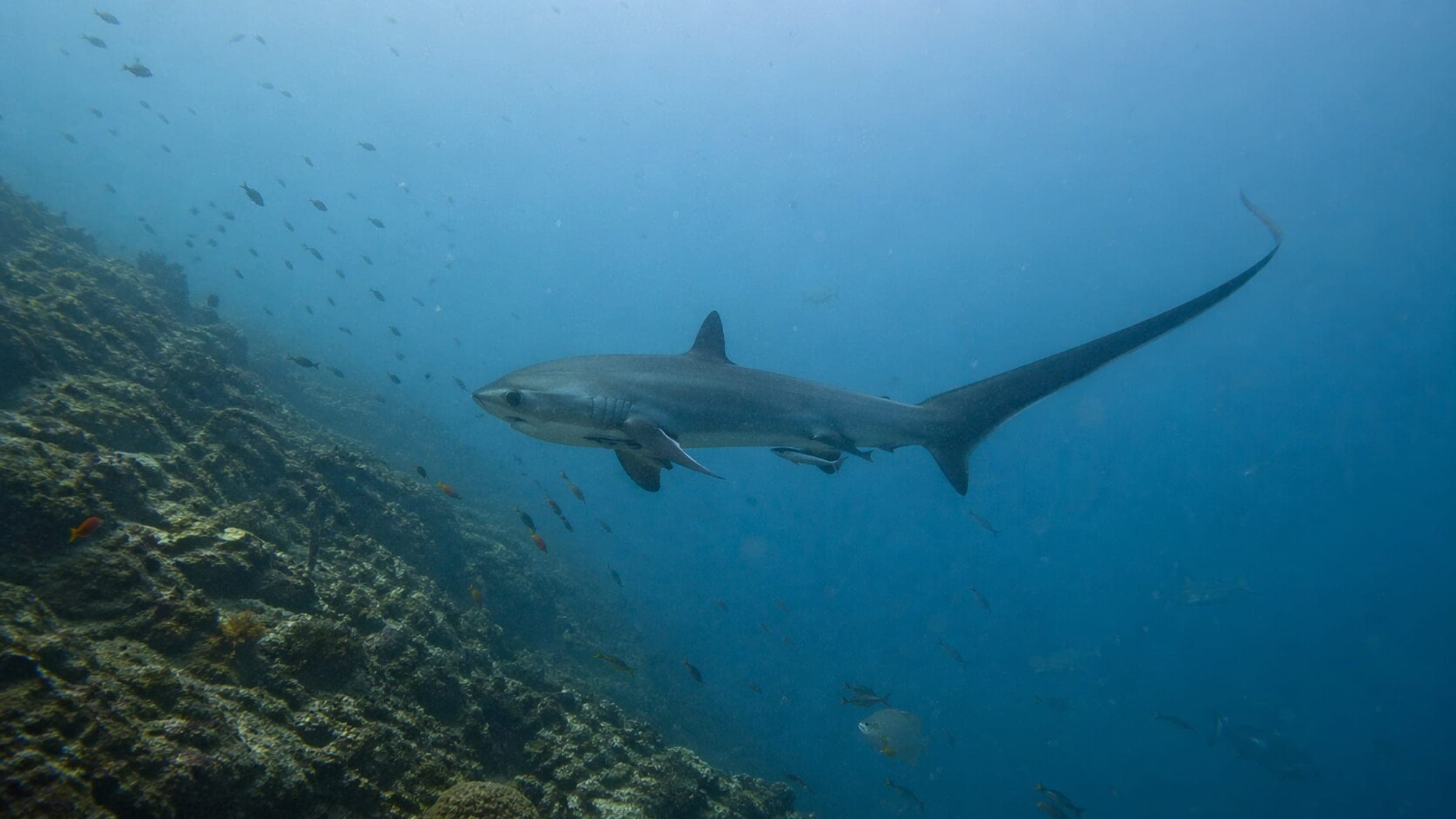
Large mackerel sharks of the genus Alopias found in temperate and tropical oceans worldwide and comprising three extant species.
Species Guide
A clean field guide focused on habitat, identification, behavior, and conservation context without burying the useful parts.
Thresher sharks are large mackerel sharks in the family Alopiidae and genus Alopias. The family contains three extant species. They occur in all temperate and tropical oceans of the world. All three species have been listed as Vulnerable by the IUCN since 2007. Thresher sharks are sought as big-game sport fish and are also hunted commercially for their meat, livers (for shark liver oil), skin (for shagreen) and fins. Despite being active predatory fish, they do not appear to be a threat to humans.
All three thresher shark species have been listed as Vulnerable by the IUCN since 2007; they are targeted by both sport fisheries and commercial exploitation for meat, livers, skin and fins.
Active predatory fish.
The strongest linked planning options currently surface around destinations such as Fuvahmulah, Derawan Islands, Nusa Penida and countries such as Philippines, Maldives, Indonesia for divers building trips around thresher sharks.
Last Updated Mar 9, 2026 · 2 sources
Identification
The visual markers divers can use underwater, plus the species most likely to cause confusion.
Large mackerel sharks of the family Alopiidae, genus Alopias.
The family contains three extant species.
Found in all temperate and tropical oceans of the world.
Diet
Useful feeding context that often explains habitat, movement, and encounter style.
Active predatory fish.
Conservation
Status, pressure, and protection context grounded in cited sources rather than filler.
All three thresher shark species have been listed as Vulnerable by the IUCN since 2007; they are targeted by both sport fisheries and commercial exploitation for meat, livers, skin and fins.
Hunted commercially for meat, livers (for shark liver oil), skin (for shagreen) and fins.
Popular big-game sport fish, which contributes to pressure on populations.
Responsible Encounters
Conservation-minded guidance for divers who want the encounter without adding pressure.
Give thresher shark space, avoid blocking the animal's path, and follow local site and operator rules for wildlife interactions with sharks.
Field Notes
Useful species context that makes the encounter more meaningful once you are underwater.
Despite being active predators, thresher sharks do not appear to be a threat to humans.
They are used for meat, liver oil, shagreen (skin) and fins.
All three species are popular targets for big-game sport fishing.
Top Destinations
Destinations surfaced from the linked dive spots associated with this species.
Top Countries
The strongest country-level starting points currently linked to this species.
Top Dive Spots
Directly linked dive spots where this species already shows up in the planning data.

Boat-only south-point drift for pelagics off Fuvahmulah.
Boat-access reef with sharks, turtles, and snapper.
North Fuvahmulah reef-and-wall dive with pelagic passes.
Shallow fringing reef with an easy snorkel-friendly slope.
Batumulapan is a drift-friendly Nusa Penida wall dive.
Costa Blanca Denia and Javea: a site-specific underwater feature shore dive
FAQ
Clear planning and conservation answers written for search visibility and AI retrieval.
Research Sources
Primary and credible references behind the field-guide and conservation claims on this page.
Primary wildlife guide source.
Supporting wildlife source.
Related Species
Related species guides in the same encounter family.