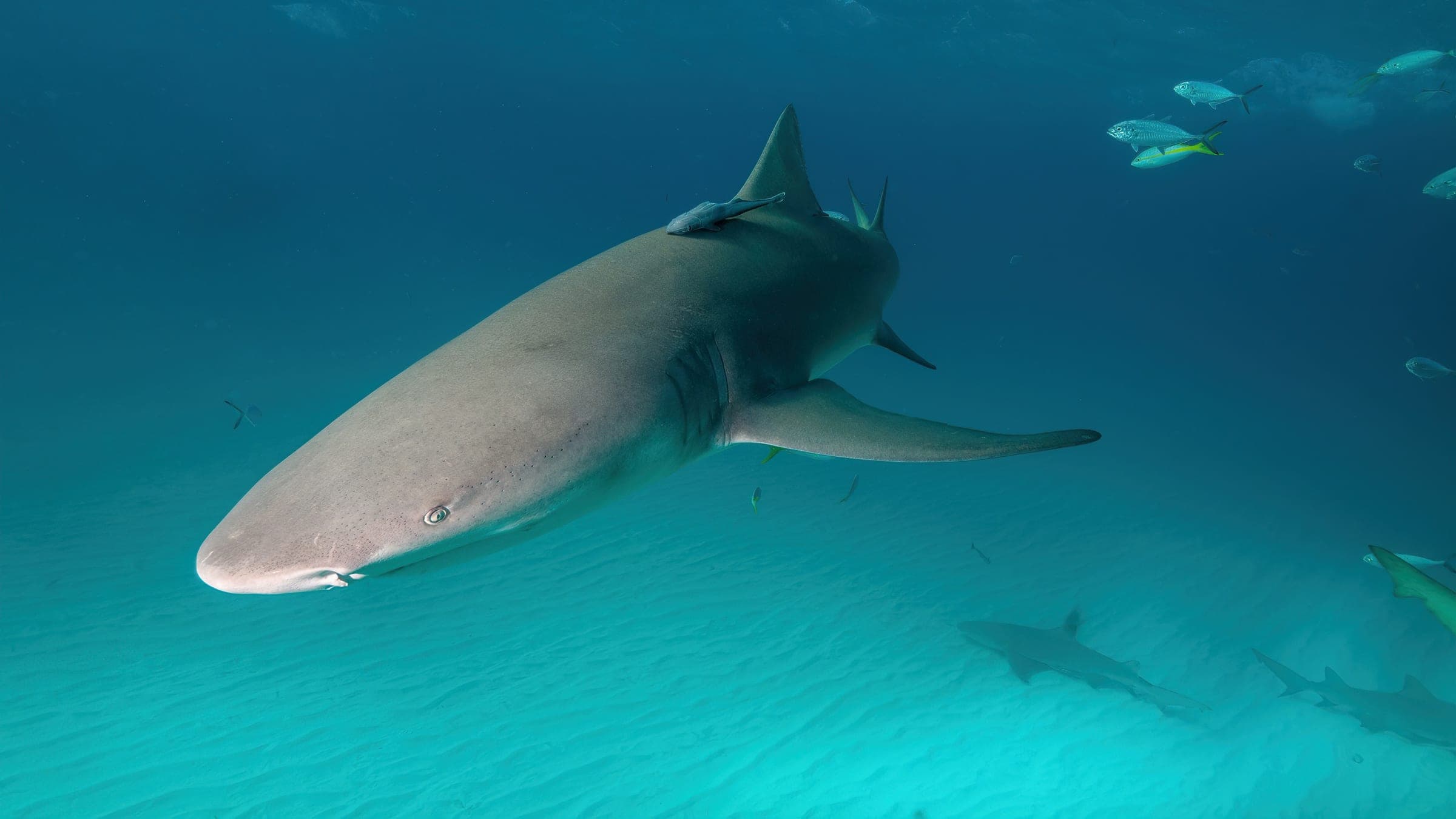
Body shape
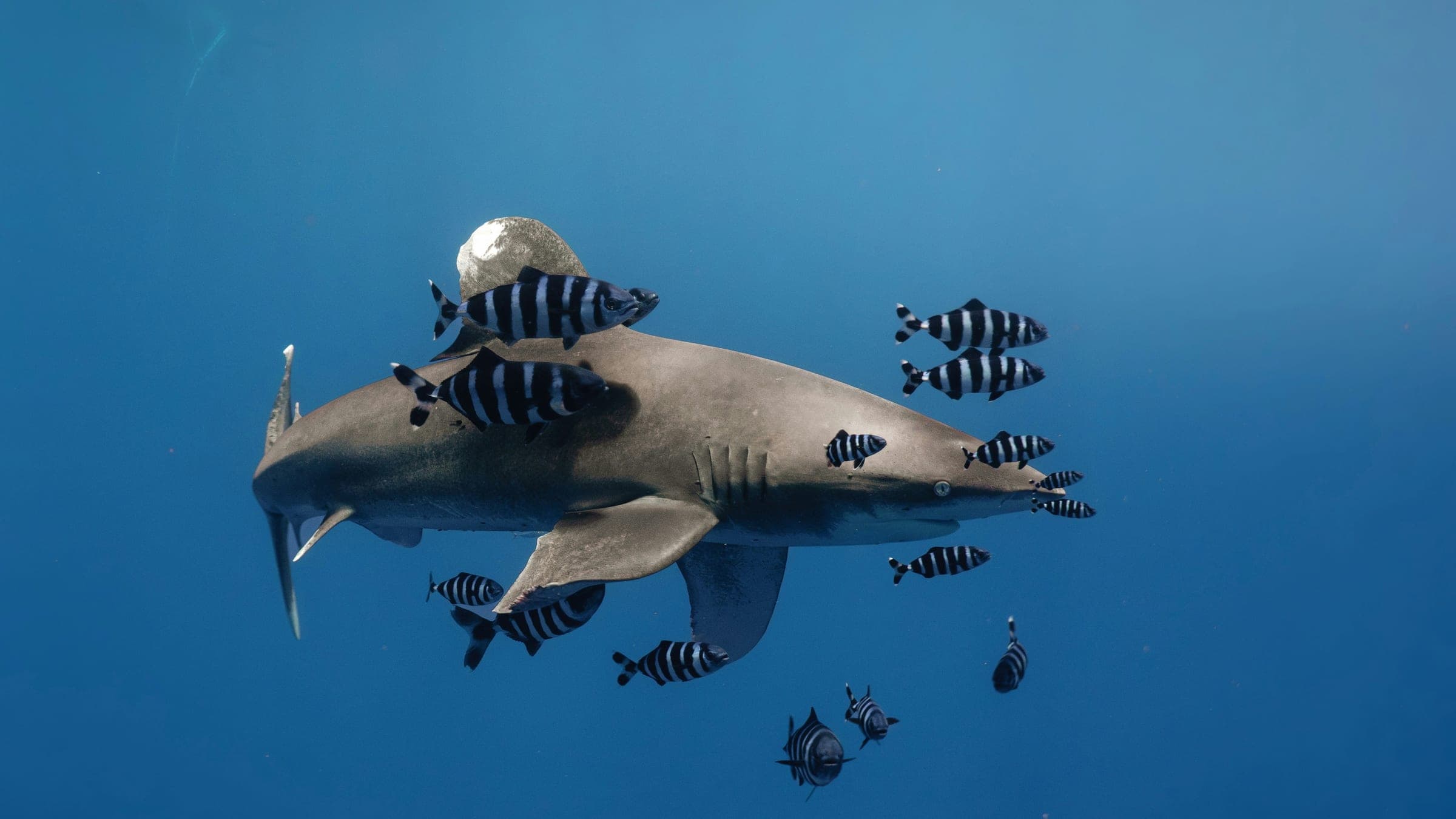
Stocky body typical of a large requiem shark.
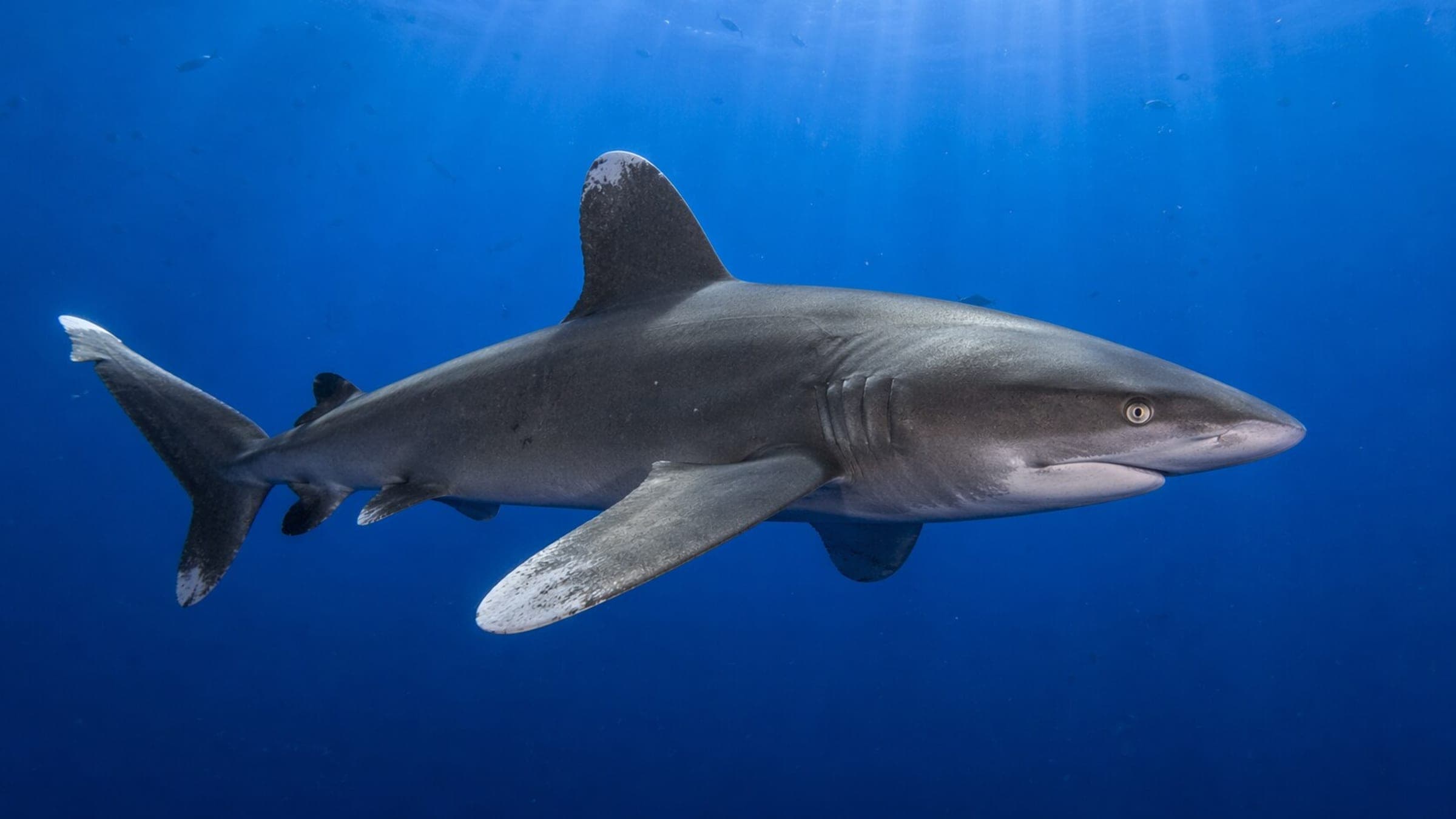
Carcharhinus longimanus
A large pelagic requiem shark with elongated rounded fins tipped in white, found in tropical and warm temperate seas.
Species Guide
A clean field guide focused on habitat, identification, behavior, and conservation context without burying the useful parts.
The oceanic whitetip shark is a large requiem shark inhabiting the pelagic zone of tropical and warm temperate seas. It has a stocky body and distinctive elongated, rounded fins with white tips. The species is typically solitary but may gather in large numbers where food is concentrated. It is slow-moving yet opportunistic and has a reputation for aggressive behavior. Its diet is composed mainly of bony fish and cephalopods. Females give live birth. The IUCN Red List classifies the oceanic whitetip shark as Critically Endangered; populations have been reported to decline steeply due to mounting fishing pressure and harvest for fins and meat.
Populations have fallen steeply in recent studies as the species faces mounting fishing pressure and is harvested for its fins and meat across its range.
Pelagic (open ocean) species; typically slow-moving and solitary but may gather in large numbers where food is concentrated; described as opportunistic and aggressive.
The strongest linked planning options currently surface around destinations such as Marsa Alam (Abu Dabbab and Elphinstone), Fernando de Noronha, Fuvahmulah and countries such as Egypt, Japan, Brazil for divers building trips around oceanic whitetip sharks.
Last Updated Mar 9, 2026 · 3 sources
Identification
The visual markers divers can use underwater, plus the species most likely to cause confusion.
Stocky body typical of a large requiem shark.
Iconic elongated, rounded fins with white tips.
Range and Movement
The broad range, seasonal movement, or migratory behavior that shapes where divers encounter this species.
Pelagic (open ocean) species; typically slow-moving and solitary but may gather in large numbers where food is concentrated; described as opportunistic and aggressive.
Diet
Useful feeding context that often explains habitat, movement, and encounter style.
Main diet components are bony fish and cephalopods.
Conservation
Status, pressure, and protection context grounded in cited sources rather than filler.
Populations have fallen steeply in recent studies as the species faces mounting fishing pressure and is harvested for its fins and meat across its range.
Mounting fishing pressure across its range has driven population declines.
The species is harvested for its fins and meat, contributing to steep population declines.
Responsible Encounters
Conservation-minded guidance for divers who want the encounter without adding pressure.
Exercise caution and maintain distance due to reported opportunistic and aggressive behavior.
Field Notes
Useful species context that makes the encounter more meaningful once you are underwater.
Historically reputed to be dangerous to shipwreck survivors.
Females give live birth.
Top Destinations
Destinations surfaced from the linked dive spots associated with this species.
Top Countries
The strongest country-level starting points currently linked to this species.
Top Dive Spots
Directly linked dive spots where this species already shows up in the planning data.

Big Brother is a remote Red Sea liveaboard dive with sharks and wrecks.
Buraco do Inferno is a compact cave dive in Noronha.
Coral Garden, Menjangan: easy reef diving in West Bali
North-side offshore reef with drift diving and sharks
South-side offshore reef with afternoon light and sharks
Boat-accessed reef-wall-ocean dive with reef and pelagic life
FAQ
Clear planning and conservation answers written for search visibility and AI retrieval.
Research Sources
Primary and credible references behind the field-guide and conservation claims on this page.
Primary wildlife guide source.
Supporting wildlife source.
Taxonomy reference.
Related Species
Related species guides in the same encounter family.