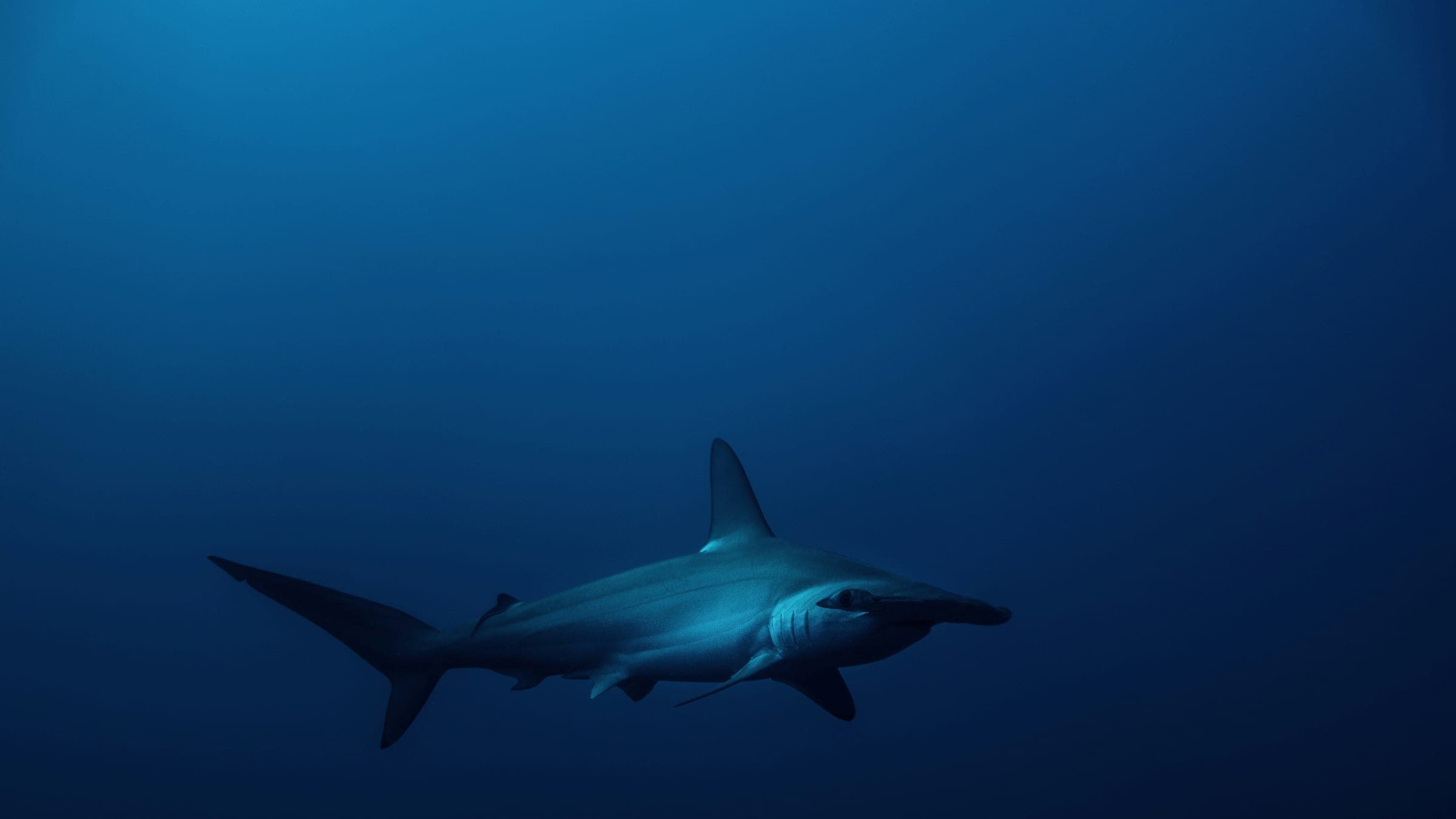
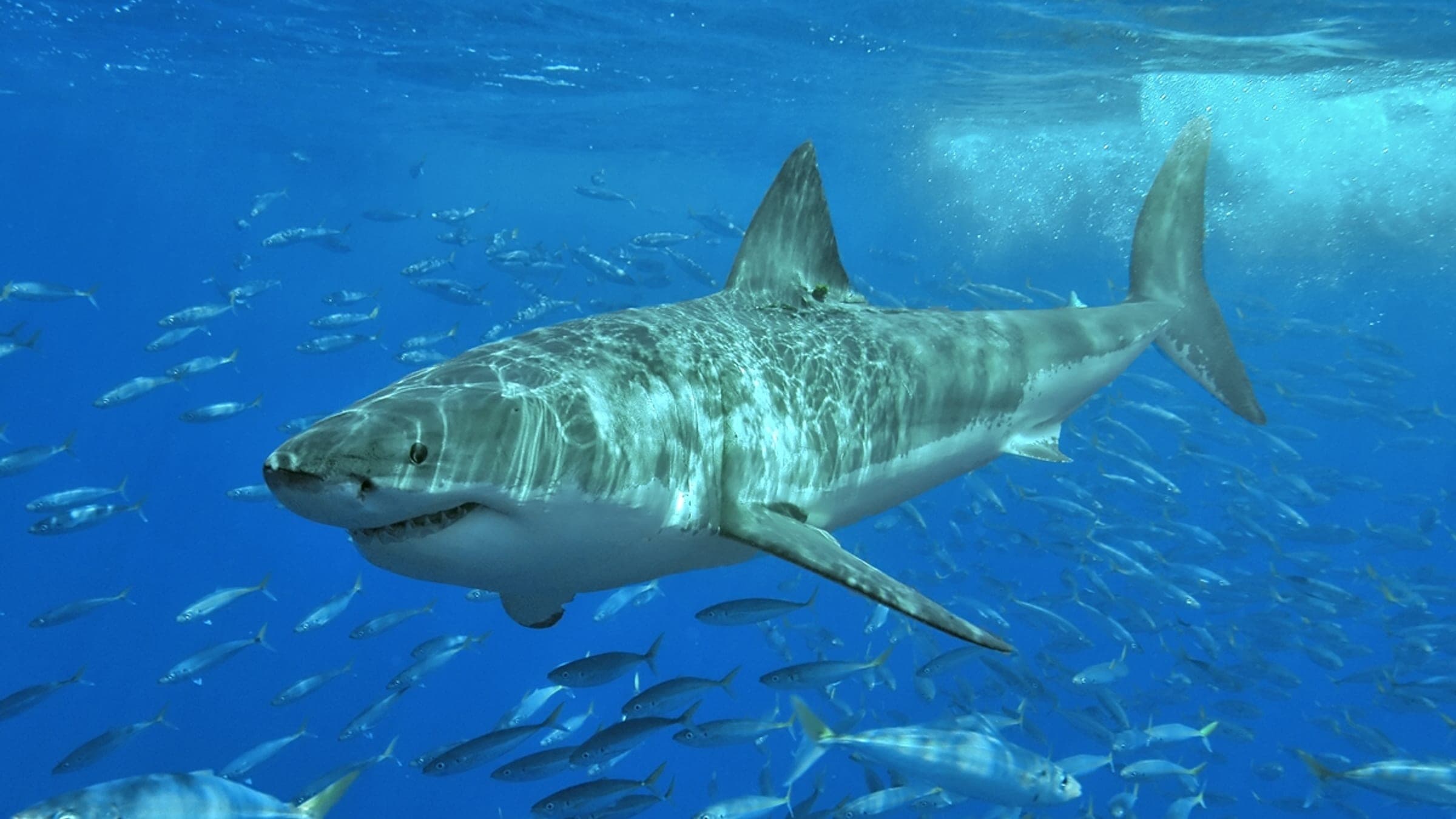
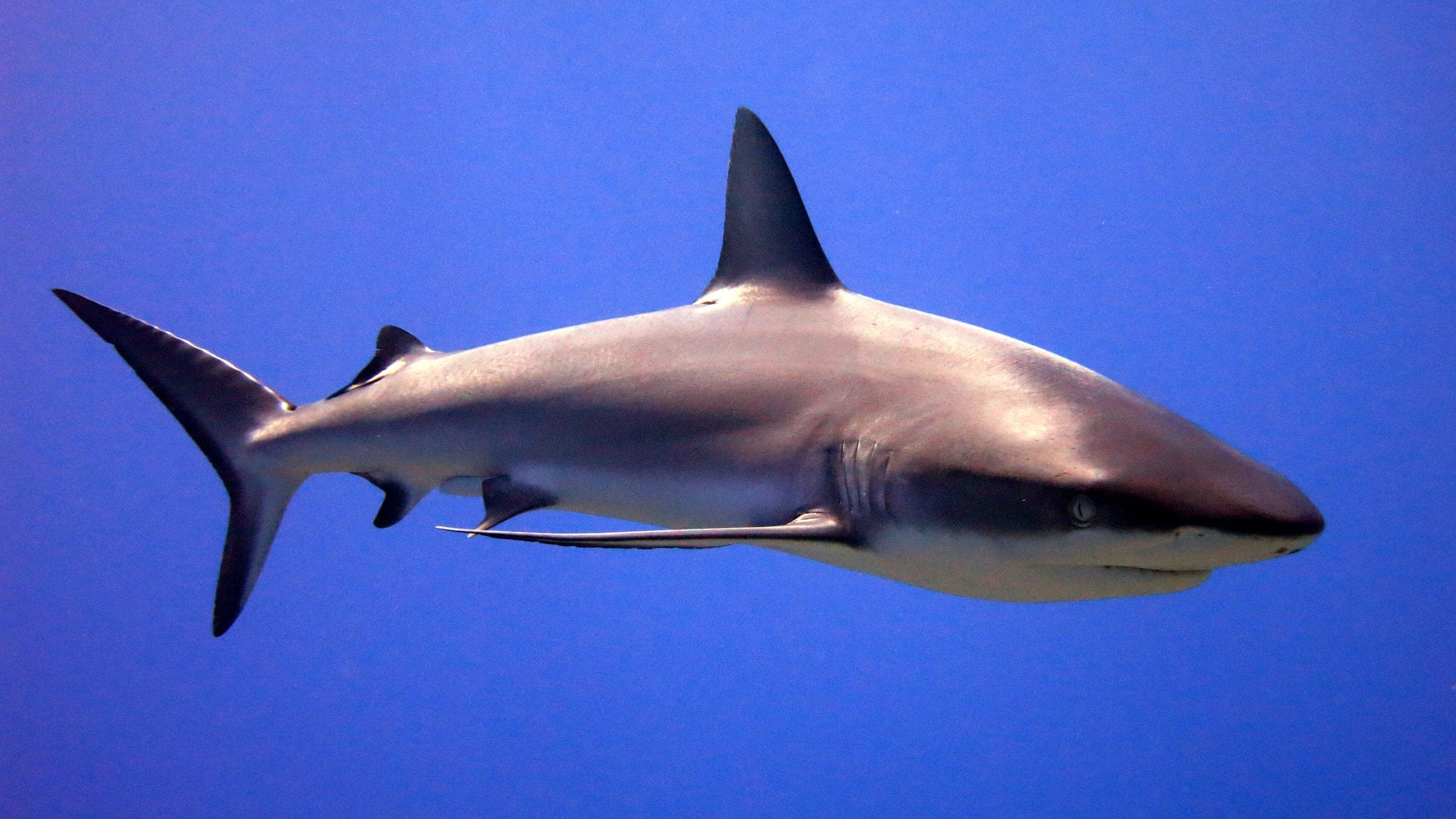
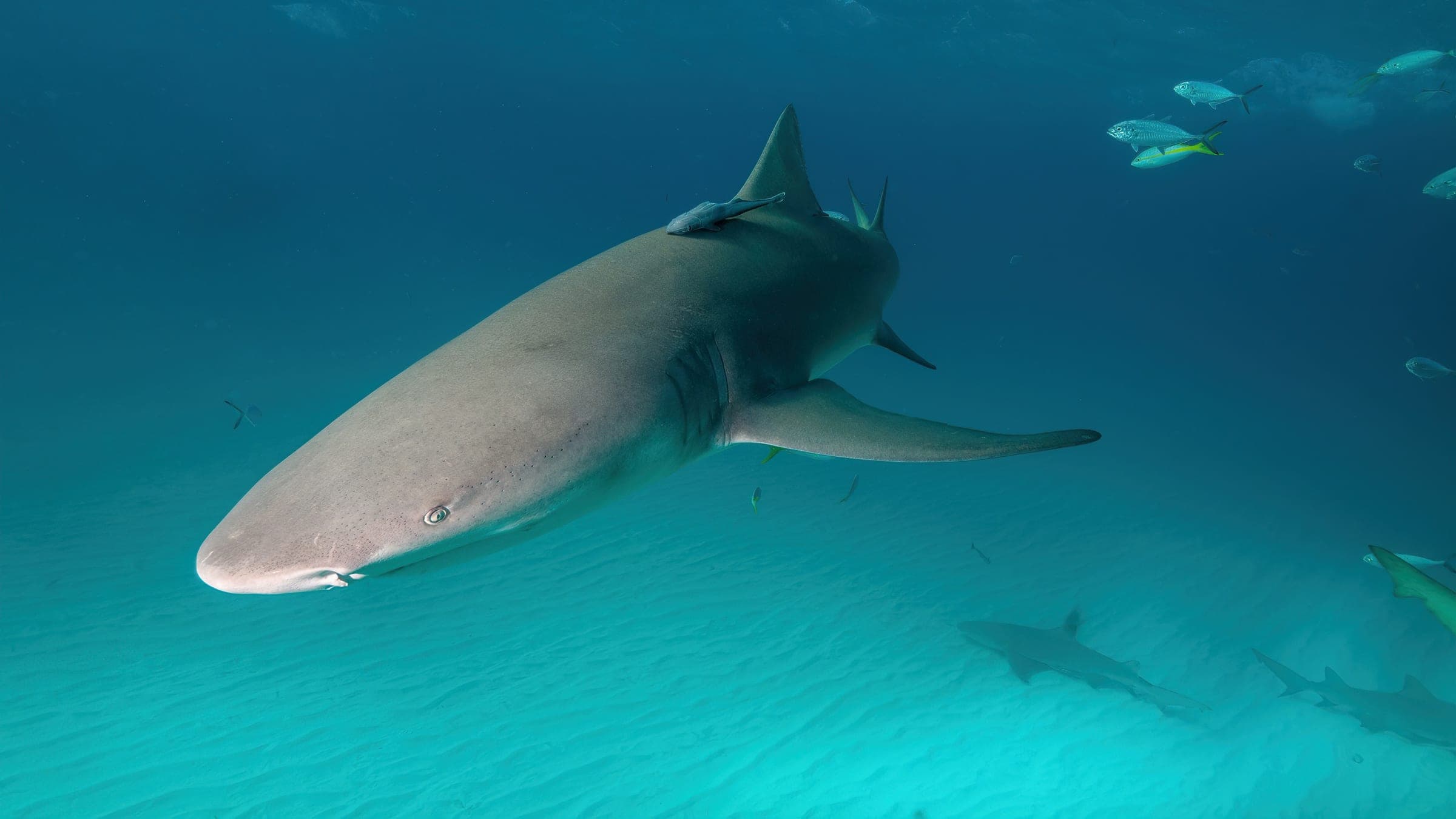
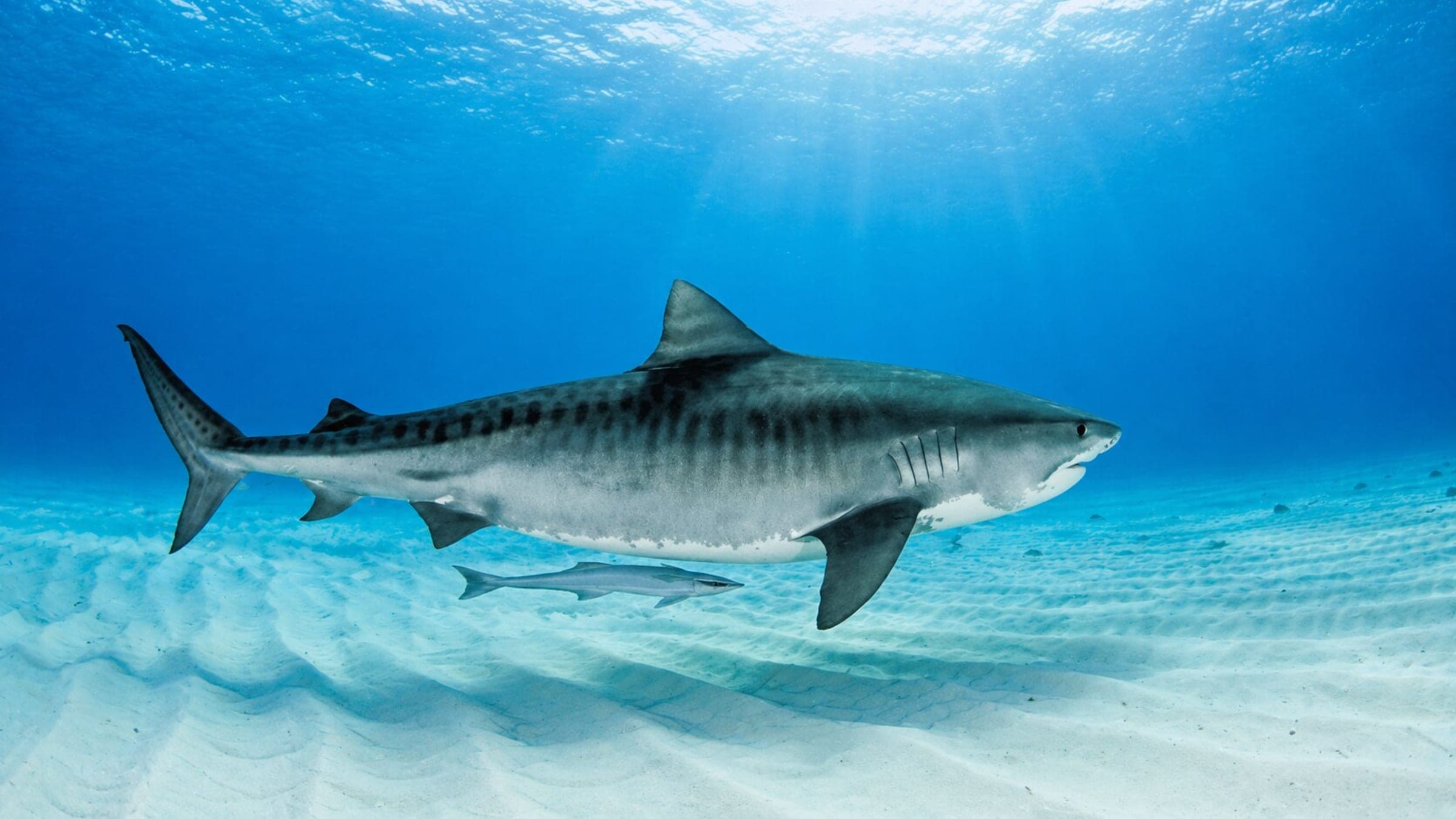
Distinctive body stripes
Dark stripes down the body resemble a tiger's pattern; these stripes fade as the shark matures.
Species Guide
A clean field guide focused on habitat, identification, behavior, and conservation context without burying the useful parts.
The tiger shark (Galeocerdo cuvier) is a large ground shark and the only living member of the genus Galeocerdo and family Galeocerdonidae. Females can exceed 5 m (about 16 ft 5 in) in length. Populations occur in many tropical and temperate waters, especially around central Pacific islands. The species is named for the dark stripes along its body, which resemble a tiger's pattern and fade as individuals mature. Tiger sharks are largely solitary and primarily nocturnal. They have one of the broadest diets among sharks, consuming crustaceans, fish, seals, birds, squid, sea turtles, sea snakes, dolphins, smaller sharks, and various inedible man-made objects reported from stomach contents. The tiger shark has only one recorded natural predator, the orca. The species is considered near-threatened due to widespread finning and fishing by humans. Historically it ranks second only to the great white in recorded fatal attacks on humans, though such events are described as exceedingly rare.
Considered near-threatened due to widespread finning and fishing by humans.
One of the most solitary shark species and primarily a nocturnal hunter.
The strongest linked planning options currently surface around destinations such as North Male Atoll, Fuvahmulah, Coral Coast, Viti Levu and countries such as Maldives, French Polynesia, Egypt for divers building trips around tiger sharks.
Identification
The visual markers divers can use underwater, plus the species most likely to cause confusion.
Dark stripes down the body resemble a tiger's pattern; these stripes fade as the shark matures.
Females are capable of attaining lengths over 5 m (about 16 ft 5 in).
Range and Movement
The broad range, seasonal movement, or migratory behavior that shapes where divers encounter this species.
One of the most solitary shark species and primarily a nocturnal hunter.
Diet
Useful feeding context that often explains habitat, movement, and encounter style.
Extremely broad diet including crustaceans, fish, seals, birds, squid, sea turtles, sea snakes, dolphins, smaller sharks, and various inedible man-made objects reported in stomach contents.
Conservation
Status, pressure, and protection context grounded in cited sources rather than filler.
Considered near-threatened due to widespread finning and fishing by humans.
Widespread finning and fishing by humans are cited as reasons for the species being considered near-threatened.
Responsible Encounters
Conservation-minded guidance for divers who want the encounter without adding pressure.
Exercise caution and maintain safe distances; tiger sharks have been involved in recorded fatal attacks, though such events are described as exceedingly rare.
Field Notes
Useful species context that makes the encounter more meaningful once you are underwater.
The tiger shark is the only extant member of the genus Galeocerdo and family Galeocerdonidae.
Known for the widest food spectrum of all sharks, including both natural prey and inedible human-made objects.
Only one recorded natural predator: the orca.
Top Destinations
Destinations surfaced from the linked dive spots associated with this species.
Top Countries
The strongest country-level starting points currently linked to this species.
Top Dive Spots
Directly linked dive spots where this species already shows up in the planning data.

Boat-only south-point drift for pelagics off Fuvahmulah.
Advanced harbor-side wall for tiger-shark passes.
Fakarava north-channel drift dive with sharks and canyon shelter.
Aliwal Shoal: a shark-rich boat dive off Umkomaas.
North Fuvahmulah reef-and-wall dive with pelagic passes.
Maratua boat dive with gentle slope, coral blocks, and rays
FAQ
Clear planning and conservation answers written for search visibility and AI retrieval.
Research Sources
Primary and credible references behind the field-guide and conservation claims on this page.
Primary wildlife guide source.
Supporting wildlife source.
Taxonomy reference.
Related Species
Related species guides in the same encounter family.