Size
The largest known extant fish species; individuals have been reliably recorded up to about 18.8 m in length.
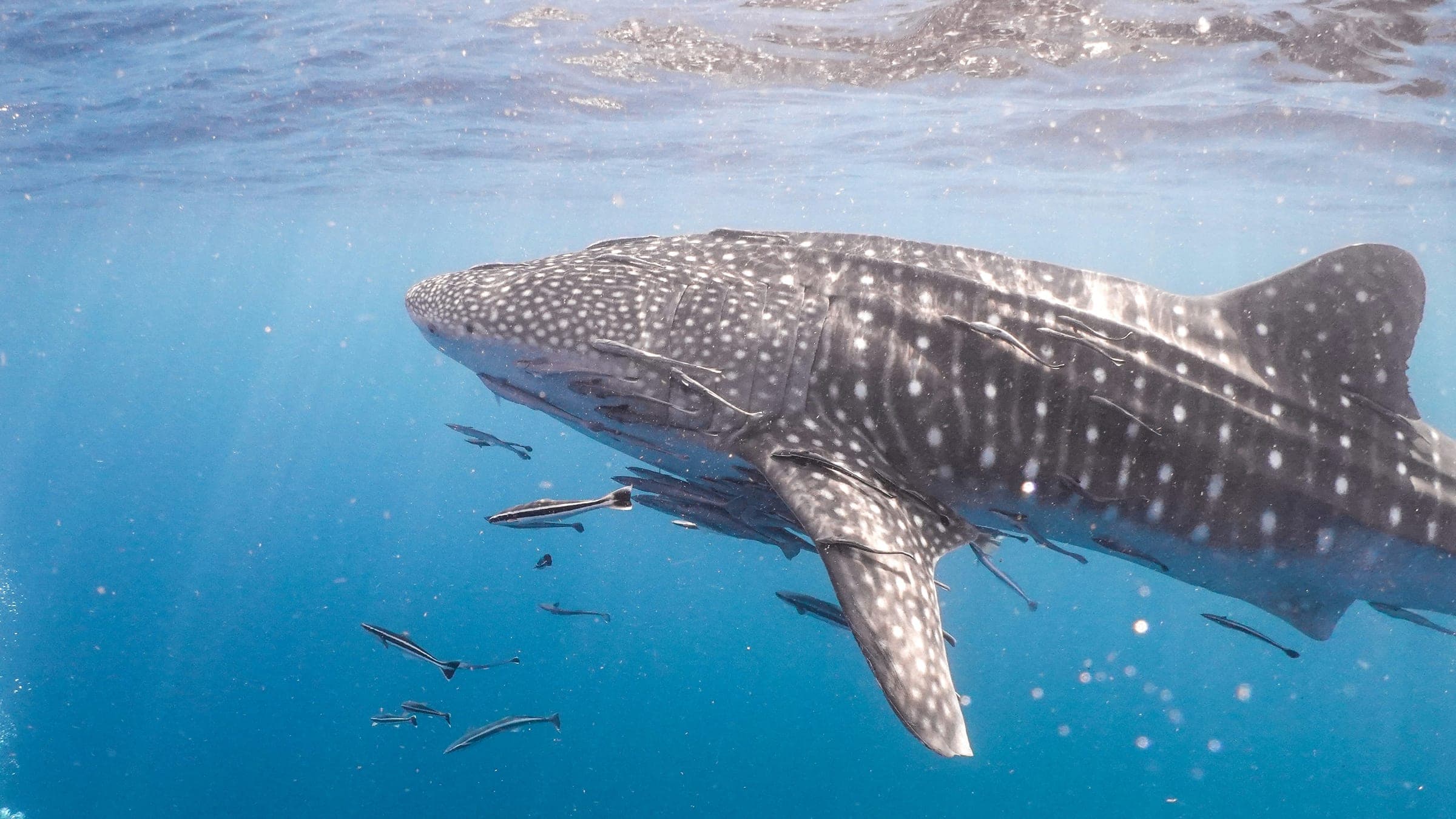
Rhincodon typus
The whale shark is a very large, slow-moving, filter-feeding shark found in tropical open oceans and listed as Endangered by the IUCN.
Species Guide
A clean field guide focused on habitat, identification, behavior, and conservation context without burying the useful parts.
The whale shark (Rhincodon typus) is a slow-moving, filter-feeding carpet shark and the largest known living fish species. Individuals reach extreme lengths (the largest reliably recorded measured 18.8 m) and the species is notable for being the most massive living non-cetacean animal. It is the only living species in the genus Rhincodon and the sole extant member of the family Rhincodontidae. Whale sharks feed by filtering seawater through specialized sieve-like gill pads and primarily consume plankton, krill, fish eggs, and small schooling fish such as sardines and anchovies, processing thousands of liters of water per hour. They are highly migratory, traveling long distances across tropical oceans to exploit seasonal food sources, and form large, predictable coastal feeding aggregations at certain sites. Despite their size, whale sharks are generally docile and are not considered a significant threat to humans. The species is listed as Endangered on the IUCN Red List after an estimated population decline of more than 50% over the last 75 years, with primary threats including targeted fishing, bycatch, and ship strikes. Whale sharks inhabit open tropical waters, are rarely found below about 21 °C (70 °F), and have an estimated lifespan of roughly 80 to 130 years based on growth-band studies.
Listed as Endangered by the IUCN due to an estimated population decline of more than 50% over the past 75 years, primarily from targeted fishing, bycatch, and ship strikes.
Highly migratory, traveling long distances across tropical oceans to exploit seasonal food sources; form large, predictable coastal feeding aggregations at specific sites.
The strongest linked planning options currently surface around destinations such as Koh Tao, Puerto Princesa + Tubbataha Gateway (Palawan), Ari Atoll and countries such as Thailand, Seychelles, Egypt for divers building trips around whale sharks.
Last Updated Mar 9, 2026 · 2 sources
Identification
The visual markers divers can use underwater, plus the species most likely to cause confusion.
The largest known extant fish species; individuals have been reliably recorded up to about 18.8 m in length.
Possess large, sieve-like gill pads used to filter plankton and small prey from the water.
A carpet shark (subclass Elasmobranchii, class Chondrichthyes) and the only living member of its genus and family.
Range and Movement
The broad range, seasonal movement, or migratory behavior that shapes where divers encounter this species.
Highly migratory, traveling long distances across tropical oceans to exploit seasonal food sources; form large, predictable coastal feeding aggregations at specific sites.
Diet
Useful feeding context that often explains habitat, movement, and encounter style.
Active filter feeder primarily consuming plankton, krill, fish eggs, and small schooling fish such as sardines and anchovies; can process over 6,000 liters of water per hour through sieve-like gill pads.
Conservation
Status, pressure, and protection context grounded in cited sources rather than filler.
Listed as Endangered by the IUCN due to an estimated population decline of more than 50% over the past 75 years, primarily from targeted fishing, bycatch, and ship strikes.
Direct fishing for whale sharks has contributed significantly to population declines.
Whale sharks are caught incidentally in other fisheries, adding to mortality.
Collisions with large vessels pose a risk to these surface-using, large-bodied sharks.
Responsible Encounters
Conservation-minded guidance for divers who want the encounter without adding pressure.
Whale sharks are generally docile; divers should avoid disturbing feeding animals, maintain a respectful distance, and follow local regulations at aggregation sites (specific rules not provided in source).
Field Notes
Useful species context that makes the encounter more meaningful once you are underwater.
Estimated lifespan is about 80 to 130 years based on vertebral growth band studies and growth rates.
An individual measuring about 18.8 m (61.7 ft) is considered the largest reliably recorded.
The whale shark is the only living species in the genus Rhincodon and the only extant member of the family Rhincodontidae.
Top Destinations
Destinations surfaced from the linked dive spots associated with this species.
Top Countries
The strongest country-level starting points currently linked to this species.
Top Dive Spots
Directly linked dive spots where this species already shows up in the planning data.
Boat-access reef-and-wall bank with big fish and whale sharks.
Advanced offshore seamount dive for hammerheads and pelagics.
Boat-access reef with twin pinnacles, coral gardens, and night-dive appeal.
Outer-reef wall dive in Ari Atoll known for current-driven routing and whale-sha
Abu Dabab Garden is a shore-friendly Marsa Alam reef.
Sodwana Bay boat reef with coral ledges and reef fish
FAQ
Clear planning and conservation answers written for search visibility and AI retrieval.
Research Sources
Primary and credible references behind the field-guide and conservation claims on this page.
Primary wildlife guide source.
Taxonomy reference.
Related Species
Related species guides in the same encounter family.