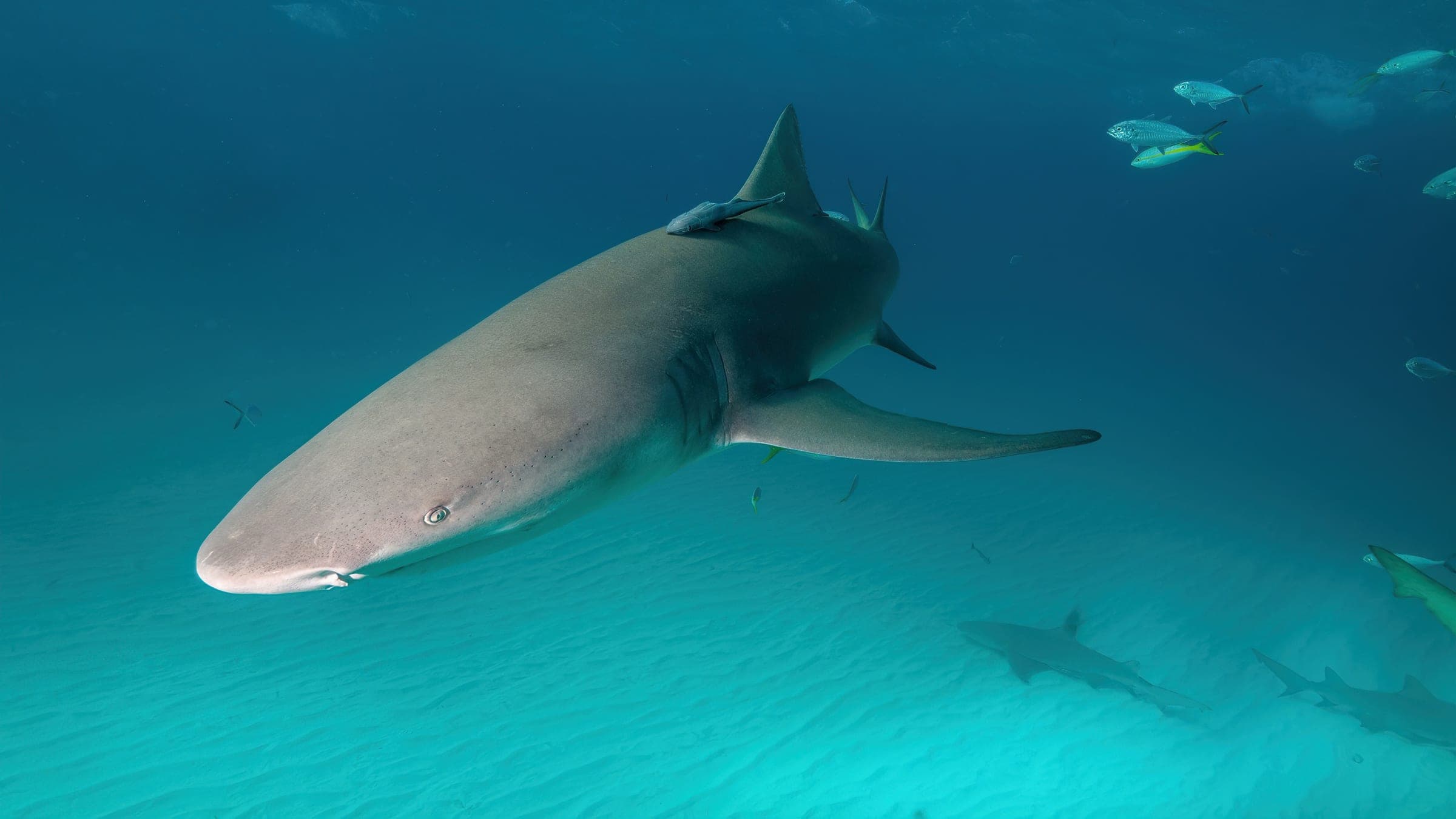
Adult body and ridges
Adults have five longitudinal ridges on a cylindrical body and typically display dark spots on a pale background.

Stegostoma tigrinum
A distinctive Indo-Pacific carpet shark with spotted adults, striped juveniles, reaching about 2.5 m and typically resting by day while hunting at night.
Last Updated Mar 9, 2026 ·
Species Guide
A clean field guide focused on habitat, identification, behavior, and conservation context without burying the useful parts.
The zebra shark (Stegostoma tigrinum) is a carpet shark found across the tropical Indo-Pacific, frequenting coral reefs and sandy flats to depths of about 62 m. Adults typically have five longitudinal ridges on a cylindrical body, a low caudal fin that makes up nearly half the total length, and dark spots on a pale background. Juveniles under roughly 50–90 cm show light vertical stripes on a brown background and lack the ridges. Adults reach about 2.5 m in length. Zebra sharks are largely nocturnal, spending much of the day resting motionless on the seafloor and actively hunting at night for molluscs, crustaceans, small bony fishes, and possibly sea snakes in holes and crevices. They are oviparous; females produce several dozen large egg capsules anchored to underwater structures by adhesive tendrils. Generally solitary for most of the year, they can form large seasonal aggregations. The species is considered innocuous to humans and is kept in public aquaria and used in ecotourism, but it has been assessed as Endangered due to fisheries removals for meat, fins, and liver oil across much of its range.
Assessed as Endangered due to removal by commercial fisheries for meat, fins, and liver oil across most of its range, with evidence of declining numbers.
Nocturnal: rests motionless on the seafloor during the day and actively hunts at night; generally solitary but forms large seasonal aggregations.
The strongest linked planning options currently surface around destinations such as Koh Phi Phi (Phi Phi Islands), Musandam, Koh Lanta and countries such as Oman, Thailand, Spain for divers building trips around zebra sharks.
Identification
The visual markers divers can use underwater, plus the species most likely to cause confusion.
Adults have five longitudinal ridges on a cylindrical body and typically display dark spots on a pale background.
Low caudal fin comprising nearly half the total length.
Juveniles under about 50–90 cm have light vertical stripes on a brown background and lack the ridges.
Species attains a length of approximately 2.5 m.
Range and Movement
The broad range, seasonal movement, or migratory behavior that shapes where divers encounter this species.
Nocturnal: rests motionless on the seafloor during the day and actively hunts at night; generally solitary but forms large seasonal aggregations.
Diet
Useful feeding context that often explains habitat, movement, and encounter style.
Feeds on molluscs, crustaceans, small bony fishes, and possibly sea snakes, often searching inside holes and crevices in reefs.
Conservation
Status, pressure, and protection context grounded in cited sources rather than filler.
Assessed as Endangered due to removal by commercial fisheries for meat, fins, and liver oil across most of its range, with evidence of declining numbers.
Taken by commercial fisheries across most of its range for meat, fins, and liver oil; populations show evidence of decline.
Responsible Encounters
Conservation-minded guidance for divers who want the encounter without adding pressure.
Generally innocuous to humans and commonly encountered in ecotourism and public aquaria; no specific dive-safety behaviors are detailed in the source.
Field Notes
Useful species context that makes the encounter more meaningful once you are underwater.
The zebra shark is the sole member of the family Stegostomatidae.
Females produce large egg capsules that are anchored to underwater structures via adhesive tendrils.
Top Destinations
Destinations surfaced from the linked dive spots associated with this species.
Top Countries
The strongest country-level starting points currently linked to this species.
Top Dive Spots
Directly linked dive spots where this species already shows up in the planning data.
Boat-entry channel wall with strong, shifting currents.
Deep Similan pinnacle with manta-ray potential
Boat reef with cave, coral garden, and small wreck
Abu Saaf ED is a shore tunnel dive ending in a coral garden.
Deep gorgonian dive for advanced Toroni divers.
Classic Similan coral-garden reef with sharks, turtles, and rays.
FAQ
Clear planning and conservation answers written for search visibility and AI retrieval.
Research Sources
Primary and credible references behind the field-guide and conservation claims on this page.
Primary wildlife guide source.
Supporting wildlife source.
Taxonomy reference.
Related Species
Related species guides in the same encounter family.