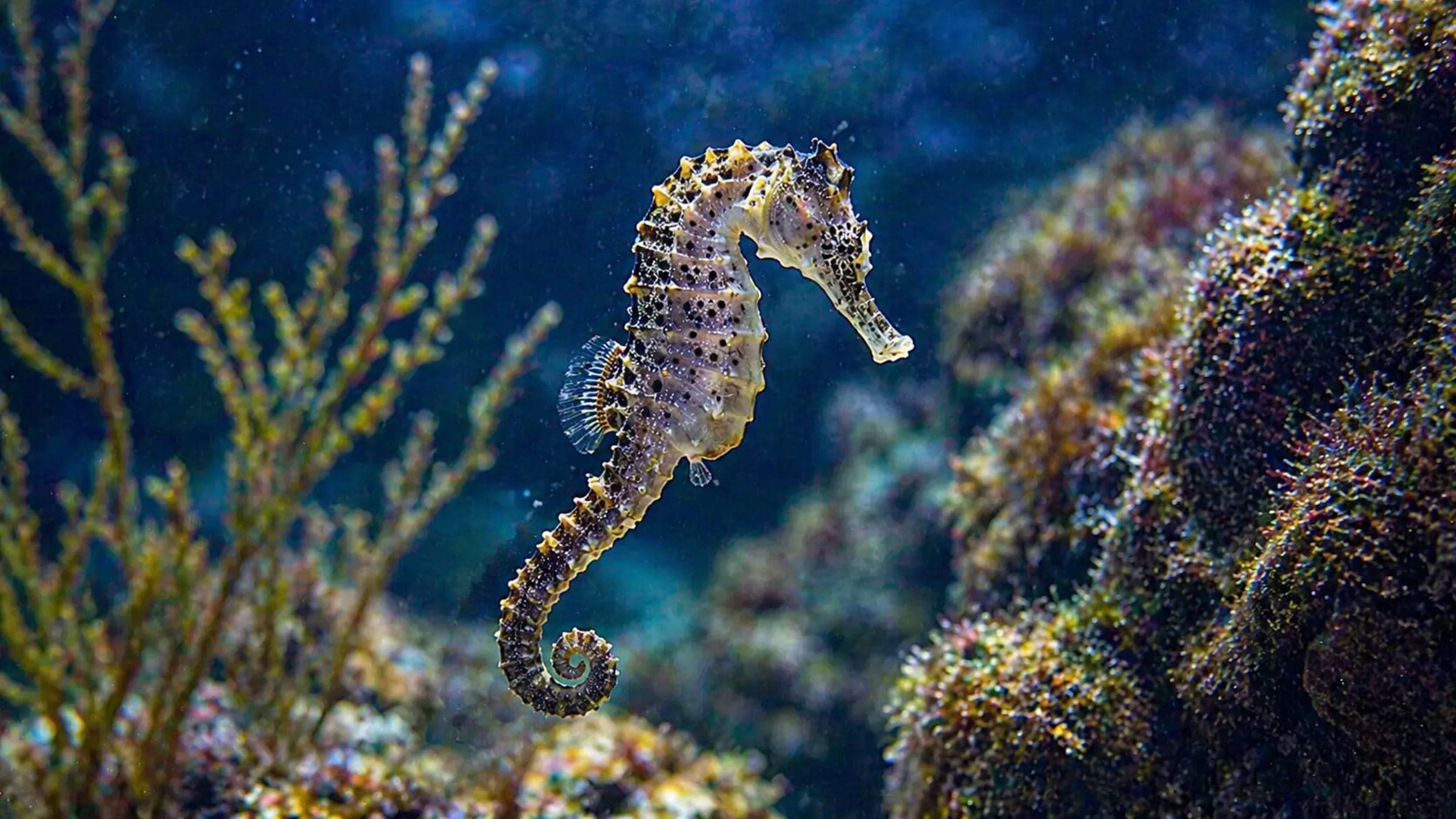
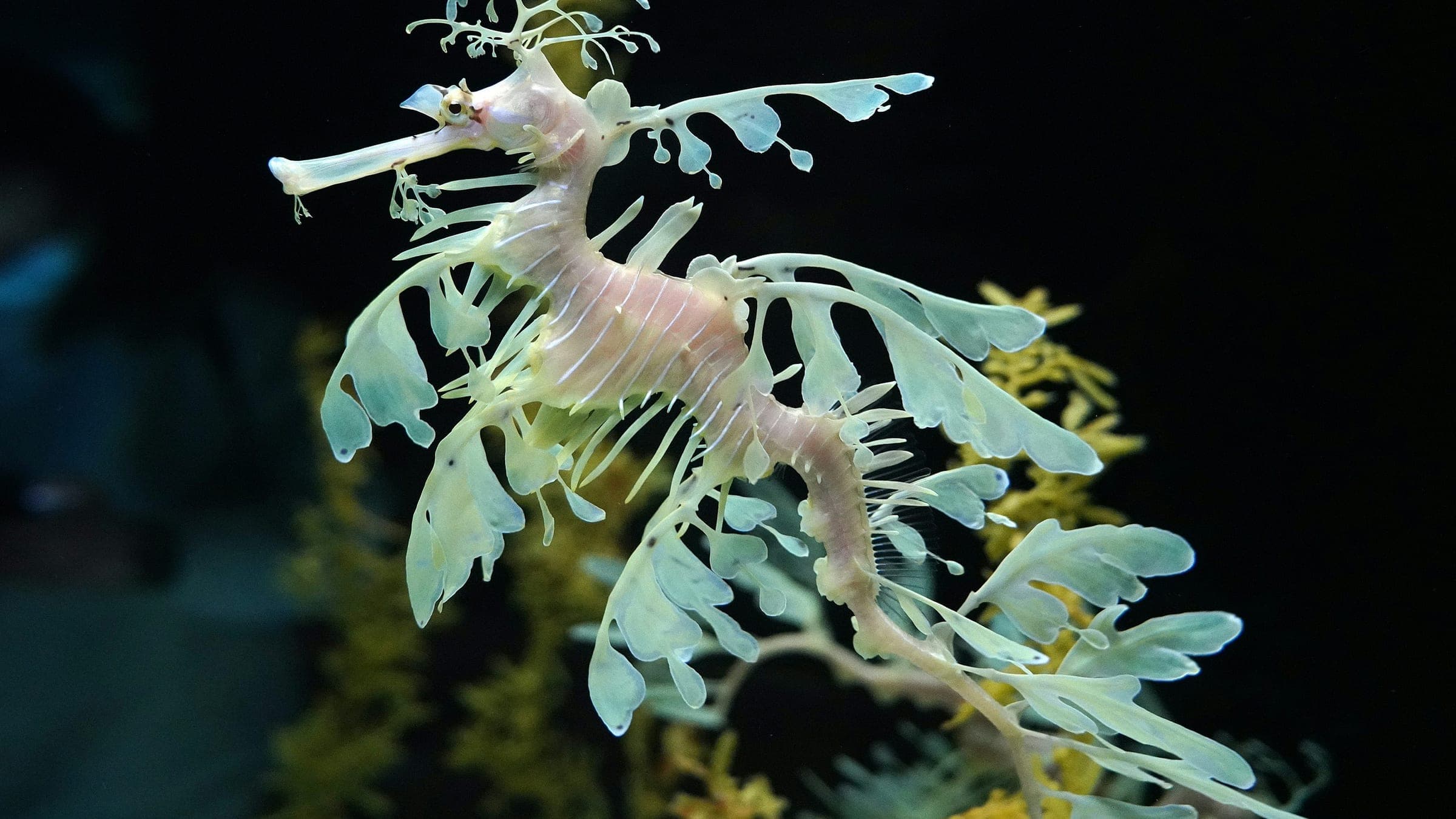
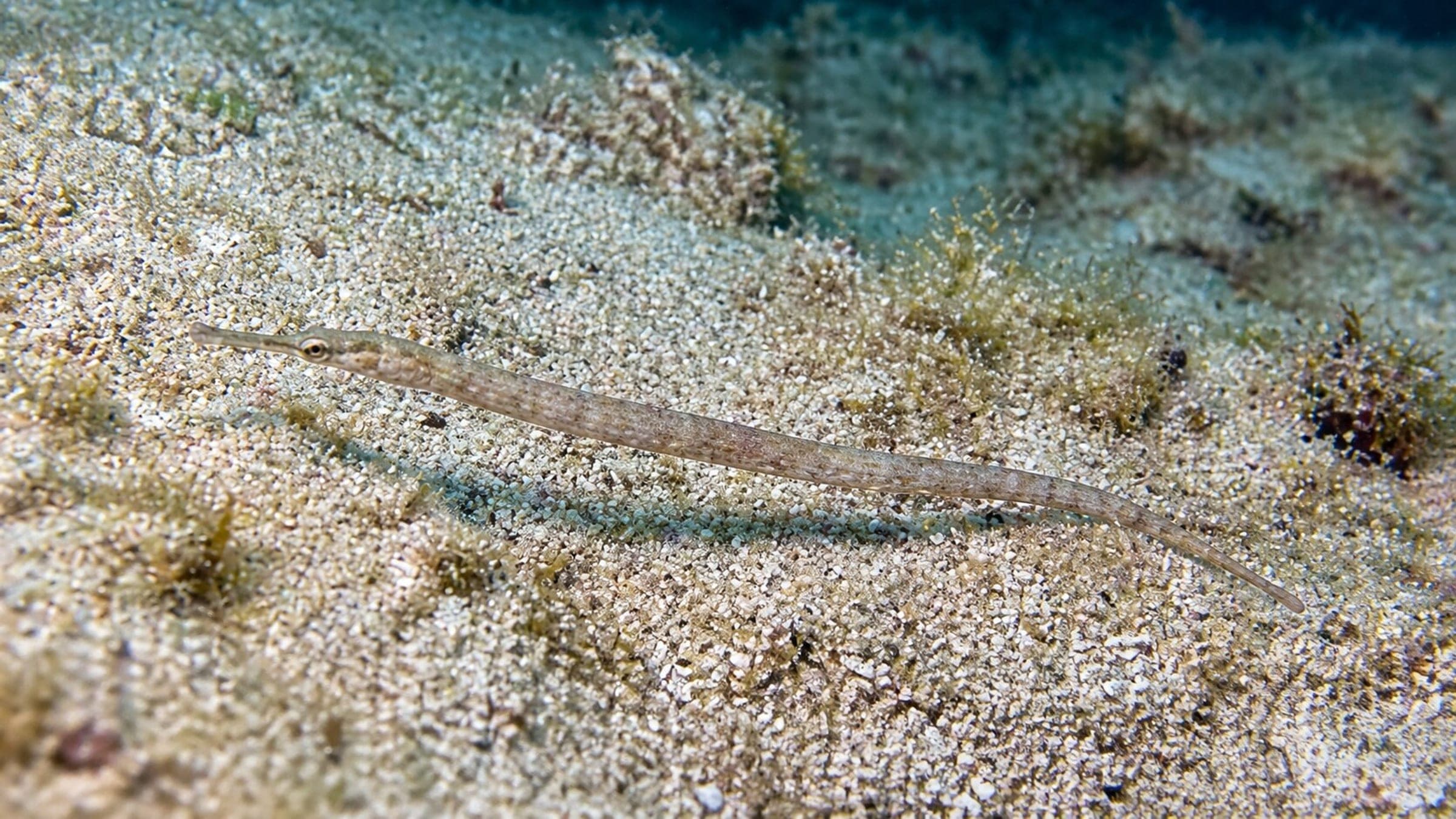
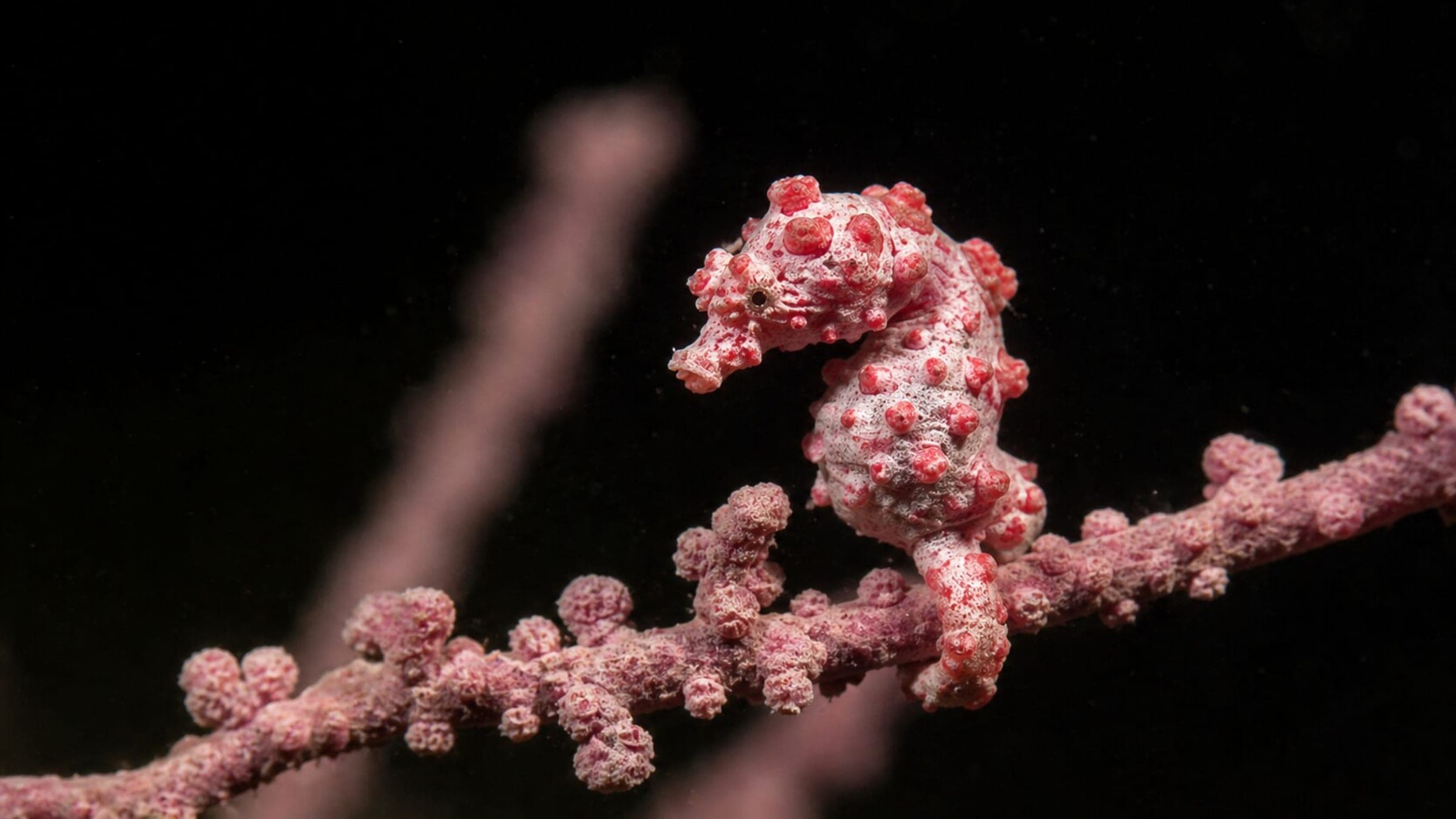
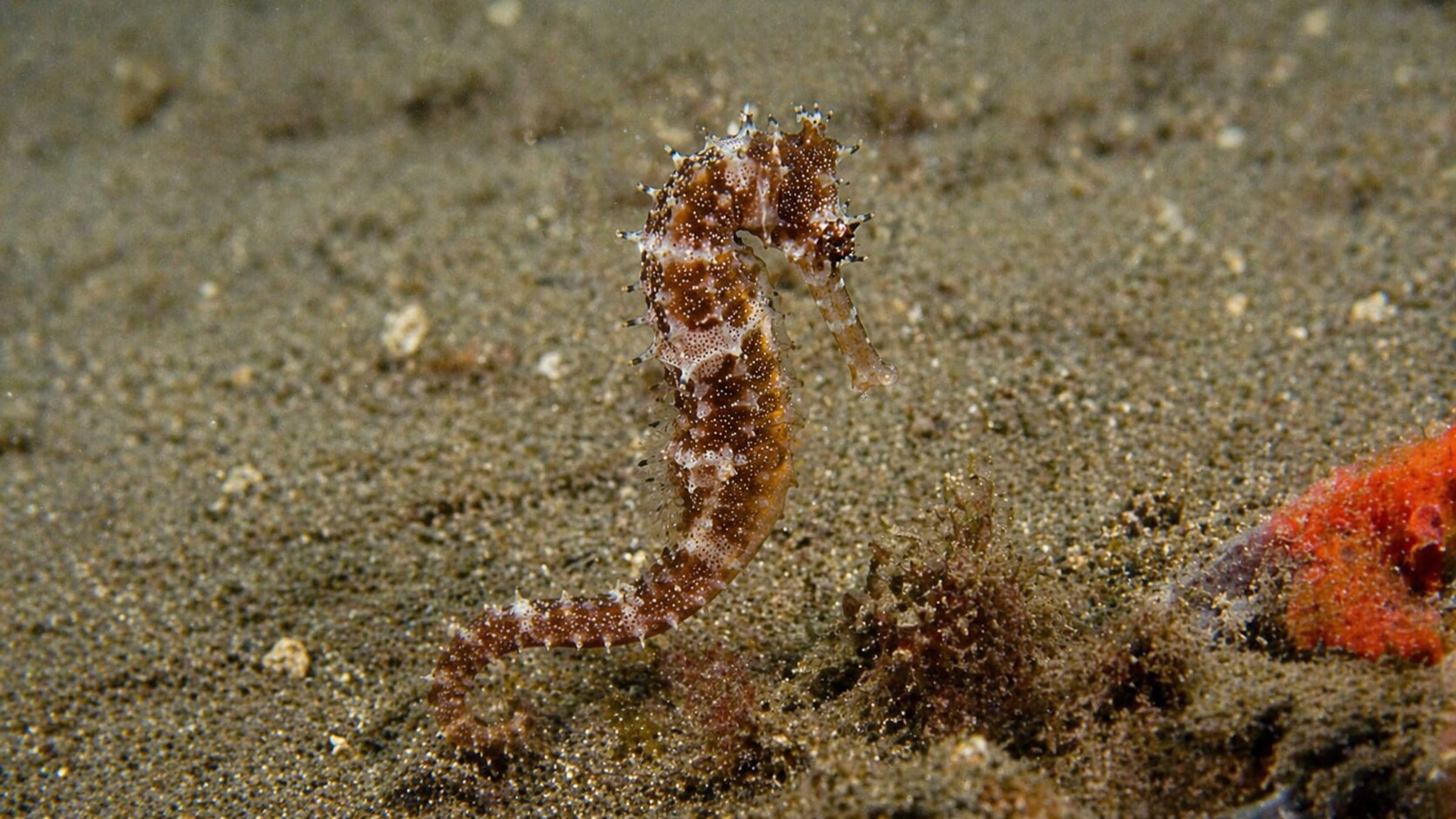
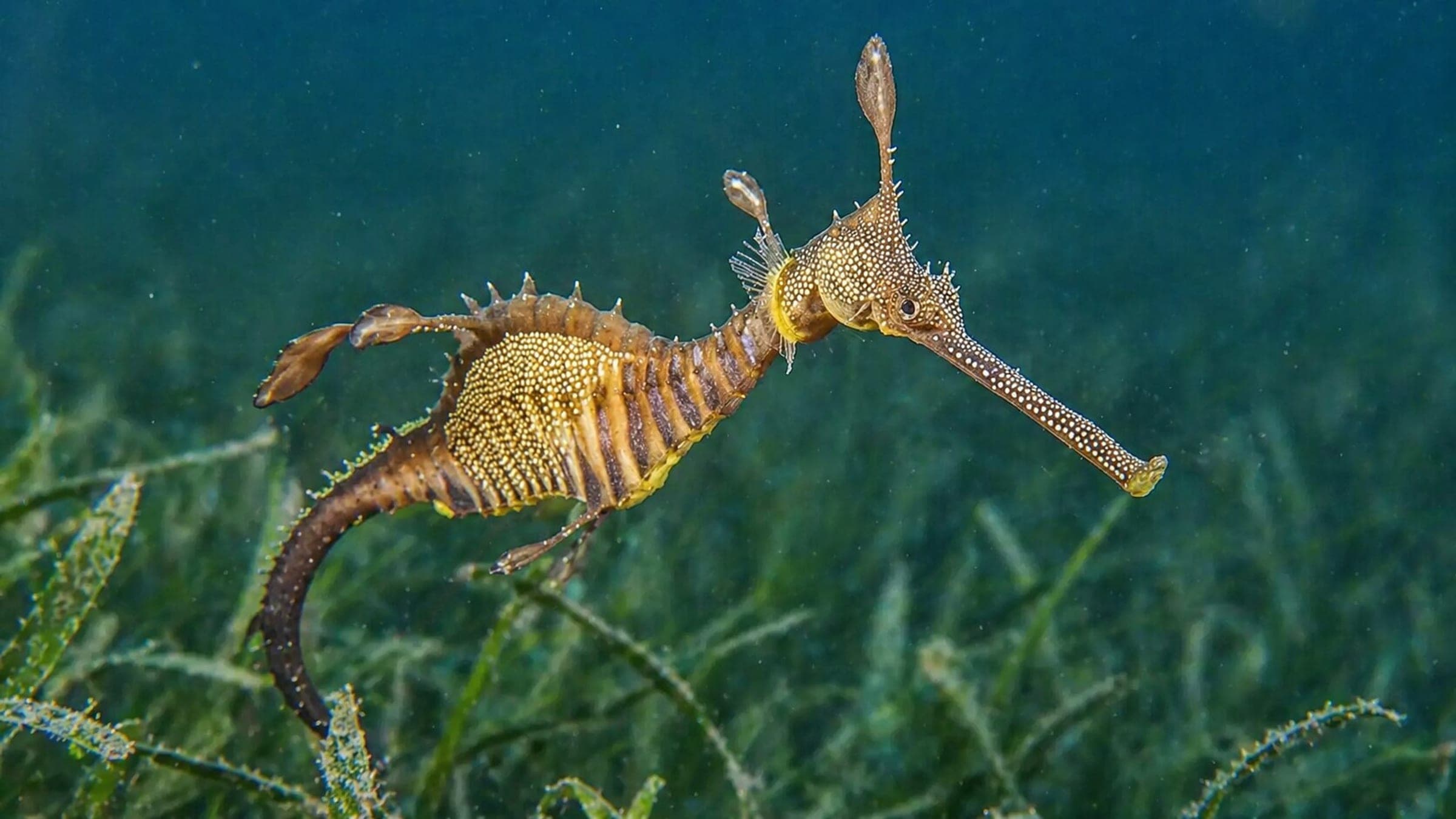
Tubular snout and bony body rings
Most members of the group show a long narrow snout and an armored body made of visible rings rather than typical fish scales.
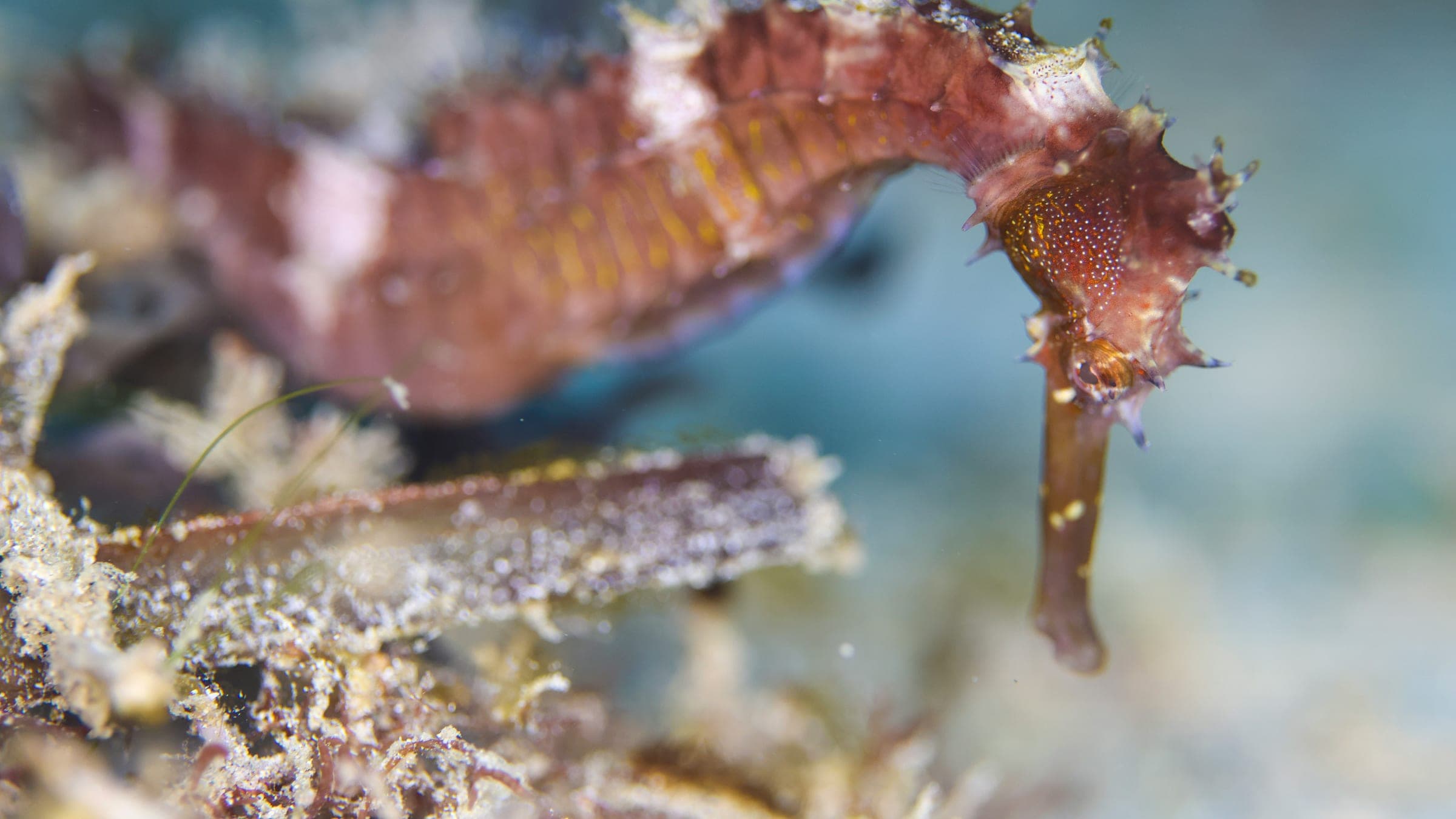
Seahorses and pipefishes are camouflage specialists that reward slow macro diving, stable buoyancy, and patient searching in seagrass, rubble, mangroves, and sheltered reefs.
Group Guide
A group-level field guide built to move divers from broad intent into the right species, destinations, and encounter planning.
Seahorses and pipefishes sit in the same family, but divers experience them as a macro challenge rather than a big-animal event. They are small, posture-driven fishes that rely on camouflage, slow movement, and habitat matching, so the best encounters come from calm conditions, careful buoyancy, and guides who understand exactly where these animals hold.
Seahorses are the easiest members to recognize because they swim upright, have curled prehensile tails, and often anchor to seagrass, coral, or hydroids. Pipefishes are more horizontal and elongated, often looking like blades of grass or thin twigs drifting with the current. Across the group, the shared clues are tubular snouts, bony body rings, and a tendency to disappear into the habitat until the angle is right.
Divers most often find seahorses and pipefishes in sheltered seagrass meadows, estuaries, mangroves, muck sites, coral rubble, and protected reef corners with enough structure to hold. Pygmy seahorses are a special case because they may live directly on specific gorgonians or other hosts and are nearly invisible until a guide points them out.
This group rewards patience, magnified focus, and repeat visits to known macro sites. It is a poor fit for rushed group diving, heavy finning, or photographers who need multiple repositioned passes to get a shot.
This group guide pulls together 6 published Seahorses and Pipefishes guides so divers can move from broad trip intent to the right species pages, destinations, and dive spots faster.
Conservation risk in this group is driven less by one single global pressure than by the combination of habitat loss, trade collection, and highly localized populations. Seahorses and pipefishes depend heavily on seagrass, mangroves, sheltered reef structure, and healthy macro habitat, so coastal development, destructive fishing, and unmanaged collection can hit local populations hard even when the wider region still appears suitable.
Seahorses and pipefishes are not known for long, open-water migrations. Instead, they tend to track the quality of very specific habitat: seagrass beds, mangrove edges, rubble patches, soft corals, or host organisms. Storms, habitat loss, seasonal growth cycles, and breeding behavior can all change where divers find them, but the key scale is usually meters, not hundreds of miles.
Bunaken and Manado (North Sulawesi), Tulamben and Amed, and Bonaire currently stand out as strong destination entry points for Seahorses and Pipefishes planning.
Indonesia, Thailand, and Philippines are some of the clearest country-level starting points for this group right now.
Most members of the group show a long narrow snout and an armored body made of visible rings rather than typical fish scales.
Seahorses usually hold an upright posture with a curved neck and grasping tail, while pipefishes are elongated and lie more like a blade of grass or twig.
Color, texture, and posture often match the surrounding seagrass, soft coral, rubble, or hydroids so closely that the habitat itself is a key identification clue.
Seahorses, pipefishes, seadragons, and pygmy seahorses all sit inside the same family, which is why the shared snout and armored body plan keep showing up in very different shapes.
For many species, finding the right host or patch of seagrass is half the battle because the animal is designed to vanish into that exact background.
A storm, damaged seagrass bed, or broken gorgonian can be enough to remove a local sighting opportunity even when the wider destination still looks healthy.
Seahorses and pipefishes are not known for long, open-water migrations. Instead, they tend to track the quality of very specific habitat: seagrass beds, mangrove edges, rubble patches, soft corals, or host organisms. Storms, habitat loss, seasonal growth cycles, and breeding behavior can all change where divers find them, but the key scale is usually meters, not hundreds of miles.
Most members of the group feed on tiny crustaceans and other small prey that they suck in through their tubular snouts. That is why calm, food-rich habitat such as seagrass, protected reef corners, and current-softened macro sites often produces better sightings than exposed reef edges.
Conservation
A group-level read on the pressures, protections, and diver behavior that matter most across these species.
Conservation risk in this group is driven less by one single global pressure than by the combination of habitat loss, trade collection, and highly localized populations. Seahorses and pipefishes depend heavily on seagrass, mangroves, sheltered reef structure, and healthy macro habitat, so coastal development, destructive fishing, and unmanaged collection can hit local populations hard even when the wider region still appears suitable.
Hover carefully, keep your fins clear of the bottom, and never move the animal or the host to improve the view. Give photographers a strict no-touch brief, keep lights moderate, and avoid repeated crowding around a single animal. On fragile seagrass or soft-coral habitat, the best encounter is the one that leaves no sign you were there.
Damage to seagrass meadows, mangroves, soft coral habitat, and sheltered reef structure removes the exact microhabitats these fishes depend on.
Some seahorses are collected for traditional medicine, curios, or the aquarium trade, which is why trade monitoring and species-level regulation matter.
Small-bodied syngnathids can also be taken as bycatch or damaged by fishing practices that disturb their habitat.
International trade in seahorses is regulated under CITES, adding a formal control layer to cross-border collection and export.
Seagrass, mangrove, and reef-habitat protection is often more important than species-only rules because these fishes are so tied to specific small-scale structure.
Responsible macro-diving rules that prohibit handling, host manipulation, and repeated disturbance help reduce direct tourism pressure.
Species
Jump into the individual species pages that currently sit inside this wildlife group.
Top Destinations
Destinations surfaced from the linked dive spots associated with species in this group.
Top Countries
The strongest country-level starting points currently linked to this wildlife group.
Top Dive Spots
Directly linked dive spots where species in this group already show up in the planning data.
Shallow shore wreck with easy access and rich marine life.
Shore dive with a small wall, sandy bottom, and kelp life.
Red Sea bay dive with sandy entry and coral walls
Shore dive at Crash Boat Beach with an artificial reef.
Quiet Bonaire shore dive with easy access and rich shallows.
Anemone Reef: a submerged pinnacle with dense anemones and reef life.
FAQ
Direct answers to the questions divers and planners tend to ask first.
Research Sources
Primary and supporting references used for the published group guide.
Core conservation and habitat-risk framing for seahorses and related syngnathids.
Family-level identification and ecology context.
Trade regulation context for seahorses under CITES.
Accessible natural-history reference for identification and habitat use.