Coloration
Conspicuous warning coloration, commonly red or black bands.
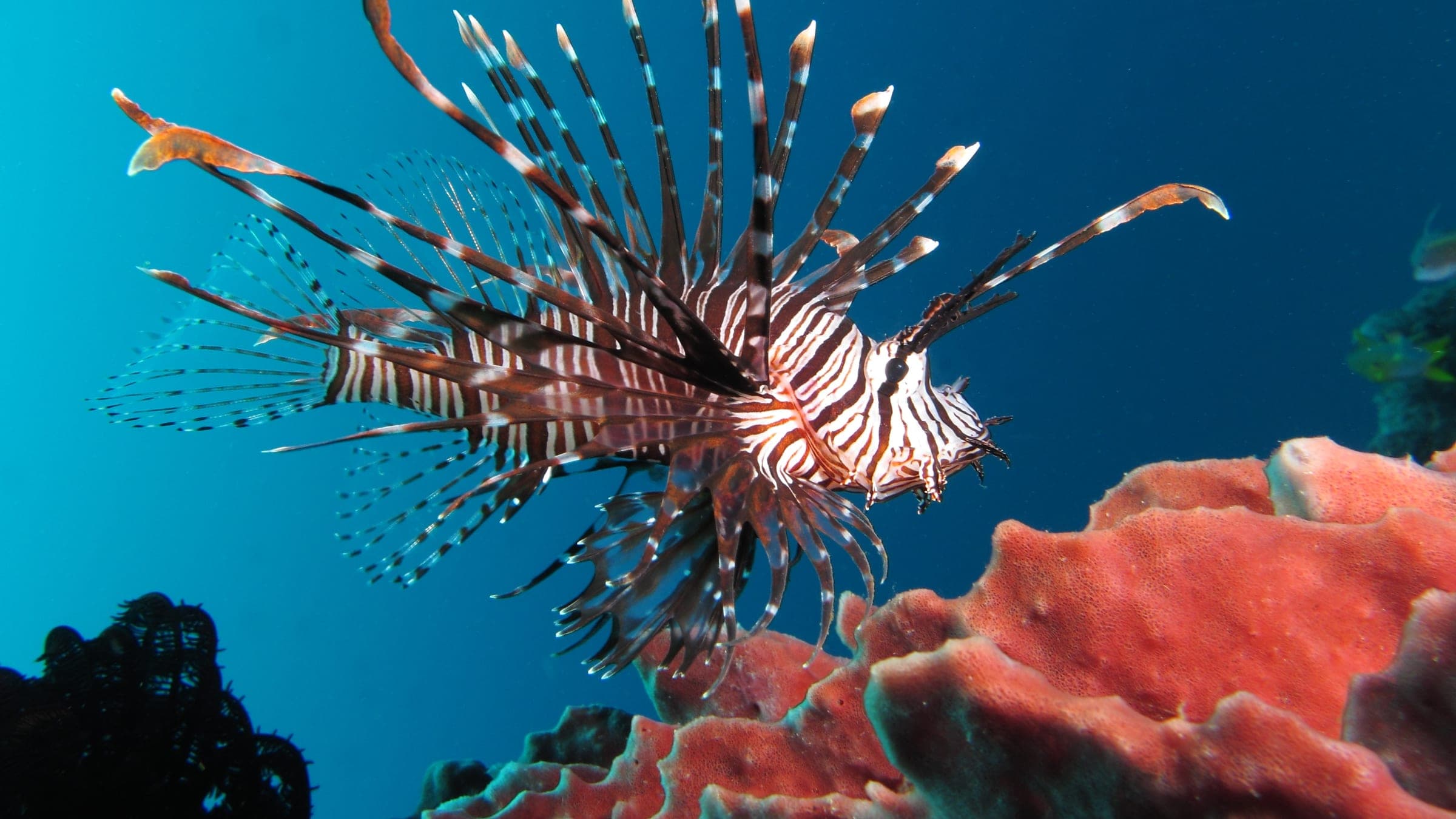
Lionfish (genus Pterois) are venomous Indo-Pacific marine fish with conspicuous red or black bands and dorsal fins tipped with venomous spines.
Last Updated Mar 9, 2026 · 2 sources
Species Guide
A clean field guide focused on habitat, identification, behavior, and conservation context without burying the useful parts.
Lionfish are venomous marine fish of the genus Pterois, native to the Indo-Pacific. They are characterized by conspicuous warning coloration, commonly red or black bands, and ostentatious dorsal fins tipped with venomous spines. Several species are common subjects of study, including Pterois radiata, Pterois volitans, and Pterois miles. Members of the genus are popular in the aquarium trade. Two species, P. volitans and P. miles, have become recent and notable invasive species in the west Atlantic, Caribbean Sea, and Mediterranean Sea.
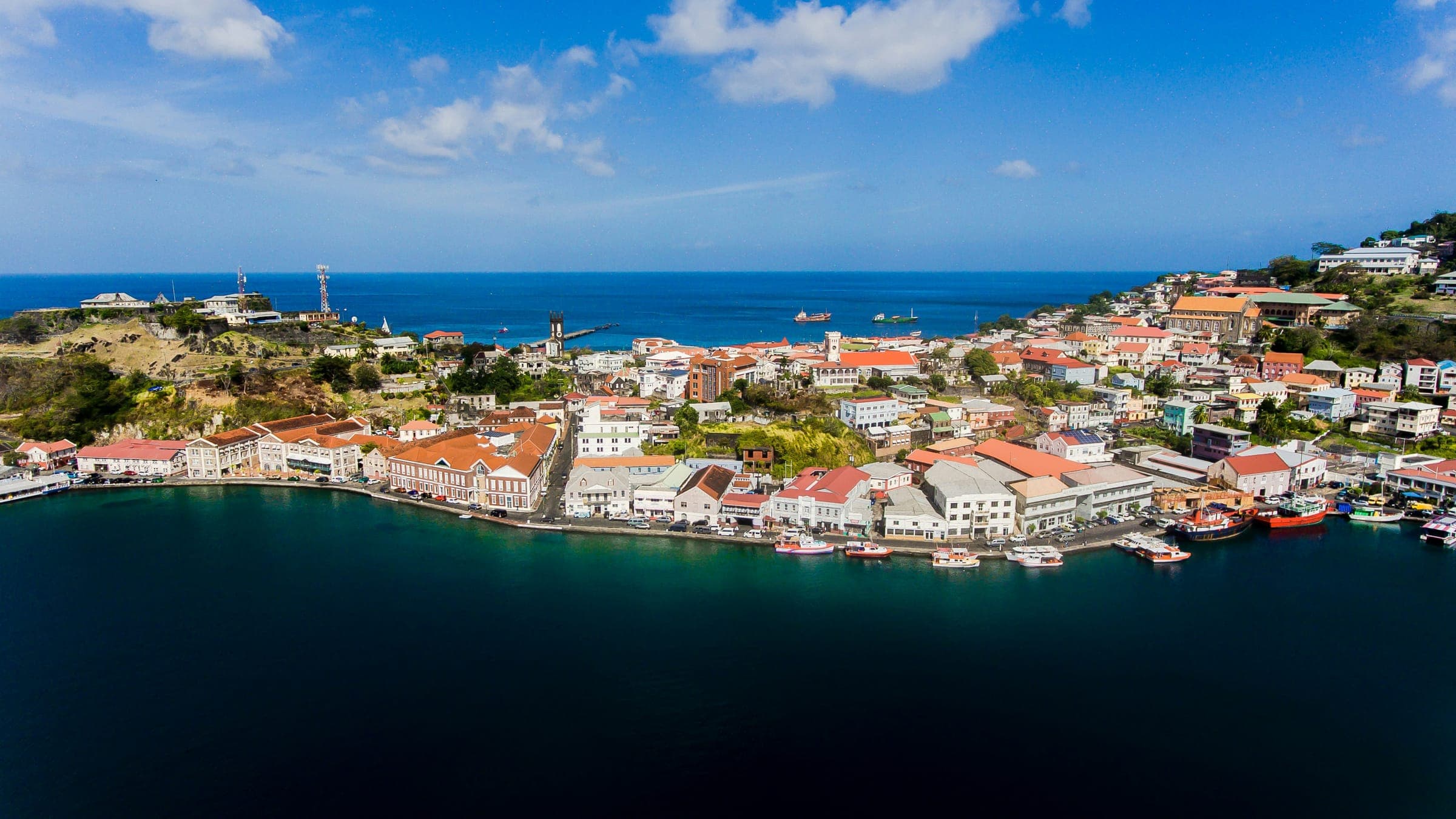
The strongest linked planning options currently surface around destinations such as Mahé, Hurghada (Giftun and Abu Nuhas), Grenada (St. George's and Grand Anse) and countries such as Egypt, Grenada, Indonesia for divers building trips around lionfish.
Identification
The visual markers divers can use underwater, plus the species most likely to cause confusion.
Conspicuous warning coloration, commonly red or black bands.
Ostentatious dorsal fins tipped with venomous spines.
Members of the genus Pterois share banding and ornate fins; several species are commonly recognized (P. radiata, P. volitans, P. miles).
Responsible Encounters
Conservation-minded guidance for divers who want the encounter without adding pressure.
Give lionfish space, avoid blocking the animal's path, and follow local site and operator rules for wildlife interactions with saltwater fishes.
Field Notes
Useful species context that makes the encounter more meaningful once you are underwater.
Lionfish have dorsal spines that are venomous.
Pterois species are popular aquarium fish.
P. volitans and P. miles are recent and significant invasive species in the west Atlantic, Caribbean Sea, and Mediterranean Sea.
Pterois radiata, Pterois volitans, and Pterois miles are the most commonly studied species in the genus.
Top Destinations
Destinations surfaced from the linked dive spots associated with this species.
Top Countries
The strongest country-level starting points currently linked to this species.
Top Dive Spots
Directly linked dive spots where this species already shows up in the planning data.
Tiger Reef Tioman is a current-swept pinnacle for advanced boat dives.
Meemu Atoll reef with plateau and cavern sections.
Boat reef with coral blocks, caves, and soft corals
Aldebaran Wreck is a deep wreck dive off Mahé.
Artificial Reef is a tide-sensitive wreck reef for experienced divers.
Tilted WWII wreck in Labuan Marine Park, Malaysia
Diver Sightings
Approved diver reports where lionfish were recently tagged.
FAQ
Clear planning and conservation answers written for search visibility and AI retrieval.
Research Sources
Primary and credible references behind the field-guide and conservation claims on this page.
Related Species
Related species guides in the same encounter family.