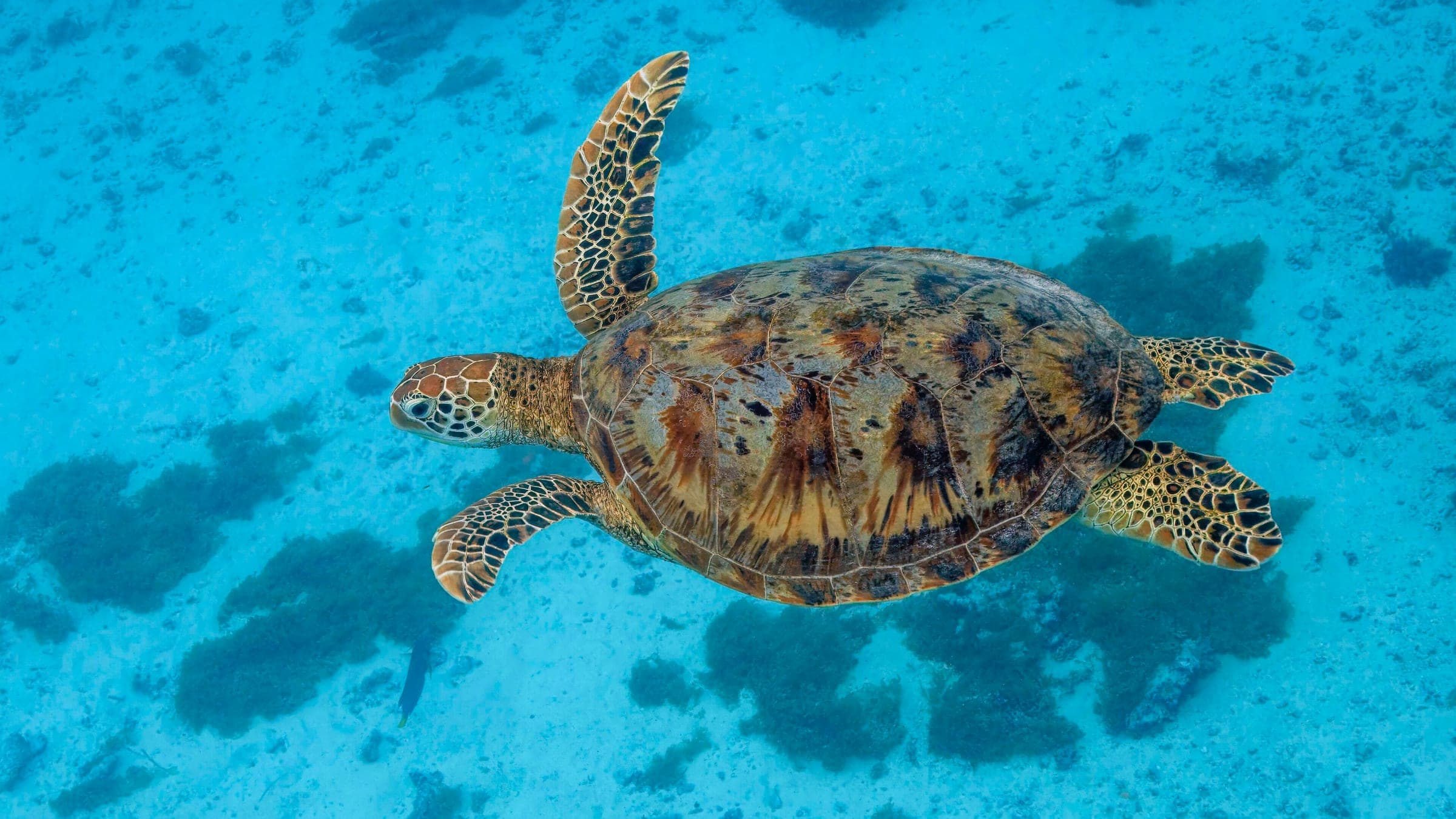
Long paddle-like front flippers
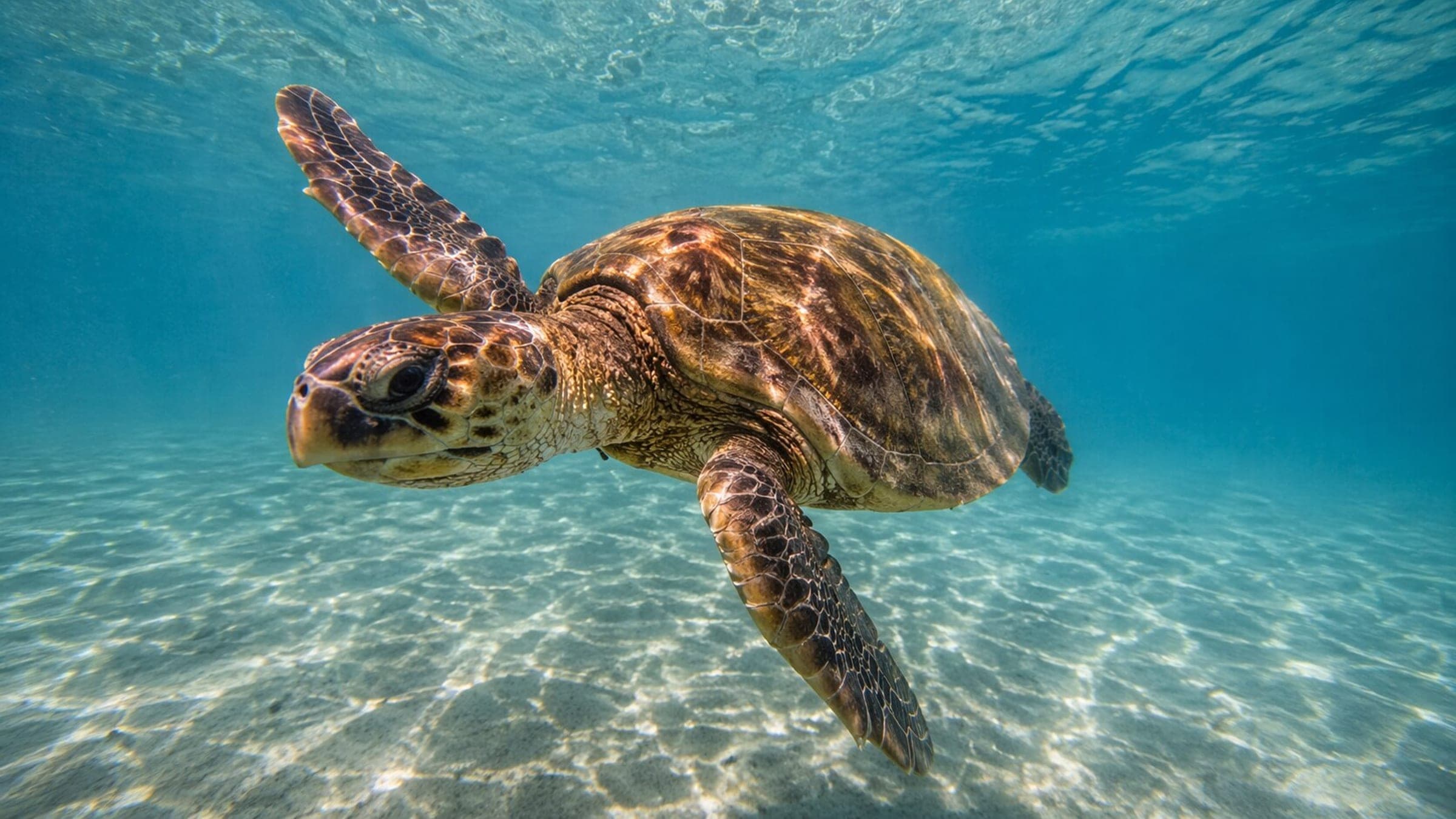
Sea turtles use large front flippers for propulsion and smaller rear flippers for steering, which gives the whole group a very hydrodynamic silhouette underwater.
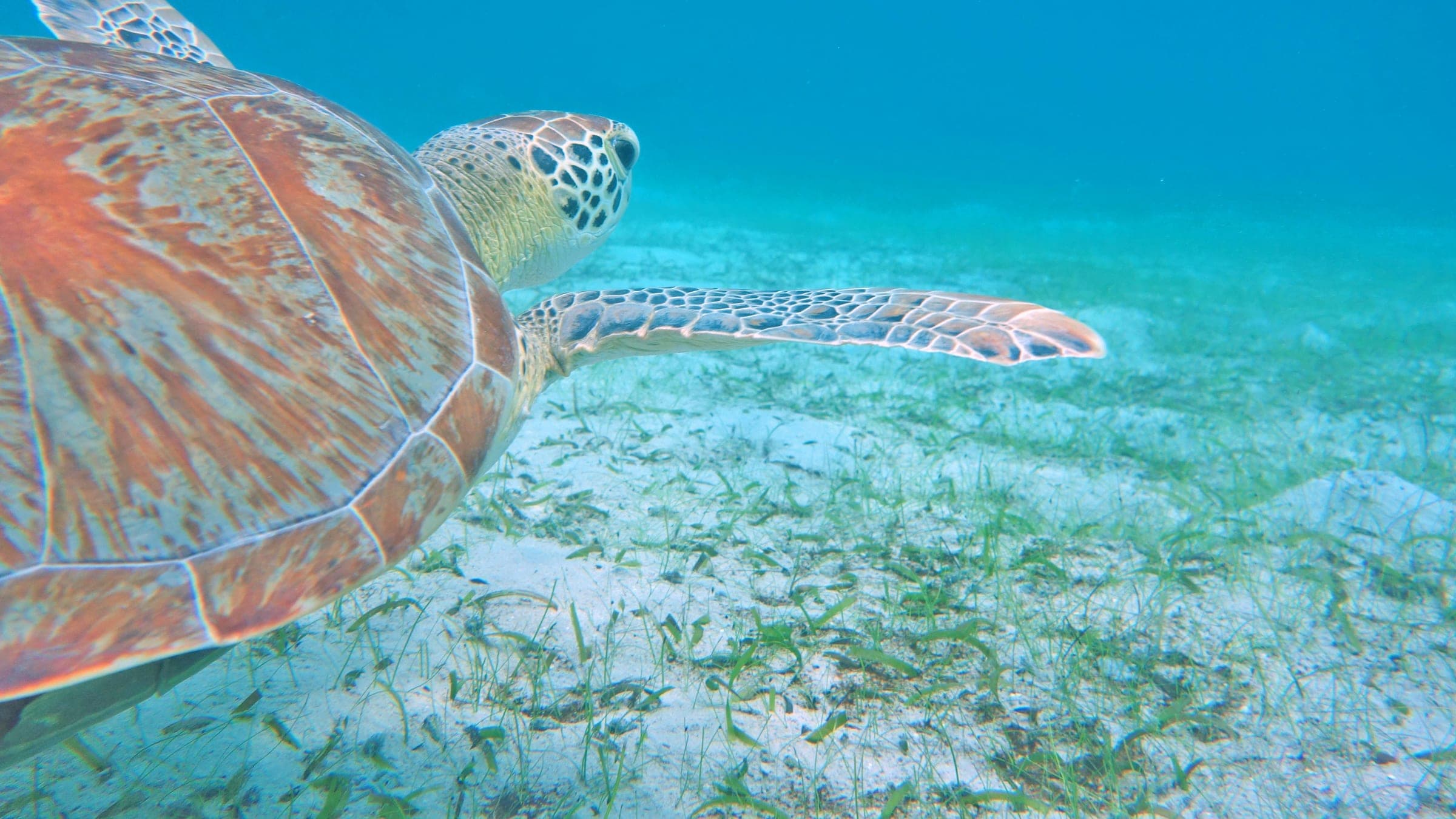
Sea turtles are air-breathing marine reptiles with paddle-like flippers, from reef grazers to open-ocean migrants that move between feeding grounds and nesting beaches.
Group Guide
A group-level field guide built to move divers from broad intent into the right species, destinations, and encounter planning.
In diving, the turtles group is primarily about sea turtles rather than river or pond turtles. Encounters usually happen in coastal habitat such as coral reefs, seagrass meadows, sandy resting areas, and migration corridors close to productive shorelines.
Sea turtles are built for efficient travel underwater. NOAA describes them as marine reptiles with streamlined bodies and large flippers, while Smithsonian Ocean notes that the modern group spans two families: the hard-shelled Cheloniidae and the leatherback family Dermochelyidae. For divers, that means the same group can include reef-feeding greens and hawksbills, heavier-headed loggerheads, and far more oceanic leatherbacks.
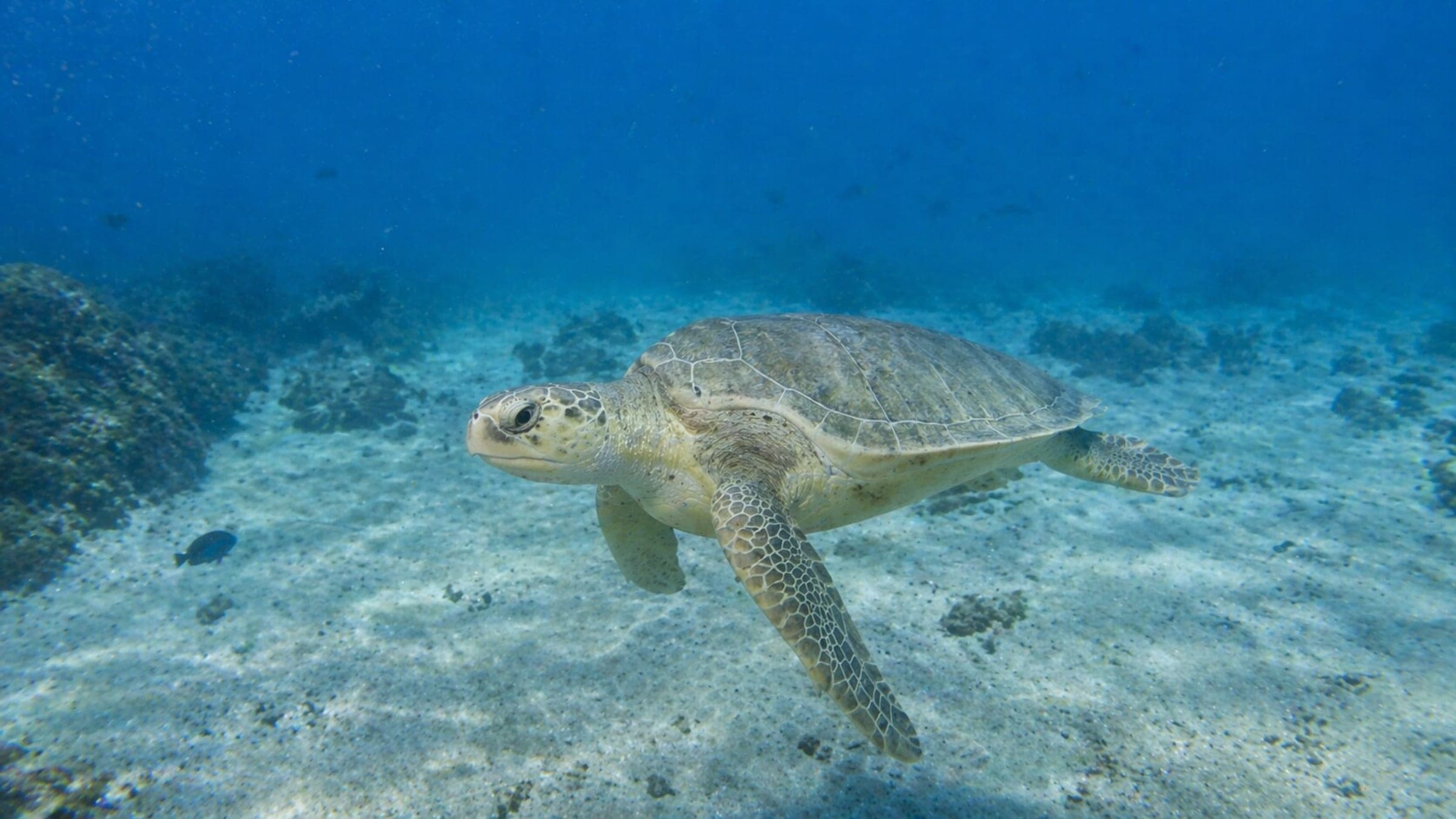
The easiest broad cue is body shape. Sea turtles have long front flippers, a hydrodynamic shell, and a profile that stays efficient in the water rather than bulky like many freshwater turtles. They also have obvious species-level differences in head shape, shell texture, and beak form that reflect what they eat.
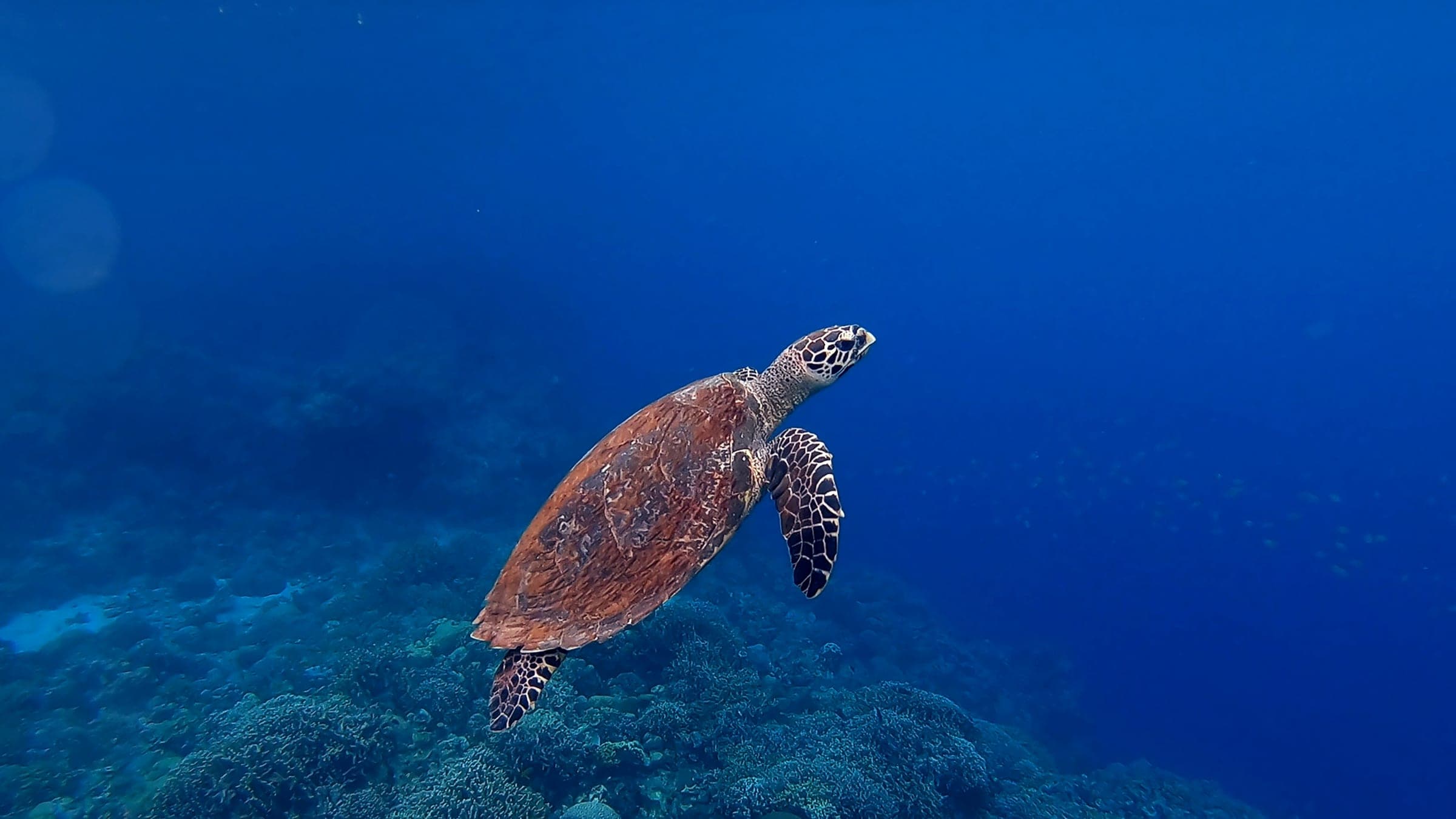
Hard-shelled turtles usually show clear scutes, while leatherbacks are the outlier with a leathery, ridged carapace instead of large hard scutes. Underwater, divers often separate common encounters by feeding style as much as color: green turtles graze, hawksbills pick through reef structure, and loggerheads tend to look heavier-jawed and more robust.
Sea turtles spend most of their lives in the water, but adult females still come ashore to nest. NOAA notes that they migrate hundreds to thousands of miles between feeding grounds and nesting beaches, and leatherbacks are among the most migratory animals in the ocean.
That wide movement is one reason the IUCN Marine Turtle Specialist Group uses Regional Management Units to assess populations below the species level. For dive planning, it means a turtle encounter at one reef does not describe the whole population picture; local abundance, nesting beaches, and migration corridors all matter.
Diet varies sharply by species and life stage. Smithsonian Ocean highlights green turtles as the main adult herbivores in the group, grazing seagrass and algae, while hawksbills are strong sponge specialists and leatherbacks feed heavily on jellyfish and similar gelatinous prey. Loggerheads are the generalists of the group, using powerful jaws to crush harder prey.
For divers, diet helps explain where turtles spend time. Seagrass habitat, healthy reef structure, and productive drift zones each tend to favor different turtle encounters.
Sea turtles are difficult to recover quickly because they are long-lived, late-maturing, and highly migratory. NOAA and the U.S. Fish and Wildlife Service both emphasize recurring pressures from bycatch, nesting and foraging habitat loss, illegal take and egg collection, pollution, marine debris, and vessel strikes.
Protection is necessarily international. The U.S. Fish and Wildlife Service notes that all sea turtle species are included in CITES Appendix I, so commercial trade is not legal, and its Marine Turtle Conservation Fund supports recovery work across more than 30 countries. Strong local operator behavior still matters because even protected turtles can be displaced or stressed by repeated crowding at popular sites.
This group guide pulls together 5 published Turtles guides so divers can move from broad trip intent to the right species pages, destinations, and dive spots faster.
Sea turtles remain high-priority conservation animals because they are long-lived, late-maturing, and highly migratory, so recovery is slow once adult survival drops. NOAA and the U.S. Fish and Wildlife Service both point to bycatch, habitat loss, illegal take and egg collection, pollution, marine debris, and vessel strikes as recurring pressures that need coordinated international management.
Sea turtles link coastal feeding habitat to offshore travel and nesting beaches. NOAA notes migrations of hundreds to thousands of miles between feeding grounds and nesting beaches, with leatherbacks among the most migratory animals in the ocean.
At the group level, movement is best understood as population-specific rather than uniform. The IUCN Marine Turtle Specialist Group's Regional Management Units exist because species-wide maps are too coarse for many conservation decisions, so divers should expect regional seasonality and encounter patterns to vary by population.
Mahé, Bonaire, and Caye Caulker currently stand out as strong destination entry points for Turtles planning.
United States of America, Seychelles, and Egypt are some of the clearest country-level starting points for this group right now.
Sea turtles use large front flippers for propulsion and smaller rear flippers for steering, which gives the whole group a very hydrodynamic silhouette underwater.
Compared with most freshwater turtles, sea turtles look flatter and more efficient in the water, and they do not present the same short-legged, boxy profile.
Hawksbills show a narrower beak for reef foraging, greens tend to look blunter and calmer while grazing, and loggerheads carry a heavier head and jaw.
Most sea turtles have obvious hard scutes, while leatherbacks are identified by a darker, leathery shell with strong longitudinal ridges.
Smithsonian Ocean notes that there are seven living sea turtle species spread across two families, with leatherbacks in their own family and the rest in the hard-shelled Cheloniidae.
Among sea turtles, adult green turtles are the main herbivores and are strongly associated with algae and seagrass feeding.
Smithsonian Ocean reports that hawksbill diets can be dominated by sponges, which helps explain their tight association with reef structure.
Leatherbacks feed heavily on jellyfish, travel immense distances, and can dive far deeper than the typical reef turtle encounter suggests.
The IUCN Marine Turtle Specialist Group uses Regional Management Units so conservation action can focus on meaningful populations rather than one global species-wide average.
Sea turtles link coastal feeding habitat to offshore travel and nesting beaches. NOAA notes migrations of hundreds to thousands of miles between feeding grounds and nesting beaches, with leatherbacks among the most migratory animals in the ocean.
At the group level, movement is best understood as population-specific rather than uniform. The IUCN Marine Turtle Specialist Group's Regional Management Units exist because species-wide maps are too coarse for many conservation decisions, so divers should expect regional seasonality and encounter patterns to vary by population.
Most sea turtles are omnivores at some point in life, but the group is not feeding in one single way. Smithsonian Ocean describes adult green turtles as the main herbivores of the group, grazing algae and seagrass, while hawksbills are sponge specialists, loggerheads crush harder prey, and leatherbacks focus on jellyfish and other gelatinous prey.
That feeding spread matters underwater because it helps explain where turtles spend time. Grazers favor seagrass and algal habitat, reef pickers stay close to structure, and gelatinous-prey specialists can be much more pelagic.
Conservation
A group-level read on the pressures, protections, and diver behavior that matter most across these species.
Sea turtles remain high-priority conservation animals because they are long-lived, late-maturing, and highly migratory, so recovery is slow once adult survival drops. NOAA and the U.S. Fish and Wildlife Service both point to bycatch, habitat loss, illegal take and egg collection, pollution, marine debris, and vessel strikes as recurring pressures that need coordinated international management.
Keep a respectful buffer and avoid swimming directly at resting, feeding, or surfacing turtles. NOAA's public viewing guidance recommends at least 50 yards by land or sea in the United States; underwater, always follow the stricter local rule when one exists.
Never touch, chase, ride, feed, or corner a turtle, and do not block its route to the surface or open water. Hold stable buoyancy, stay off the reef while watching or photographing the animal, and if a turtle chooses to approach, remain calm and let it end the interaction.
NOAA and USFWS both highlight incidental capture in fishing gear, entanglement, and hook injuries as major recurring threats across life stages.
Coastal development, erosion, sea-level rise, pollution, and other shoreline changes reduce suitable nesting beaches and degrade feeding habitat.
USFWS describes ongoing trafficking of turtles, eggs, and turtle products as a serious pressure even where trade is formally banned.
Marine debris, oil and chemical pollution, artificial lighting, and boat collisions all add stress or direct mortality across the group.
USFWS states that all sea turtle species are included in CITES Appendix I, so legal commercial trade in sea turtles and their products is not allowed.
NOAA notes that the six species found in U.S. waters are listed and protected under the Endangered Species Act.
USFWS runs the Marine Turtle Conservation Fund and supports recovery work in more than 30 countries because turtles cross national boundaries throughout their lives.
Species
Jump into the individual species pages that currently sit inside this wildlife group.
Top Destinations
Destinations surfaced from the linked dive spots associated with species in this group.
Top Countries
The strongest country-level starting points currently linked to this wildlife group.
Top Dive Spots
Directly linked dive spots where species in this group already show up in the planning data.
Easy shore-access house reef with calm, colorful reef life.
Calm Matinhos beach with shallow water, lifeguards, and easy snorkeling.
Boat-access canyon dive in front of San Pedro Town.
Boat-access reef and canyon diving off Ambergris Caye.
Abu Dabab Garden is a shore-friendly Marsa Alam reef.
Boat reef with coral blocks, caves, and soft corals
FAQ
Direct answers to the questions divers and planners tend to ask first.
Research Sources
Primary and supporting references used for the published group guide.
Group overview, movement, U.S. protection status, and major threats.
Responsible viewing distance and no-touch / no-pursuit guidance for sea turtles.
Seven species, two-family framing, anatomy, diet specialization, and broad ecology.
International conservation framing, CITES Appendix I statement, migration, and major threats.
Why turtle conservation and evaluation often need population-level RMU framing rather than one species-wide summary.
![Scientific name: Dermochelys coriacea Common name Spanish: Tinglar Photo by Claudia Lombard, USFWS Location, Sandy Point National Wildlife Refuge, US Virgin Islands More information: [1]](/_next/image?url=https%3A%2F%2Fscccpsqeuaphhrqmepmb.supabase.co%2Fstorage%2Fv1%2Fobject%2Fpublic%2Fimages-public%2Fclean%2Fcontent%2Fce079739-416f-4696-b477-a5113ebfaec1%2Fmaster.jpg&w=3840&q=75)