Venomous spines
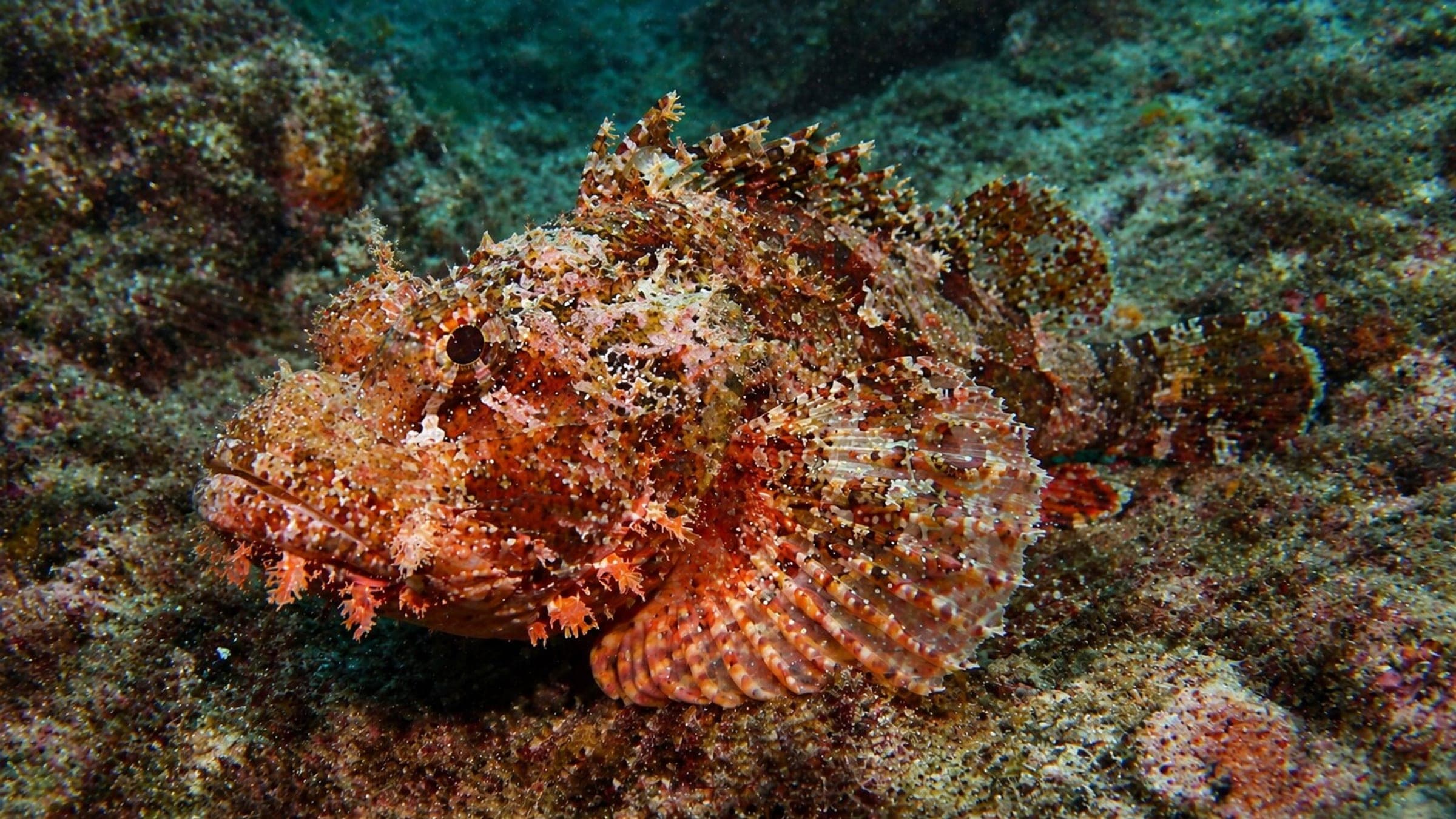
Possess sharp spines coated with venomous mucus that function as a sting.
Scorpaenidae
Scorpionfish are mostly marine fish in the family Scorpaenidae, many of which bear venomous, spine-tipped stings.
Last Updated Mar 9, 2026 · 3 sources
Species Guide
A clean field guide focused on habitat, identification, behavior, and conservation context without burying the useful parts.
Scorpionfish (family Scorpaenidae) are mostly marine fish that include many of the world's most venomous species. They possess sharp spines coated with venomous mucus that function as a sting. Scorpionfish are widespread in tropical and temperate seas, with particular diversity in the Indo-Pacific region. They are distinct from cabezones (genus Scorpaenichthys), which belong to the separate family Cottidae.
The strongest linked planning options currently surface around destinations such as Hurghada (Giftun and Abu Nuhas), Mahé, Costa Brava and Medes Islands and countries such as Spain, Italy, Egypt for divers building trips around scorpionfish.
Identification
The visual markers divers can use underwater, plus the species most likely to cause confusion.
Possess sharp spines coated with venomous mucus that function as a sting.
Mostly marine, widespread in tropical and temperate seas, especially in the Indo-Pacific.
Cabezones belong to a separate family, Cottidae, and should not be confused with scorpionfish.
Responsible Encounters
Conservation-minded guidance for divers who want the encounter without adding pressure.
Do not touch or handle scorpionfish; their sharp, venom-coated spines can deliver painful stings.
Field Notes
Useful species context that makes the encounter more meaningful once you are underwater.
The Scorpaenidae family includes many of the world's most venomous fish species.
Their common name refers to the sting-like function of their venomous spines.
Scorpionfish are found across tropical and temperate seas, with notable diversity in the Indo-Pacific.
Top Destinations
Destinations surfaced from the linked dive spots associated with this species.
Top Countries
The strongest country-level starting points currently linked to this species.
Top Dive Spots
Directly linked dive spots where this species already shows up in the planning data.
Boat reef with coral blocks, caves, and soft corals
Aldebaran Wreck is a deep wreck dive off Mahé.
Closed Similan reef with a shallow sandy slope.
Boat wall dive on Arsida Walll with very good visibility
Artificial Reef is a tide-sensitive wreck reef for experienced divers.
Boat-accessed wall dive with gorgonians and sponges.
FAQ
Clear planning and conservation answers written for search visibility and AI retrieval.
Research Sources
Primary and credible references behind the field-guide and conservation claims on this page.
Primary wildlife guide source.
Supporting wildlife source.
Taxonomy reference.
Related Species
Related species guides in the same encounter family.